
Monthly Archives: August 2026

Cosplay

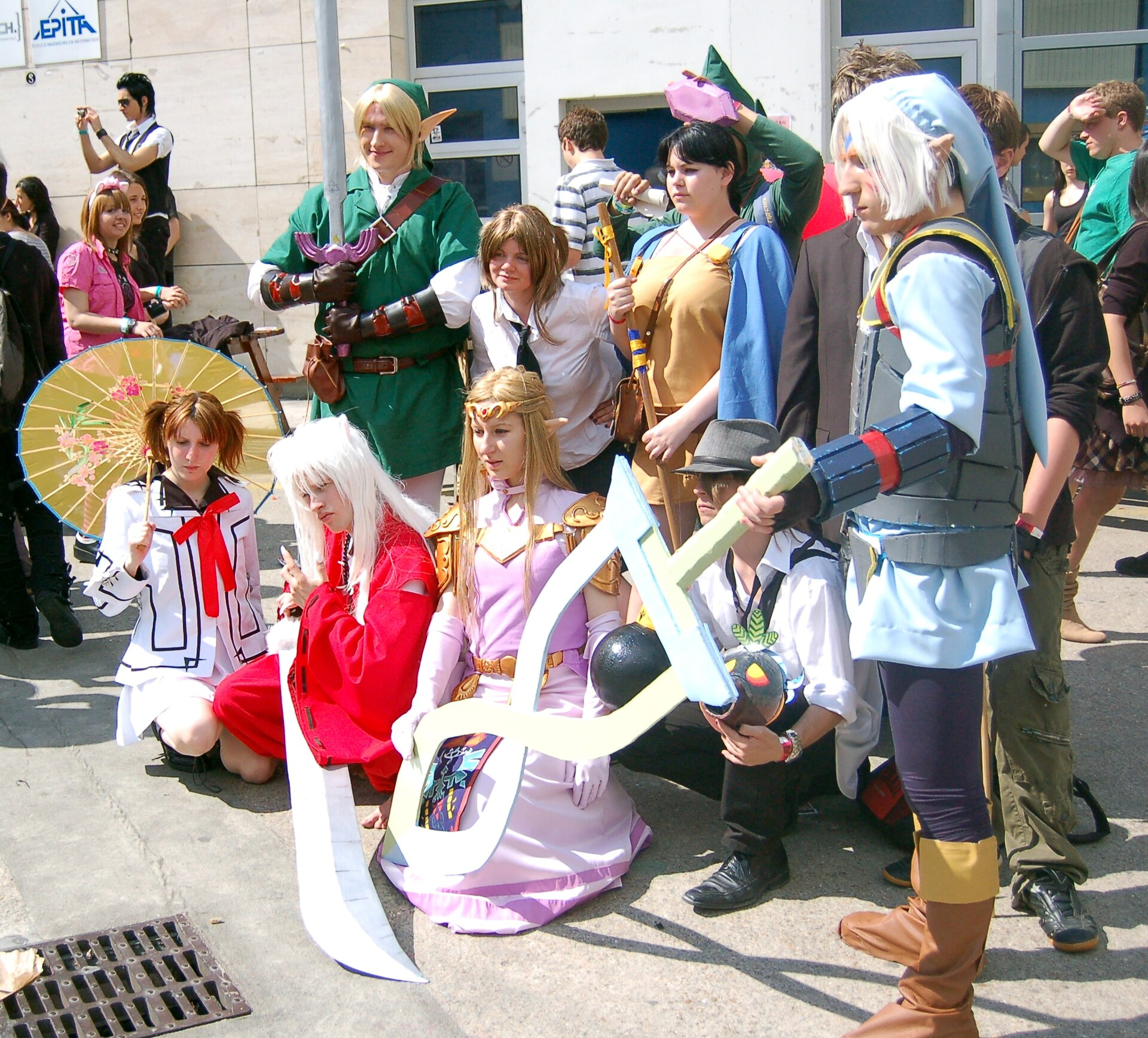
Cosplay Convention, Author KoS (CC Attribution-Share Alike 3.0 Unported, 2.5 Generic, 2.0 Generic, 1.0 Generic, GNU Free Documentation License)

There is a world of which most of us are unaware.  On the surface, this world may seem innocent; a children’s world of fantasy, of dress up and role play, in which adults engage.   But there is a sinister aspect. This is the world of cosplay [1]. 

Escapism and Fame

Cosplay, in simplest terms, is the practice of dressing up as a favorite character from a movie, comic book, or video game.  It is a world populated by many who are nerds, lonely, bullied, seeking to escape their lives…or seeking fame.

Costume Cost

Cosplayers invest a great deal of time, attention, and expense in the effort to portray their characters accurately.  The cost of a costume can vary between $50 and $5000 or more, depending on the design, materials used, and craftsmanship [2A]. 

On average, cosplayers spend 40 hours building an individual costume, but may spend months learning to sew, style wigs, or craft foam into armor [2B].

Global Market

The results are shared at conventions and online [3][4]. 

Multi-genre conventions may range from Anime, Sci-Fi, Comics, and Gaming to Furry, Horror, Steampunk, and Post-Apocalyptic [5A].  Show specific conventions focus on particular shows such as My Little Pony, Power Rangers, or Doctor Who [5B].  Comic Con International in San Diego and Anime Expo in Los Angeles are two well known examples.

These are not amateur ventures.  The global cosplay market is expected to reach $23 billion by 2030 [6].

Monetization

Individuals can monetize their efforts in a variety of ways:  by making costumes, props, and accessories for others; by merchandising their own designs; by offering workshops; by hosting Live Action Role Play (LARP) events; or by creating online content featuring the characters they portray [7]. 

Not surprisingly, sexualized content draws the highest paying subscribers online [8A].

Dark Fantasies

“Characters once designed to be feared, hated, or opposed are now among the most photographed and celebrated figures in cosplay culture [9A].”

This is where dark fantasies come into play.  Villains are portrayed at least as often as heroes or heroines [9B][10].  Characters like Sebastian Michaelis (Black Butler), Ryomen Sukuna (Jujutsu Kaisen), Sephiroth (Final Fantasy VII), and Muzan (Demon Slayer) are among the most photographed [9C]. 

Online content can be highly disturbing [8B]. And cosplayers who remain in character may become lost in their own fantasies.

Empowerment

For those who have been shattered by some form of abuse, cosplay may afford an escape from reality; welcome, if brief, relief from their pain.  

Cosplay may – at least temporarily – assist with low self-esteem.  Creative expression is good for the soul [1A].  The emotional and psychological shift can make a cosplayer feel invincible [11B][12A]. 

Conventions are filled with ready-made friends, or so it seems [11C][12B].  And the association with a villain can feel empowering, allowing the release of long repressed anger.

But the allure of that fantasy world may be more powerful than empowering.

Crossing A Line

In 2021, Helen Hastings, 18 y.o., was shot in the head by her friend and fellow cosplayer, Mary Anne Oliver-Snow a/k/a Yandere Freak [8C][13][14]. 

Although the shooting was an apparent accident, Snow’s portrayals of her cosplay character had become increasingly violent.  She spent days in character, on screen and off, appearing as a harmless Anime child who gleefully murders her friends.

Was a line between fantasy and reality crossed here?  The temptation was certainly there. And the danger remains for those who may be vulnerable to it.

[1]  Wikipedia, “Cosplay”, https://en.wikipedia.org/wiki/Cosplay.

[2A and 2B]  Gank, “How Much Are Cosplay Costumes:  The Genuine Cosplaying Budget”, 10/17/22, https://ganknow.com/blog/how-much-are-cosplay-costumes/.

[3]  Cosplay Convention Center, “Your Convention Season Starts Here”, https://www.cosplayconventioncenter.com/.

[4]  FanCons, “Convention Schedule”, https://fancons.com/events/.

[5A and 5B]  https://popculthq.com/cosplay-convention-list/.

[6]  Business Calculators by Bigger Bottom Line, “How to Start a Cosplay LARP Business:  Funding Guide”, 8/22/25, https://business-calculators.com/how-to-start-a-cosplay-larp-business-funding-guide/.

[7]  Starter Story, “20 Business Ideas for Cosplayers [2026] by Pat Walls, 9/27/24, https://www.starterstory.com/business-ideas-for-i-cosplayer.

[8A, 8B, and 8C]  Investigation Discovery, Lethally Blonde, “Snow the Salt Queen Had 1.6 Million Followers”, https://www.bing.com/videos/riverview/relatedvideo?q=lethally+blonde+oliver+snow&pc=GD06&ptag=29417&source=chrome.ob&ru=%2fsearch%3fq%3dlethally%2bblonde%2boliver%2bsnow%26pc%3dGD06%26form%3dGDNSBR%26ptag%3d29417%26source%3dchrome.ob&mmscn=vwrc&mid=A0BC3CA5D8490B6FE7F8A0BC3CA5D8490B6FE7F8&FORM=WRVORC&ntb=1&msockid=e2c3f3f76ca511f1af4b4875ee42ec0f

[9A, 9B, and 9C]  Cosplay Real, “Why Villains Are Becoming More Popular Than Heroes in 2026”, 6/13/26, https://www.cosplayreal.com/blogs/anime-exhibition/why-villains-are-becoming-more-popular-than-heroes-in-cosplay-2026.

[10]  Victims and Villains, “Cosplay:  Heroes vs. Villains” by Dani Arii, 2/12/22,  https://www.victimsandvillains.net/reviews/cosplay-heroes-and-villains.

[11A, 11B, and 11C]  Inthastyle, “Is Cosplay Good for Mental Health?”, 4/24/25, https://www.inthaverse.com/articles/cosplay-mental-health-benefits-fantasy-costume/.

[12A and 12B]  Cityscape Counseling, “How Cosplay Is Used to Improve Mental Health”, https://www.cityscapecounseling.com/post/how-cosplay-is-used-therapeutically-to-improve-mental-health-2/.

[13]  Rolling Stone, “They Were Close Friends and Cosplay Stars Then Snow Killed Helen” by EJ Dickson, 10/21/21, https://www.rollingstone.com/culture/culture-features/cosplay-tiktok-manslaughter-yandere-snow-helen-hastings-1234452/.

[14]  Y!Entertainment, “A TikTok influencer charged in the fatal shooting of their friend deleted their accounts a year after the incident” by Kieran Press-Reynolds, 11/2/21, https://www.yahoo.com/entertainment/tiktok-cosplay-influencer-charged-fatal-143935792.html?guccounter=1&guce_referrer=aHR0cHM6Ly93d3cuYmluZy5jb20v&guce_referrer_sig=AQAAAMKX_RBPPz08VUP8RVueu-vujUMljCsjhDgcMWmRhDb6gCRmhegFTmZrkLeCPZDtJ3ngyJ4GBEl3pfU8vZp1H64bgGMwTpla7toApxleTC1GNkSBpIW7-WStuo8Wz2eR7GgL-XoGGddao62kPHARW6tWWWr4Jdrt4P_KurUU2h_7.

FOR MORE OF MY ARTICLES ON POVERTY, POLITICS, AND MATTERS OF CONSCIENCE CHECK OUT MY BLOG A LAWYER’S PRAYERS AT: https://alawyersprayers.com
3 Comments

Filed under bullying, Child Abuse, Child Molestation, Emotional Abuse, Neglect, Physical Abuse, Sexual Abuse

Fidelity

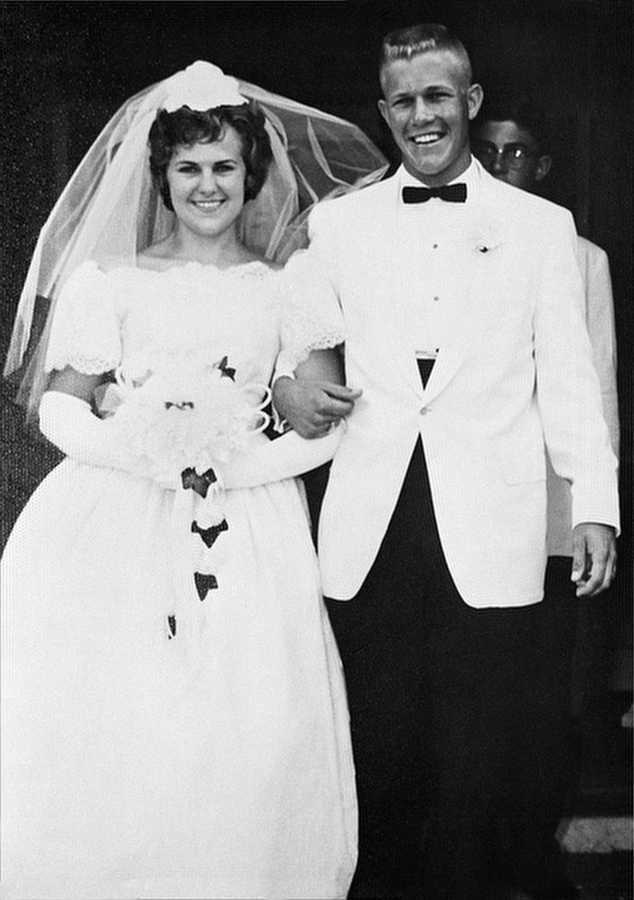
Wedding photo of Charles and Kathleen Whitman (1962), Source eBay, Author unknown (Public Domain).

The Bible describes marital fidelity as a sacred commitment involving love, respect, and faithfulness between spouses [1].

A Divine Covenant

The Bible views marriage as a divinely instituted covenant where a husband and wife become “one flesh” (Gen. 2: 24) [2].  Fidelity is central to this covenant, so sexual immorality or adultery is explicitly condemned (Heb. 13: 4).  The Seventh Commandment, of course, forbids adultery (Ex. 20: 14).

A Loving Bond

However, marital fidelity extends beyond avoiding adultery.  It encompasses honesty, loyalty, and a deep respect.  The Bible instructs husbands to love their wives as Christ loves His church (Eph. 5:25), and wives to respect their husbands (Eph. 5: 33).  Such love is not just a feeling, but an unwavering bond [3].

Sexual Fulfillment

Surprisingly, the Bible specifically addresses sexual fidelity within marriage, emphasizing that spouses should fulfill each other’s conjugal rights to prevent temptation and maintain intimacy (1 Cor. 7: 3-5).  Lustful intent constitutes adultery in the heart (Matt. 5: 28).

Sexual Revolution

We may today think this old fashioned. 

After all, the sexual revolution of the 1960s changed attitudes and behavior related to sexuality throughout the Western World [4].  Nearly 2 in 5 children in the United States – some 1 million children – are now born out of wedlock each year [5A][6].  More than 2 in 3 Black children are born outside marriage [7]. This is part of a global trend, with out of wedlock births exceeding 50% in many countries [5B].

Poverty and Out of Wedlock Births

Unfortunately, research consistently shows that children born out of wedlock face poverty risks approximately 5 times higher than those born to married parents [8].  This is because single parents often have lower household incomes, fewer resources, and less access to economic stability. 

Studies find that never-married mothers work less outside the home, earn less when they do work outside the home, and experience slower income growth compared to married or divorced mothers [9].  This limits their ability to lift their children out of poverty.  

Growing up in poverty can have a profound and lasting impact on children’s self-esteem [10].  Children living in poverty often face stressors like chronic food insecurity, unstable housing, and limited access to healthcare, all of which can ultimately lead to anxiety, depression, and behavioral issues [11]. 

Modeling

Moreover, children raised in single parent households do not see fidelity modeled.   They do not see women treated with respect, hence the term “baby mamas” for unmarried mothers who no longer have even the status of girlfriends.  It is not a great leap to domestic violence.

Abuse Risk

Studies show that children in single-parent households are at greater risk of abuse and neglect as compared to those living with married biological parents, and at greater risk of witnessing domestic violence [12][13].

History

There may be still another lesson to be drawn here. 

The ethnologist and social anthropologist JD Unwin found a correlation between marital fidelity and cultural achievement across the 80 tribes and 6 major civilizations he studied, covering a period of 5000 years [14]. The people groups who became increasingly liberal toward sexual morality eventually vanished.

Having embraced so called “sexual freedom” in the name of progress, we may well have doomed ourselves to the ash heap of history, regardless of our technological achievements.

[1]  OpenBible, “Marital Fidelity”, https://www.openbible.info/topics/marital_fidelity.

[2]  BibleHub, “The Seriousness of Marital Fidelity”, https://biblehub.com/topical/t/the_seriousness_of_marital_fidelity.htm.

[3]  BibleRepository, “35 Important Bible Verses about Fidelity to Relationships (Explained)” by “Pastor David”, 5/12/26, https://biblerepository.com/bible-verses-about-fidelity-to-relationships/.

[4]  Wikpedia, “Sexual revolution”, https://en.wikipedia.org/wiki/Sexual_revolution#:~:text=The%20sexual%20revolution%2C%20also%20known%20as%20the%20sexual,late%201950s%20to%20the%20early%201970s.%20%5B1%5D%20.

[5A and 5B]  World Population Review, “Out of Wedlock Births by Country 2026”, https://worldpopulationreview.com/country-rankings/out-of-wedlock-births-by-country.

[6]  Institute for Family Studies, “America’s Unmarried Birth Rate Puts 1 Million Kids at Risk A Year” by Nicholas Zill, 6/3/26, https://ifstudies.org/blog/americas-unmarried-birth-rate-puts-1-million-kids-at-risk-a-year.

[7]  World Data, “Unmarried Birthrate by Race in US:  Statistics and Facts”, 10/29/25, https://theworlddata.com/unmarried-birth-rate-by-race/.

[8]  American Enterprise Institute (AEI), “Dynamics of Families after a Non-Marital Birth” by Angela Rachidi, 1/8/24, https://www.aei.org/research-products/report/dynamics-of-families-after-a-nonmarital-birth/.

[9]  Institute for Family Studies, “The Poverty of Single Mothers Is Persistent” by Nicholas Wolfinger and Matthew McKeever, 5/6/25, https://ifstudies.org/blog/the-poverty-of-single-mothers-is-persistent.

[10]  Academia, “Recognition, Poverty and Self-Respect” by Jonathan Seglow, 7/21/20, https://www.academia.edu/67998406/Recognition_Poverty_and_Self_Respect.

[11]  PS 169 Baychester Academy, “How poverty influences social-emotional learning” by “Rick”, 8/26/24, https://baychesteracademy.org/how-poverty-influences-social-emotional-learning/.

[12] Hope 4 Hurting Kids, “Risks of Child Abuse and Neglect Based on Family Structure” (adapted from an article originally published on Divorce Ministry 4 Kids 9/28/11), https://hope4hurtingkids.com/trauma-tragedy/abuse/risks-of-child-abuse-and-neglect-based-on-family-structure/.

[13] Institute for Family Studies, “Kids of Single Parents More Likely to Witness Domestic Violence” by Nicholas Zill, 1/6/15, https://ifstudies.org/blog/children-in-single-parent-families-are-more-likely-to-witness-domestic-violence/.

[14]  Wikipedia, “JD Unwin”, https://en.wikipedia.org/wiki/J._D._Unwin.

FOR MORE OF MY ARTICLES ON POVERTY, POLITICS, AND MATTERS OF CONSCIENCE CHECK OUT MY BLOG A LAWYER’S PRAYERS AT: https://alawyersprayers.com
15 Comments

Filed under Child Abuse, Child Molestation, Christianity, Community, domestic abuse, domestic violence, Emotional Abuse, Neglect, Physical Abuse, Poverty, Religion, Sexual Abuse, Violence Against Women

Valor and PTSD

Tattered American flag at scene of devastation following F-5 tornado in Oklahoma, Image released by US Armed Forces (ID DF-SD-00-03241), Author Sgt Bill Kimble, (Public Domain)

Valor, noun – strength of mind or spirit that enables a person to encounter danger with firmness personal bravery

Valor may be an old fashioned word these days.  It is something quiet.  Something internal.

Society applauds courage – a much prized quality that involves action in the face of danger, action despite fear.  We picture it on the battlefield, flags waving and bullets flying.  Civic associations award medals for it, as well they should.

But there are all kinds of battlefields.  Many of us carry our battlefields inside.  They are no less perilous, no less grimy, no less bloody for that.   Only the blood, the sweat, and the tears are our own.

We carry scars from the battles fought and lost, many when we were grossly outmatched as children.  All our failures remain present with us; they haunt us like ghosts.  Our victories vanish like soap bubbles.  Yet we continue to look death in the face almost daily, and persevere to survive another day [1][2][3].

This is life with Post Traumatic Stress Disorder (PTSD).  The wounds inflicted on us – whether from childhood abuse and neglect, or domestic violence – were undeserved.  The guilt for them is not ours, but we carry the shame regardless.

The demons we wrestle – anxiety, depression, self-doubt, self-loathing – rarely sleep.

At times, we seek to numb the pain.  The anesthetics we use for this vary – drugs, alcohol, razor blades, food, sex, work.  But they provide little relief.  We simply harm ourselves further.

What we fail to recognize is the sheer valor required to endure in the face of such an unrelenting onslaught.  There is no better word for the strength of mind and spirit required to remain steadfast and carry on.

Medals or no, we deserve to hold our heads up.

[1] Psychiatry Advisor, “Trauma and Suicide”, https://www.psychiatryadvisor.com/factsheets/trauma-and-suicide/.

[2] PTSD UK, “Suicide amongst people with Post Traumatic Stress Disorder”, https://www.ptsduk.org/suicide-amongst-people-with-ptsd/.

[3] US Dept. of Veterans Affairs, National Center for PTSD, “The Relationship Between PTSD and Suicide”, https://www.ptsd.va.gov/professional/treat/cooccurring/suicide_ptsd.asp.

A New Mexico court has ordered Meta (the parent of Instagram and Facebook) to pay $567 million for harming children. The social media giant must eliminate push notifications at night and during school hours, reduce time limits on its apps to no more than 90 hours/month, and put AI chatbox safeguards in place for users under 18 y.o.

For more information, see https://www.abc.net.au/news/2026-08-07/meta-ordered-to-pay-us567-million-in-new-mexico-/107008246.

FOR MORE OF MY ARTICLES ON POVERTY, POLITICS, AND MATTERS OF CONSCIENCE CHECK OUT MY BLOG A LAWYER’S PRAYERS AT: https://alawyersprayers.com

9 Comments

Filed under Child Abuse, Child Molestation, domestic abuse, domestic violence, Emotional Abuse, Neglect, Physical Abuse, Sexual Abuse, Violence Against Women

Toxic Inheritance

Photo by Luis Miguel Bugallo Sanchez (PD)

The opioid crisis has had a serious and lasting impact on our children.  That includes emotional trauma, disruption of family structure, and increased risk of substance abuse [1A][2A].  It is a toxic inheritance.

Emotional Trauma

Children often suffer grave neglect as the result of parental addiction.  Emotionally, they experience overwhelming anxiety, depression, and feelings of inadequacy.  Their lives are filled with uncertainty and fear.  This has ongoing ramifications for them [3A].

Family Disruption

“The opioid crisis significantly contributes to family instability.  As parents grapple with addiction, many lose custody of their children or become incapable of providing stable homes [1B].”

Between 2011 and 2021, some 321,566 children lost a parent to a drug overdose [2B].

Children will often wind up living with relatives or going into foster care as the result of ongoing parental addiction [4].  Addiction is particularly devastating in single parent households which are already vulnerable.

The economic burden of addiction destroys family finances.  Even if willing to assume custody, grandparents may have limited resources. and insufficient energy to raise young children.

Meanwhile, the foster care system is overburdened.  Caseworkers are overloaded, so screening and monitoring are inadequate, sometimes with tragic results.

Addiction Risk

Children of addicts are at higher risk of substance abuse, themselves, perpetuating the cycle of addiction [1C][3B].

Better Lives

Sadly, the opioid crisis is far from over [5].  Our children need more than this.

Policies aimed at strengthening families and providing resources for recovery are essential to breaking the cycle of addiction [1D][3C].

Programs which take a holistic approach, providing substance abuse treatment along with mental health support, can aid families in dealing with this challenging problem and enable children to have better lives [1E].

[1A through 1E]  Mothers Against Addiction, “Opioid Crisis Devastates Families While Hope Emerges”, 2/12/25, https://www.mothersagainstaddiction.org/opioid-crisis/.

[2A and 2B]  Sojourner House, “The Hidden Impact of the Opioid Crisis:  Children Left Behind”, https://www.sojournerhousepa.org/the-hidden-impact-of-the-opioid-crisis-children-left-behind/.

[3A, 3B, and 3C]  National Child Trauma Stress Network (NCTSN), “Child Trauma and Opioid Use:  Policy Implications”, https://www.nctsn.org/sites/default/files/resources/fact-sheet/child_trauma_and_opioid_use_policy_implications.pdf.

[4]  Annals of American Academy of Political and Social Science, “The Opioid Epidemic and Children’s Living Arrangements in the United States 2000-2018” by Monica Caudillo et al,  https://journals.sagepub.com/doi/10.1177/00027162221142648.

[5]  Health Affairs, “Insights about the Opioid Crisis” by D. Metz et al, September 2025, https://www.healthaffairs.org/doi/10.1377/hlthaff.2025.01002.

A study of 600 teens found that those who perceived their parents distracted by cell phone use experienced reduced emotional connection, higher anxiety, and a more insecure attachment style.

For more information, see https://www.frontiersin.org/news/2026/06/18/teenagers-whose-parents-are-more-distracted-by-phones-are-more-insecure-frontiers-psychology.

FOR MORE OF MY ARTICLES ON POVERTY, POLITICS, AND MATTERS OF CONSCIENCE CHECK OUT MY BLOG A LAWYER’S PRAYERS AT: https://alawyersprayers.com

11 Comments

Filed under Child Abuse, Poverty, Physical Abuse, Sexual Abuse, Emotional Abuse, Neglect, Community, Child Molestation