Tag Archives: broken foster care system

Child Abuse, Domestic Violence, and Homelessness

Unknown homeless man, Author Magdalena Roeseler, (Creative Commons Attribution 3.0 Unported)

We tend to shun the homeless. We may pity them, may even refer to them using the politically correct term “unhoused individuals” which supposedly preserves their dignity while doing nothing to improve their condition.

But we are likely to feel disgusted or threatened by them, at the same time.

Admittedly, a majority of the homeless do suffer from mental illness and/or addiction [1]. Yet research has consistently shown that there is strong correlation between childhood abuse and later homelessness [2].

And it should not be overlooked that approximately 1/3 of the homeless are families with children (85% of them single mothers) — some 259,473 men, women, and children among the estimated 770,00 homeless in the United States [7].

There is a link not just to child abuse, but to domestic violence here.  Over 92% of homeless mothers with children have experienced severe physical and/or sexual violence during their lifetimes [8].  Moreover, 38% of all domestic violence victims become homeless at some point in their lives [9].

Adverse Childhood Experiences (ACEs)

The highly respected Adverse Childhood Experiences framework — widely used in public health, medicine, education, and social services — arose from a landmark study by the Centers for Disease Control and Kaiser Permanente in the 1990s [3A]. 

Over 17,000 participants were asked about adverse childhood experiences in three categories:  abuse (emotional, physical or sexual); neglect (emotional or physical); and household dysfunction (parental mental illness, parental substance abuse, domestic violence, parental separation or divorce, and parental incarceration).

Among the homeless, 89.8% reported having had 1 or more adverse childhood experiences, and 53.9% reported having had 4 or more [4A].  In the general population, 38-39% reported having had 1 adverse childhood experience, while 3-5% reported having had 4 or more [4B].

Impact of Childhood Trauma

Childhood trauma creates vulnerabilities that may compound with time [3B]:

  • Childhood trauma alters brain structure and function, making it more difficult to manage emotions, and reach sound decisions.  This has the potential to undermine stable housing and employment, as an adult.
  • Childhood trauma damages children’s trust and disrupts the support systems they need to thrive, interfering with their ability to form healthy relationships.  Chaos is normalized.  Self-sabotage becomes an unconscious life strategy. This can result in unstable adult relationships and attraction to abusive partners.  Social isolation can be a maladaptive means of self-protection, leading to avoidance of services like schools, job programs, or shelters that could be of help.
  • Childhood trauma increases the risk of mental illness which, also, has the potential to undermine stable housing and employment.  Those with over 4 adverse childhood experiences are at 4.6 times the risk of depression, and 12 times the risk of suicide, compared with the general population.
  • Childhood trauma greatly increases the risk of alcoholism and drug addiction.  Those with over 4 adverse childhood experience are at over 7 times the risk of alcoholism, and over 10 times the risk of intravenous drug use.  Self-medication becomes addiction.

Foster Care

Not only do the children placed in foster care all too often experience further trauma there, but aging out of foster care puts them at extraordinary risk of homelessness. They simply have no support system.  Between 20-25% of those aging out of foster care are homeless within 4 years; over 50% are homeless by age 26 [3C].

Runaways

This does not take into account the young people who run away from unsafe homes where violence or sexual abuse is ongoing daily [5A].  These become the children of the streets, the easy prey of pimps and sex traffickers [6].

The Root of Homelessness

Early intervention; trauma informed services at school; regular monitoring and support, if children are placed in foster care; provision for adequate housing in Safety/Treatment Plans when children are about to age out of foster care; and trauma-informed healthcare are key to addressing the problem of homelessness at its root [5B].

This is the responsibility of a civilized society. Of course, we may not qualify as that.

Is this not the fast I [your God] have chosen…To undo the heavy burdens, To let the oppressed go free…? Is it not to share your bread with the hungry, And that you bring to your house the poor who are cast out; When you see the naked, that you cover him, And not hide yourself from your own flesh?” (Isa. 58: 6-7).

[1] Psychiatric News, “Most People Experiencing Homelessness Have Mental Health Disorders, Study Says”, https://alert.psychnews.org/2024/04/most-people-experiencing-homelessness.html.

[2]  Wikipedia, “Youth homelessness”, https://en.wikipedia.org/wiki/Youth_homelessness.

[3A, 3B, and 3C]  The Steady Ground, “Childhood Trauma and Adult Homelessness:  The ACEs Connection”, January 2025, https://thesteadyground.org/articles/childhood-trauma-homelessness.html.

[4A and 4B]  The Lancet, “Adverse childhood experiences and homelessness:  advance and aspirations” by Katherine Koh and Ann Montgomery,   https://www.thelancet.com/journals/lanpub/article/PIIS2468-2667%2821%2900210-3/fulltext.

[5A and 5B]  National Crimes Against Children Investigators Assoc. (NCACIA), “Nowhere to Go:  Understanding the Link Between Child Abuse and Homelessness”, https://www.ncacia.org/post/nowhere-to-go-understanding-the-link-between-child-abuse-and-homelessness.

[6]  2026 Calendar-Canada, “What’s the difference between a pimp and a trafficker?”, https://www.calendar-canada.ca/frequently-asked-questions/whats-the-difference-between-a-pimp-and-a-trafficker.

[7] Institute for Children, Poverty, & Homelessness, “The Hidden Homelessness: Families with Children in the US”, August 2025, https://www.icph.org/wp-content/uploads/2025/08/Family-Homelessness-101-National-WEB_8.21.25.pdf.

[8] Green Doors, “Family Homelessness Facts”, https://www.greendoors.org/facts/family-homelessness.php.

[9] American Bar Association, “Five Facts about Domestic and Sexual Violence and Homelessness”, https://www.americanbar.org/groups/domestic_violence/Initiatives/five-for-five/five-facts-homelessness/.

FOR MORE OF MY ARTICLES ON POVERTY, POLITICS, AND MATTERS OF CONSCIENCE CHECK OUT MY BLOG A LAWYER’S PRAYERS AT: https://alawyersprayers.com

9 Comments

Filed under Child Abuse, Child Molestation, domestic abuse, domestic violence, Emotional Abuse, Neglect, Physical Abuse, Prostitution, Rape, sex trafficking, Sexual Abuse, Sexual Assault, Violence Against Women

The Mousetrap

File:London-The Mousetrap celebrating 70 years.jpg

“The Mousetrap” at St. Martin’s Theater, London, Author Ji-Elle
(CC BY-SA 4.0 International)

WARNING:  Graphic Images

Thousands have enjoyed Agatha Christie’s “The Mousetrap”, the longest running play in the world.  Few realize that the play was inspired by a real life tragedy [1][2].

Fictional Plot

Set in a snowbound manor house, the mystery centers on the strangling death of a woman who mistreated the foster children in her care.  The principal suspect is one of those children, now grown and motivated by revenge.

Factual Basis

Because their parents were deemed unfit, England’s Newport Juvenile Court in May 1944 placed the three O’Neill brothers on whom the play is based under the jurisdiction of the Newport County Council [3].

In July 1944 the Council assigned custody of the two older boys — 12 y.o. Dennis and 9 y.o. Terence — to Reginald Gough and his wife Esther at Bank Farm in Hope Valley, Shropshire.  The youngest boy — 7 y.o. Freddie — was placed nearby.

When a short time later Terence was asked to write a school essay about his homelife, he said his foster mother was good and kind to him.  He said she bought him new clothes and gave him “lots to eat”.

But the name Hope Valley would prove haunting.  Terence later revealed that his essay was written under duress.  He knew instinctively that he would be in “huge trouble” if he told the truth.

Fatal Abuse

On January 9, 1945 Esther Gough phoned a local doctor to say that Dennis was having a seizure.  The doctor arrived to find the boy dead, a victim of severe abuse.  An inquest revealed that he had suffered cardiac arrest, as the result of a brutal beating.  The child was, also, badly undernourished, with painful septic ulcers on his feet. Continue reading

14 Comments

Filed under Child Abuse, Child Molestation, domestic abuse, domestic violence, Emotional Abuse, Justice, Law, Neglect, Physical Abuse, Sexual Abuse

Radicalization

File:US Secretary of Health and Human Services flag.svg

Flag of US Secretary of Health and Human Services, Author Dept. of Health and Human Services (PD)

A proposed regulation by the US Dept. of Health and Human Services (HHS) would prohibit foster families from any attempt to “undermine, suppress, or change” the gender identification of children in their care [1].

Biblical Values Mischaracterized

Couched as “protection” for children suffering from gender dysphoria, i.e. gender identification at variance with their biological sex, the proposed regulation effectively equates the expression of biblical values vis a vis sexuality with child abuse [2].

It should be emphasized that there is no evidence to suggest that foster children in Christian homes have in any way been harmed.

Foster Parents Disqualified

Apart from interfering with religious freedom, the new regulation is likely to deprive the foster care system of thousands of willing foster parents who do not believe children should be chemically or surgically mutilated before they are old enough to purchase alcohol or vote. Continue reading

7 Comments

Filed under Abuse of Power, Child Abuse, Child Molestation, Christianity, Emotional Abuse, Justice, Law, Neglect, Physical Abuse, Religion, Sexual Abuse

The Turpin Children – The 9th Circle of Hell

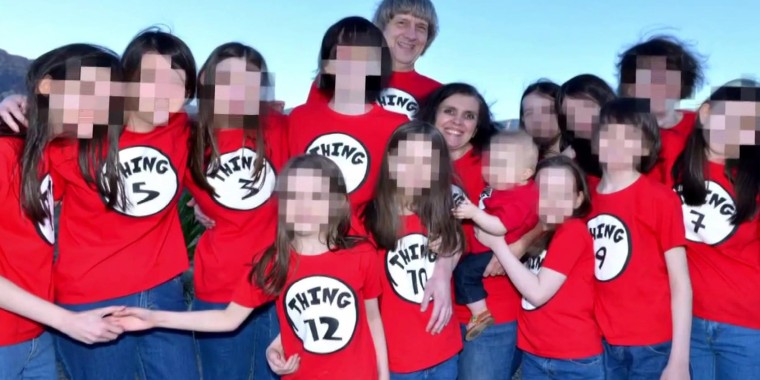
Four years ago, the plaintiffs were among a dozen siblings removed from their home in Perris, about 70 miles southeast of downtown Los Angeles, where they had been tortured, starved and neglected.

Turpin Family – Image courtesy of NBC News

WARNING:  Graphic Images

Most of us remember the Turpin children because of the extreme abuse they endured.

The 13 children suffered years of torture, starvation, and neglect at the hands of their parents before being rescued in 2018 from the house of horrors in which they were raised. 

Now it appears that rescue was illusory.

Further Abuse

The 6 youngest children have filed suit against Riverside County, CA; ChildNet Youth and Family Services; and the Foster Family Network, alleging they were placed with a foster family who emotionally, physically, and sexually abused them [1A][2]. Continue reading

12 Comments

Filed under Child Abuse, Child Molestation, Christianity, Emotional Abuse, Justice, Law, Neglect, Physical Abuse, Religion, Sexual Abuse

Foster Care – A Failed System

Changes in Congregate Care in 8 States (9/30/04-9/30/13), Author US Govt. Accountability Office (GAO), Source https://www.gao.gov, (PD as work product of federal govt.)

Reporting by the Washington Post confirms what the public has long known.  Our foster care system is failing, nationwide.

One major flaw involves the use of detention centers and similar facilities to house children who have committed no infraction whatsoever [1A].

Warehousing

“…in an era when a surging number of biological parents are falling into the grips of drug addiction, and child welfare systems are struggling with a shortage of foster parents…case workers and courts have been funneling children into crowded emergency shelters, hotels, out-of-state institutions and youth prisons — cold, isolating and often dangerous facilities not built to house innocent children for years [1B].”

Both literally and figuratively, children taken into foster care for their own protection are instead being warehoused with rapists and murderers.  Some are forced to sleep on cement floors with harsh fluorescent lights on during lockdowns.

Scope of the Failure

Because foster care is decentralized, accurate figures are difficult to come by.

As of 2013, approximately 56,000 of the 400,000 children in foster care across the country (14% of the foster care population) were living in what is known as “congregate” care – group homes, detention centers, residential drug treatment facilities, and the like [2].  In West Virginia, fully 71% of 6800 foster children between the ages of 12 and 17 have been relegated to such institutions [1C].

The Opioid Crisis is greatly increasing those numbers. Continue reading

19 Comments

Filed under bullying, Child Abuse, Child Molestation, Christianity, domestic abuse, domestic violence, Emotional Abuse, Justice, Law, Neglect, Physical Abuse, Religion, Sexual Abuse

“Why I Am Leaving” by blackbirds2015

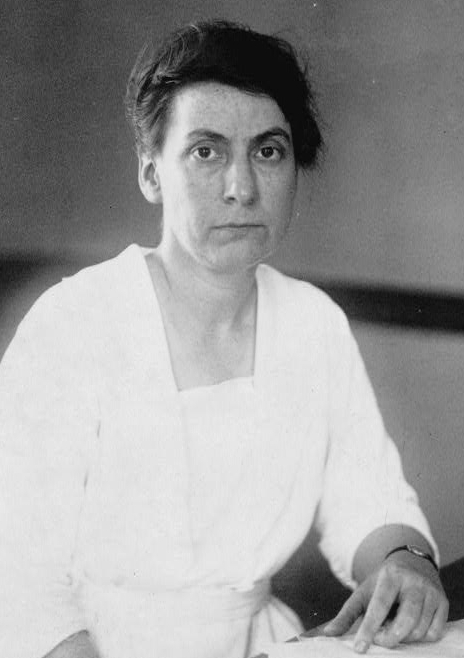
Social worker, Grace Abbott, a tireless advocate for child welfare, Library of Congress, Div. of Prints and Photographs (Digital ID cph.3c11723) (PD-US, No Known Restrictions on Publication)

I looked for someone who might rebuild the wall of righteousness that guards the land.  I searched for someone to stand in the gap in the wall…” (Ezek. 22: 30 NLT).

Social workers are among the most dedicated and selfless people on earth. They stand in the gap when parenting and other institutions that should serve our children fail.

The tragedy is that we have our priorities skewed, as a society.  We shower sports figures and others with countless millions, but expect those charged with protecting our children to subsist on a pittance, and carry impossible workloads.

This is a heartrending post by a dedicated social worker dealing with burn-out.  It speaks volumes about the broken foster care system.

“I love my job.  Really, I do.  I love some of the foster parents and some of the kids and some of the bio parents.  I love working with the courts and knowing that I have a good reputation with them.  I love the flexibility and the ability to work from home.  I love returning kids home or helping them gain independence.  There are some biological families that I still talk to and I love them as well.

What I don’t love: turning kids into numbers, meeting dashboards instead of needs, looking out for the best interest of DCF instead of the child.  I can’t keep up with the changing policies and new requirements; the updated trainings, changes to our computer system, and the daily threat that I could really get hurt by someone.”

TO READ MORE, go to Social Work(er)ing at: https://threecatsandababy.wordpress.com/2017/11/15/why-i-am-leaving/

FOR MORE OF MY ARTICLES ON POVERTY, POLITICS, AND MATTERS OF CONSCIENCE CHECK OUT MY BLOG A LAWYER’S PRAYERS AT: https://alawyersprayers.com


9 Comments

Filed under Child Abuse, Child Molestation, Emotional Abuse, Neglect, Physical Abuse, Sexual Abuse