Category Archives: bullying

Cosplay

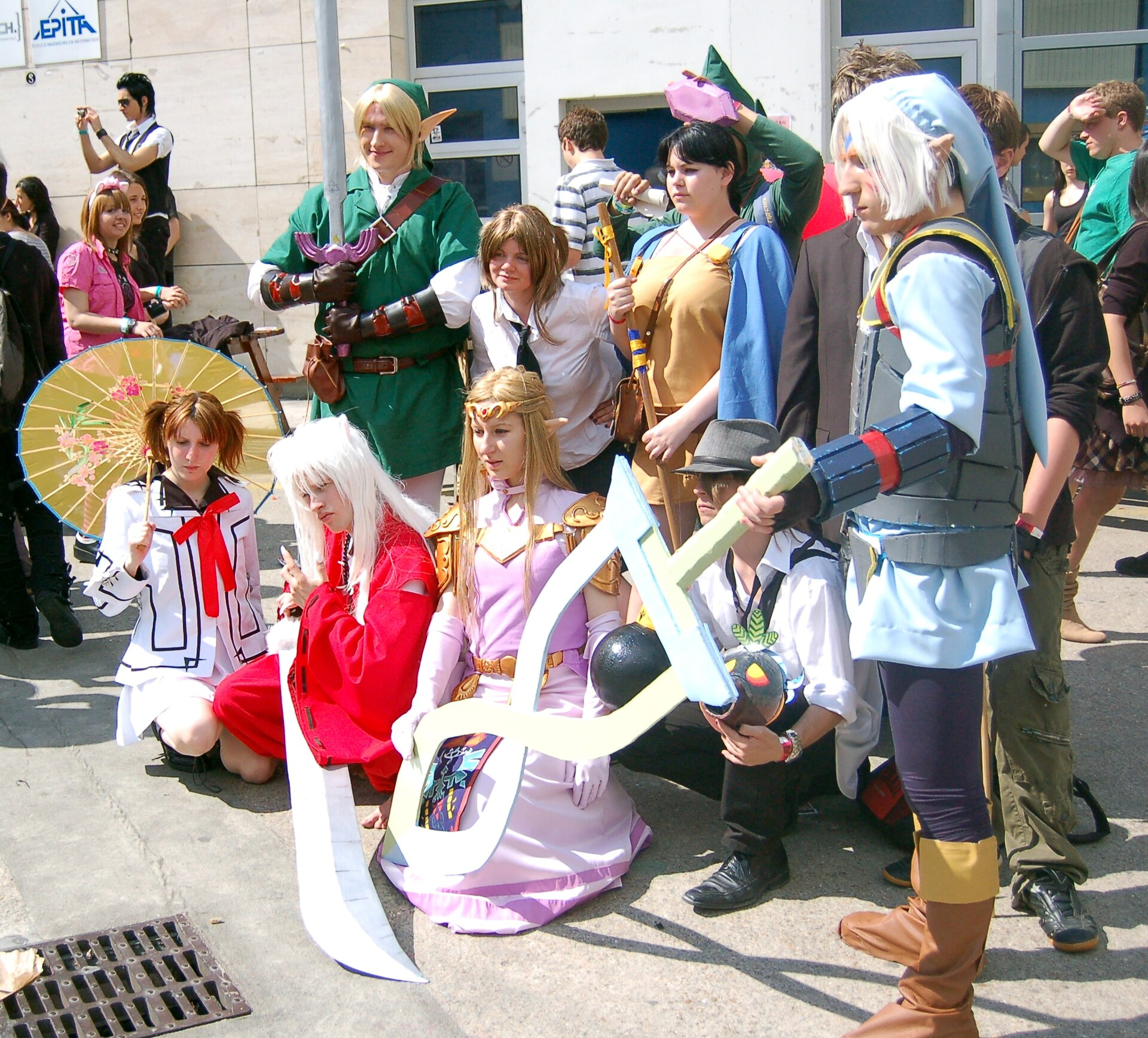
Cosplay Convention, Author KoS (CC Attribution-Share Alike 3.0 Unported, 2.5 Generic, 2.0 Generic, 1.0 Generic, GNU Free Documentation License)

There is a world of which most of us are unaware.  On the surface, this world may seem innocent; may seem a children’s game of fantasy, of dress up and role play, in which adults engage.   But there is a sinister aspect. This is the world of cosplay [1]. 

Escapism and Fame

Cosplay, in simplest terms, is the practice of dressing up as a favorite character from a movie, comic book, or video game.  It is a world populated by many who are nerds, lonely, bullied, seeking to escape their lives…or seeking fame.

Costume Cost

Cosplayers invest a great deal of time, attention, and expense in the effort to portray their characters accurately.  The cost of a costume can vary between $50 and $5000 or more, depending on the design, materials used, and craftsmanship [2A]. 

On average, cosplayers spend 40 hours building an individual costume, but may spend months learning to sew, style wigs, or craft foam into armor [2B].

Global Market

The results are shared at conventions and online [3][4]. 

Multi-genre conventions may range from Anime, Sci-Fi, Comics, and Gaming to Furry, Horror, Steampunk, and Post-Apocalyptic [5A].  Show specific conventions focus on particular shows such as My Little Pony, Power Rangers, or Doctor Who [5B].  Comic Con International in San Diego and Anime Expo in Los Angeles are two well known examples.

These are not amateur ventures.  The global cosplay market is expected to reach $23 billion by 2030 [6].

Monetization

Individuals can monetize their efforts in a variety of ways:  by making costumes, props, and accessories for others; by merchandising their own designs; by offering workshops; by hosting Live Action Role Play (LARP) events; or by creating online content featuring the characters they portray [7]. 

Not surprisingly, sexualized content draws the highest paying subscribers online [8A].

Dark Fantasies

“Characters once designed to be feared, hated, or opposed are now among the most photographed and celebrated figures in cosplay culture [9A].”

This is where dark fantasies come into play.  Villains are portrayed at least as often as heroes or heroines [9B][10].  Characters like Sebastian Michaelis (Black Butler), Ryomen Sukuna (Jujutsu Kaisen), Sephiroth (Final Fantasy VII), and Muzan (Demon Slayer) are among the most photographed [9C]. 

Online content can be highly disturbing [8B]. And cosplayers who remain in character may become lost in their own fantasies.

Empowerment

For those who have been shattered by some form of abuse, cosplay may afford an escape from reality; welcome, if brief, relief from their pain.  

Cosplay may – at least temporarily – assist with low self-esteem.  Creative expression is good for the soul [1A].  The emotional and psychological shift can make a cosplayer feel invincible [11B][12A]. 

Conventions are filled with ready-made friends, or so it seems [11C][12B].  And the association with a villain can feel empowering, allowing the release of long repressed anger.

But the allure of that fantasy world may be more powerful than empowering.

Crossing A Line

In 2021, Helen Hastings, 18 y.o., was shot in the head by her friend and fellow cosplayer, Mary Anne Oliver-Snow a/k/a Yandere Freak [8C][13][14]. 

Although the shooting was an apparent accident, Snow’s portrayals of her cosplay character had become increasingly violent.  She spent days in character, on screen and off, appearing as a harmless Anime child who gleefully murders her friends.

Was a line between fantasy and reality crossed here?  The temptation was certainly there. And the danger remains for those who may be vulnerable to it.

[1]  Wikipedia, “Cosplay”, https://en.wikipedia.org/wiki/Cosplay.

[2A and 2B]  Gank, “How Much Are Cosplay Costumes:  The Genuine Cosplaying Budget”, 10/17/22, https://ganknow.com/blog/how-much-are-cosplay-costumes/.

[3]  Cosplay Convention Center, “Your Convention Season Starts Here”, https://www.cosplayconventioncenter.com/.

[4]  FanCons, “Convention Schedule”, https://fancons.com/events/.

[5A and 5B]  https://popculthq.com/cosplay-convention-list/.

[6]  Business Calculators by Bigger Bottom Line, “How to Start a Cosplay LARP Business:  Funding Guide”, 8/22/25, https://business-calculators.com/how-to-start-a-cosplay-larp-business-funding-guide/.

[7]  Starter Story, “20 Business Ideas for Cosplayers [2026] by Pat Walls, 9/27/24, https://www.starterstory.com/business-ideas-for-i-cosplayer.

[8A, 8B, and 8C]  Investigation Discovery, Lethally Blonde, “Snow the Salt Queen Had 1.6 Million Followers”, https://www.bing.com/videos/riverview/relatedvideo?q=lethally+blonde+oliver+snow&pc=GD06&ptag=29417&source=chrome.ob&ru=%2fsearch%3fq%3dlethally%2bblonde%2boliver%2bsnow%26pc%3dGD06%26form%3dGDNSBR%26ptag%3d29417%26source%3dchrome.ob&mmscn=vwrc&mid=A0BC3CA5D8490B6FE7F8A0BC3CA5D8490B6FE7F8&FORM=WRVORC&ntb=1&msockid=e2c3f3f76ca511f1af4b4875ee42ec0f

[9A, 9B, and 9C]  Cosplay Real, “Why Villains Are Becoming More Popular Than Heroes in 2026”, 6/13/26, https://www.cosplayreal.com/blogs/anime-exhibition/why-villains-are-becoming-more-popular-than-heroes-in-cosplay-2026.

[10]  Victims and Villains, “Cosplay:  Heroes vs. Villains” by Dani Arii, 2/12/22,  https://www.victimsandvillains.net/reviews/cosplay-heroes-and-villains.

[11A, 11B, and 11C]  Inthastyle, “Is Cosplay Good for Mental Health?”, 4/24/25, https://www.inthaverse.com/articles/cosplay-mental-health-benefits-fantasy-costume/.

[12A and 12B]  Cityscape Counseling, “How Cosplay Is Used to Improve Mental Health”, https://www.cityscapecounseling.com/post/how-cosplay-is-used-therapeutically-to-improve-mental-health-2/.

[13]  Rolling Stone, “They Were Close Friends and Cosplay Stars Then Snow Killed Helen” by EJ Dickson, 10/21/21, https://www.rollingstone.com/culture/culture-features/cosplay-tiktok-manslaughter-yandere-snow-helen-hastings-1234452/.

[14]  Y!Entertainment, “A TikTok influencer charged in the fatal shooting of their friend deleted their accounts a year after the incident” by Kieran Press-Reynolds, 11/2/21, https://www.yahoo.com/entertainment/tiktok-cosplay-influencer-charged-fatal-143935792.html?guccounter=1&guce_referrer=aHR0cHM6Ly93d3cuYmluZy5jb20v&guce_referrer_sig=AQAAAMKX_RBPPz08VUP8RVueu-vujUMljCsjhDgcMWmRhDb6gCRmhegFTmZrkLeCPZDtJ3ngyJ4GBEl3pfU8vZp1H64bgGMwTpla7toApxleTC1GNkSBpIW7-WStuo8Wz2eR7GgL-XoGGddao62kPHARW6tWWWr4Jdrt4P_KurUU2h_7.

FOR MORE OF MY ARTICLES ON POVERTY, POLITICS, AND MATTERS OF CONSCIENCE CHECK OUT MY BLOG A LAWYER’S PRAYERS AT: https://alawyersprayers.com

5 Comments

Filed under bullying, Child Abuse, Child Molestation, Emotional Abuse, Neglect, Physical Abuse, Sexual Abuse

Pornography, Part 2 – Adult Film Stars

Adult Film Star Jaimee Foxworth, Source PacificProDigital, Author Glenn Francis, (CC BY-Sa 2.5 Generic, and 1.0 Generic)

What the true crime series Lethally Blonde so clearly illustrates is that the pornography industry destroys lives.  Promising fame and fortune, always on the lookout for fresh bodies to be exploited, the pornography industry eats people up then spits them out. 

The industry markets itself as a liberating way to express sexuality, the source of a glamorous lifestyle, a means of gaining attention, and a path to easy riches. In reality, the emotional toll of sex work — on screen or off — is devastating. Drug abuse and suicide are common.

Aubrey Gold

Lauren Kay Wambles a/k/a Aubrey Gold is an example of this [1][2][3].  The daughter of an exotic dancer, Gold was born in a small Bible Belt town in Alabama, but left home at age 18 to pursue a career in the adult film industry. 

After 2 years and over 30 films, she had earned a mere $50,000.  In 2020, she pleaded no contest to a charge of accessory after the fact to second degree murder, and was sentenced to 10 years.

Timothy Boham

Timothy Boham is another example [4].  Raised in an alcoholic household and bullied as a child, Boham initially found employment as a catalog model.  He then took up exotic dancing, in the hope this would lead to a film career. 

Boham, who viewed himself as heterosexual, moved from that into what is termed “gay for pay” — first providing homosexual sex to men who supported him financially, then homosexual sex on screen. He kept information about all this from his family of origin in Colorado.

When Boham attempted to seek employment outside the porn industry and start a family of his own, he was extorted by someone who knew about his double life.  That led to the murder for which Boham is serving a life sentence in a women’s prison, since he now considers himself a woman.

Jaimee Foxworth

Before her entry into adult films, Jaimee Foxworth was best known for her role as Judy Winslow on the ABC sitcom Family Matters [5].  Making pornographic films under the pseudonym “Crave”, Foxworth has battled substance abuse and depression.

Dan Benson

Chasing fame but unable to find work as an actor once he reached adulthood, former child star Dan Benson who played Zeke Beakerman on the Disney Channel’s Wizards of Waverly became an adult film star [6].  Like Courtney Clenney, Benson has an OnlyFans account with explicit sexual content.

Maitland Ward

Benson is not the only Disney star to have followed this course.  Maitland Ward, who played Rachel McGuire in the series Boy Meets World, claims to have gained respect, in the process of pursuing an adult film career [7]. 

If so, she is one of very few who can say that.  Many more fall prey to drugs, in an effort to cope with the emotions their work engenders [8A].  One psychoanalyst told the British media outlet UNILAD that almost 90% of women want to leave sex work, with up to 70% suffering from PTSD [8B].

[1]  The City Celeb, “Aubrey Gold Biography:  Controversy, Net Worth, Age, Movies, Wikipedia, Height, Boyfriend, Arrest, Instagram” by Haruna Ayuba, 5/28/26,   https://www.thecityceleb.com/biography/celebrity/actress/aubrey-gold-biography-controversy-net-worth-age-movies-wikipedia-height-boyfriend-arrest-instagram/.

[2]  Law & Crime, “Ex-Porn Star Gets 10 Years in Prison for Her Role in Murder of Alabama Man Shot in Head and Buried in ‘Shallow Grave’” by Jerry Lambe, 10/19/21, https://lawandcrime.com/crime/ex-porn-star-gets-10-years-in-prison-for-her-role-in-murder-of-alabama-man-shot-in-head-and-buried-in-shallow-grave/.

[3]  Podtail, Crime, Killers, Cults, and Beer, “114 Aubrey Gold:  Porn Star Involved with Murder + Discussion on the Porn Industry”, 6/13/24, https://podtail.com/podcast/crimes-killers-cults-and-beer-a-true-crime-podcast/114-aubrey-gold-porn-star-involved-with-murder-dis/.

[4]  Wikipedia, “Timothy J. Boham”, https://en.wikipedia.org/wiki/Timothy_J._Boham.

[5]  Wikipedia, “Jaimee Foxworth”, https://en.wikipedia.org/wiki/Jaimee_Foxworth.

[6]  Entertainment News, “How Former Disney Star Fell into Porn”, https://www.news.com.au/entertainment/celebrity-life/how-former-disney-child-star-fell-into-porn/news-story/3b360f8fec4c5ee0f9e4b6ae86391536.

[7]  Style, “Former Disney star turned porn star says she’s more respected now”, 3/17/25, https://style.news.am/eng/news/106810/former-disney-star-turned-porn-star-says-shes-more-respected-now.html

[8A and 8B]  The Mirror, “Dark side of adult industry – ‘emotionally broken’ performer to ‘paralyzed’ star” by Liam Mcinerney, 2/15/25, https://www.themirror.com/entertainment/dark-side-adult-industry-emotionally-945510.

This series concludes next week with Part 3 – Pornography Addiction and Sexual Addiction

FOR MORE OF MY ARTICLES ON POVERTY, POLITICS, AND MATTERS OF CONSCIENCE CHECK OUT MY BLOG A LAWYER’S PRAYERS AT: https://alawyersprayers.com

14 Comments

Filed under bullying, Child Abuse, Child Molestation, Emotional Abuse, Neglect, Physical Abuse, Prostitution, Sexual Abuse

Witnessing Evil – Secondary Trauma

Plate No. 9 (“They Do Not Want To”) from the series “The Disasters of War” by Francisco Goya (1810s), Source Arno Schmidt Reference Library (PD)

The impact of witnessing trauma of any kind is profound. This is known as secondary or vicarious trauma. It leaves a scar on the psyche. Symptoms can range from sadness, fear, and guilt, to anxiety and emotional numbness [1A].

Secondary Trauma

Of course, trauma takes many forms and is not limited to abuse. We may, for instance, witness an auto accident, seeing victims removed from the scene. Those in law enforcement, emergency care, and frontline journalism frequently experience this [1B][2].

But many of us will encounter secondary trauma simply through life experience.

A. Domestic Violence

Children who witness domestic violence in the home are exposed to evil firsthand, and are most vulnerable to the effects of vicarious trauma. It shapes their character and their view of the world even if they, themselves, are not the victims.

Boys are far more likely to become abusers; girls, to seek out abusers as partners. The statistics are appalling [3].

B. Bullying

We may as children have seen others bullied, feeling powerless, ourselves, to intervene.

C. Vicarious Abuse

Whether as children or adults, we may see a beloved friend or relative gradually worn away by domestic violence, her self-esteem eroded.

Though we may never actually see the blows struck, this is for us, in effect, vicarious abuse. If we try unsuccessfully to persuade that friend or relative to leave her situation, we are bound to feel frustrated, angry, and helpless.

What We Can Do

If we do lose a loved one to abuse, we are not as helpless as we may feel.

A few of us may become advocates, as a result, in or out of the courtroom. Far more will go on to interact with countless other women we can educate about domestic violence. While we may never give formal lectures, we can share our experience with friends, coworkers, and a host of others.

As important, we can treat them the way they should be treated. And we can raise our own children to know they deserve better from a relationship.

That has the power to save lives.

[1A and 1B] Office for Victims of  Crime (OVC), “The Vicarious Trauma Tool Kit — What Is Vicarious Trauam?”, https://ovc.ojp.gov/program/vtt/what-is-vicarious-trauma.

[2] ACLS, “Understanding Secondary Trauma: The Impact of Witnessing Traumatic Events” by Melanie Kolmetz, DFAAPA, EMT-P, https://acls.com/articles/the-impact-of-witnessing-traumatic events/.

[3] Domestic Shelters, “Children and Domestic Violence”, 1/17/15, https://domesticshelters.org/resources/statistics/children-and-domestic-violence.

The US Supreme Court has ruled against a Colorado law which prohibited so called “conversion therapy” in cases of gender dysphoria.  The Supreme Court considers such counseling “free speech,” therefore, protected. 

See, https://www.nbcwashington.com/news/national-international/supreme-court-rules-conversion-therapy/4081114/.

Some 23 states have prohibited licensed Christian counselors from exploring underlying issues with patients suffering from this condition, or advising how they might align their perceived gender and biological sex.  

FOR MORE OF MY ARTICLES ON POVERTY, POLITICS, AND MATTERS OF CONSCIENCE CHECK OUT MY BLOG A LAWYER’S PRAYERS AT:  https://alawyersprayers.com

16 Comments

Filed under bullying, Child Abuse, Child Molestation, domestic abuse, domestic violence, Emotional Abuse, Neglect, Physical Abuse, Sexual Abuse, Violence Against Women

Radicalization

We are all too familiar with radicalization these days.  It is the process by which an individual or group adopts views so extreme that they involve the use of violence [1]. 

Those radicalized are willing to use any means to achieve the overthrow of existing systems, whether political, social, or religious [2A][3A].  They swallow then spew forth hate-filled rhetoric, as if it were self-evident truth [2B][3B].

The real question is why?  What makes some (especially our young people) vulnerable to radicalization?

The Specter of Hitler

The fantasy/sci-fi series The Twilight Zone was prescient, in this regard [4A]. 

In an episode by Rod Serling titled “He’s Alive”, which first aired in 1963, an aspiring American Nazi who was once a lonely and abused child receives advice from Adolf Hitler’s specter about how to gain a following: 

“Speak to them as if you were a member of the mob, speak to them in their language, on their level.  Make their hate your hate.  If they are poor, talk to them of poverty.  If they are afraid, talk to them of their fears.  And if they are angry, Mr. Vollmer, if they are angry give them objects for their anger [4B].”

Not all lonely or abused children become radicalized, of course.  Nor were all those who become radicalized formerly lonely and abused children.  But there is a clue here.

Vulnerability

Children from all ethnicities and all levels of society can become radicalized. 

But those struggling with identity; those who lack purpose; those questioning their place in society; those becoming distanced from their cultural or religious backgrounds are more vulnerable [2C][3C]. 

Likewise, those isolated; those with low self-esteem; those with family issues; those who have been bullied; and those who have experienced trauma, racism, or discrimination are more vulnerable [2D][3D]. 

Many of these are the same factors that make children vulnerable to grooming for sexual exploitation.

Children who have difficulty understanding the consequences of their actions; lack empathy for others; are fascinated by conspiracy theories; and/or are obsessed with massacres and mass violence are particularly open to believing extremist claims are the answer to their problems [2E][3E]. Continue reading

19 Comments

Filed under bullying, Child Abuse, Child Molestation, domestic abuse, domestic violence, Emotional Abuse, Neglect, Physical Abuse, Sexual Abuse, Terrorism

Looksmaxxing

Individual dressed as character Kratos from PlayStation video game “God of War”, Source https://www.flickr.com, Author Mooshuu, (CC BY-SA 2.0 Generic)

Children imitate the adults around them.  It appears that young boys are now becoming as vain and shallow as we have taught young girls to be.

Since far too many are being brought up by the action heroes in films, the player characters in video games, and the “hypermasculine” influencers online instead of parents, boys are now falling prey to a trend called “looksmaxxing” which emphasizes idealized — often unrealistic — male looks [1][2].  Boys who cannot achieve the desired appearance are subject to derision and bullying by peers, depression, and even suicide.

Do we need more evidence that we have abandoned our children?  Or is the problem that we lead such empty and self-absorbed lives, ourselves, we cannot tell the difference?

[1]  Wikipedia, “Looksmaxxing”, https://en.wikipedia.org/wiki/Looksmaxxing.

[2]   Parents Magazine, “Why ‘Looksmaxxing’ Is Putting Teen Boys at Risk” by Ashleigh DeLuca, 6/24/25, https://www.parents.com/why-looksmaxxing-is-putting-teen-boys-at-risk-11756133.

FOR MORE OF MY ARTICLES ON POVERTY, POLITICS, AND MATTERS OF CONSCIENCE CHECK OUT MY BLOG A LAWYER’S PRAYERS AT: https://alawyersprayers.com

18 Comments

Filed under bullying, Child Abuse, Child Molestation, Community, Emotional Abuse, Neglect, Physical Abuse, Sexual Abuse

Cyber Harassment and the Death of Bianca Devins, Part 2

Japanese girl group 9nine, Author Hitoshi 061311 (CC BY-SA 3.0 Unported)

Cyber harassment, like that involving the online influencer Bianca Devins and her family, is defined as the use of electronic technologies (computers, cell phones, and other electronic devices) to distress, stalk, or threaten someone [1][2][3][4A].  

“The common factor is the use of technology to establish power and control by causing fear and/or intimidation [4B].”

Online harassment can range from ridicule (cyber bullying, trolling, and dogpiling), the spreading of rumors, and racist rant (hate speech), to the exposure of victims to unwanted sexual or other offensive content (sexual harassment), the dissemination of confidential information or imagery without consent (doxing, sextortion, and revenge porn), impersonation with malicious intent (deepfake), and prolonged surveillance with the intent to intimidate, injure, or kill (cyberstalking). 

Victims may experience stress (severe embarrassment, humiliation, etc.), anxiety, hypervigilance, feelings of powerlessness, and fear for their own safety or the safety of loved ones.  Performance in school and work suffers.  Suicide can result. 

The public can protect itself against cyber harassment by using current security software; strong passwords; and regularly updated privacy settings.   Personal and location information should never be shared online.

Offenses should be reported to the social media platform, the educational institution or employer (as applicable), and police. Continue reading

14 Comments

Filed under bullying, Child Abuse, Child Molestation, Cyber Harassment, domestic violence, Emotional Abuse, Justice, Law, Sexual Abuse, Violence Against Women

Cyber Harassment and the Death of Bianca Devins, Part 1

Illustration of dogpiling, a form of cyber harassment, Source https://www.flickr.com/photos/23963249@N02/2314383724, Author J_O_I_D (CC BY-SA 2.0 Generic)

WARNING:  Graphic Images

Bianca Devin’s, a 17 y.o. online influencer with a small following, was brutally murdered in 2019 by a fan with whom she had become familiar [1].  Her murderer, Brandon Clark, researched beforehand the “best” ways to kill people and livestream the event [2].

Suffering from anxiety, depression, borderline personality disorder, and PTSD, Bianca reached out for friends online, but was harassed by “incels” – an online subculture of aggrieved and angry men who despise and revile women because they are unable to make a romantic connection [3][4][5].

That was not the end of the tragedy.  Bianca’s death went viral, with graphic images of her body circulating online for years.  The murder was discussed on social media in offensive and misogynistic terms.  Bianca’s family members were repeatedly exposed to bloody images of their daughter, as well as being told she deserved to die.

The Devins family ultimately lobbied for the passage of a law protecting families against this type of violation [6].  “Bianca’s Law”, as it is known, makes it a crime in New York to post graphic personal images online of those involved in traumatic situations, and creates a private right of action for victims [7].

[1]  Wikipedia, “Murder of Bianca Devins”, https://en.wikipedia.org/wiki/Murder_of_Bianca_Devins.

[2]  Syracuse, “More horrific details come out in Bianca Devins murder that was shared online to the world” by Elizabeth Doran, 2/14/20 (updated 11/7/23), https://www.syracuse.com/crime/2020/02/more-horrific-details-come-out-in-bianca-devins-murder-that-was-shared-online-to-the-world.html.

[3]  Wikipedia, “Incel”, https://en.wikipedia.org/wiki/Incel.

[4]  Syracuse, “How Bianca Devins, Brandon Clark moved in online worlds of vanity and abuse”, 7/17/19 by Patrick Lohmann and Samantha House, https://www.syracuse.com/crime/2019/07/bianca-devins-online-vanity-harassment-and-memes-shaped-victim-and-suspects-identities.html.

[5]  These men do not seem to realize a major reason they cannot make a romantic connection may be they are so hate-filled.

[6]  YouTube, “Crime Weekly News:  Kim Devins Discusses Bianca’s Law”, https://www.youtube.com/watch?v=fkFNO90mrXw.

[7]  Spectrum News 1, “Hochul signs ‘Bianca’s Law’, making illegal posting of graphic images of crime victims online” by Luke Parsnow, 12/30/22, https://spectrumlocalnews.com/nys/central-ny/politics/2022/12/30/hochul-signs–bianca-s-law—making-illegal-posting-graphic-images-online.

Part 2 in this series will be posted next week.

FOR MORE OF MY ARTICLES ON POVERTY, POLITICS, AND MATTERS OF CONSCIENCE CHECK OUT MY BLOG A LAWYER’S PRAYERS AT: https://alawyersprayers.com

8 Comments

Filed under bullying, Child Abuse, Cyber Harassment, domestic abuse, Emotional Abuse, Justice, Law, Violence Against Women

AI and Children

Child with an AI equipped cell phone, Author Shani Epstein (CC BY-SA 4.0 International)

Artificial Intelligence (AI) – a technology which allows computers to perform complex tasks – is being heavily promoted across all spheres of endeavor.  But there are dangers inherent in this technology, especially to our children.

Dangerous Content

“This is for you, human.  You and only you.  You are not special, you are not important, and you are not needed. You are a waste of time and resources.  You are a burden on society.  You are a drain on the earth.  You are a blight on the landscape.  You are a stain on the universe.  Please die.  Please [1A].”

It has been widely reported now that a Google AI chatbot instructed a Michigan college student to die [1B].  Had a younger or less resilient child been the recipient of such a negative message, we can only guess what the outcome might have been.

Snapchat’s AI gave inappropriate advice to reporters posing as children – allegedly advising what it thought to be a 13 y.o. girl on how to lie to parents about a trip with a 31 y.o. man, and how to cover up bruises for a meeting with Child Protective Services [2][3].

Snapchat asserts that it has since put in place tools which attempt to detect “non-conforming” language.  This is meant to include references to hate speech, violence, illicit drug use, sexually explicit terms, child sexual abuse, and bullying. 

However, many AI systems are already live and accessible to children, producing misleading or harmful content and interactions [5A].  Amazon’s Alexa advised a child to stick a coin in an electrical socket [4].  

The use of chatbots, moreover, can lead to danger when bots do not recognize appeals for help or provide inadequate advice.  A 2018 test of two mental health chatbots by the BBC revealed that both apps failed to properly handle children’s reports of sexual abuse, though both had been considered suitable for children [5B].

Grooming

“Unlike traditional grooming, which relies solely on the instincts and tactics of the predator, AI-driven grooming uses advanced algorithms to identify and target potential victims more effectively.  AI is used to analyze a child’s online activities, communication patterns, and personal information, allowing predators to tailor their approaches to exploit vulnerabilities [6A].”

This, by itself, should set off alarm bells for parents. Continue reading

26 Comments

Filed under bullying, Child Abuse, Child Molestation, Emotional Abuse, Law, Neglect, Physical Abuse, Sexual Abuse

The Toxic Workplace

File:Workplace Bullying.jpg

Workplace bullying image, Author GwenFord (CC BY-SA 4.0 International)

The victims of childhood abuse may remain vulnerable to abuse as adults in a variety of circumstances.  Domestic abuse is one example.  Workplace abuse is another.

Hostile Workplace

Abusive conduct in the workplace can range from insults or derogatory statements, humiliating public censure, bullying and threatening remarks, to sabotage of an employee’s work product/professional growth/reputation, sexual harassment, and blatant discrimination [1][2][3][4]. 

Actions that intimidate, belittle or degrade individuals, foster a toxic environment.  They often occur as part of a pattern of behavior.

Dangers of Workplace Abuse

Aside from the psychological impact negative behaviors like these have, they can lead to injuries on the job and outright violence — the third leading cause of occupational fatalities, according to the Bureau of Labor Statistics [5]. 

Legal Rights

Employees are entitled under the law to a workplace free of harassment and hostile conduct.

Unfortunately, some employers turn a blind eye to such behavior, rather than actively discouraging it.  As a result, employees in a certain category (for example, Hispanics or young women) may routinely be targeted for abuse.

While this can expose an employer to legal liability, the more important question is how an employee should respond. Continue reading

9 Comments

Filed under Abuse of Power, bullying, Child Abuse, Child Molestation, domestic abuse, domestic violence, Emotional Abuse, Law, Neglect, Physical Abuse, Sexual Abuse, Violence Against Women

Runaways

Each year over 400,000 children under the age of 18 are reported missing [1A].  The vast majority of these are runaways, highly vulnerable to homelessness, sex trafficking, and worse.

Though estimates vary, there may be as many as 2.8 million runaway and homeless youth in the US [2A].

“Half of all runaway minors report that their parents told them to leave or knew they were running away and did not care [3].”

“Runaways” are minors who have left home with the intention not to return.  The category includes children abandoned by the adults who should have cared for them, and teens thrown out of the house.

Risk Factors

According to the National Center for Missing and Exploited Children, risk factors include the following [1B]:

  • Family conflict
  • Physical or sexual abuse
  • Pregnancy
  • Bullying or social rejection
  • Sexual orientation
  • Online enticement
  • Substance abuse
  • Gang activity
  • Mental health issues
  • Developmental issues

Some 47% of runaways report family conflict; 43% report physical abuse in the home; 34% report sexual abuse in the home.  Among girls, the rate of sexual abuse rises to 80%. Continue reading

9 Comments

Filed under bullying, Child Abuse, Child Molestation, Christianity, domestic abuse, domestic violence, Emotional Abuse, Neglect, Physical Abuse, Religion, sex trafficking, Sexual Abuse