Neon signs in Kabukicho, a “red light” district in Shinjuko, Tokyo, Author Basile Morin (CC BY-SA 4.0 International)
Domestic violence is not solely a Western phenomenon. As of June 2017, there were 72,455 cases reported in Japan [1A]. That set a new record. However, only 2.2% of the victims of spousal abuse there actually contact police.
A Private Matter
Japanese law does allow courts to issue restraining orders [2]. However, domestic violence is largely viewed as a private matter.
In one survey, 58.2% of the 650 victims injured did not feel their problem warranted police help [1B]. Another 34.3% did not seek police intervention because they believed themselves partly at fault, while 22.3% felt police intervention would be pointless. Many did not recognize that they had been victimized. Continue reading →
As we mature into adulthood, we gain not only physical and emotional strength, but power over our lives. This opens up new opportunities, and options never available to us before.
Distinguishing between the feeling of vulnerability and actual vulnerability becomes crucial.
“…Do I need to better protect myself from a danger in the environment? Or do I need to muster the courage to face something that isn’t going to kill me and that can help me grow stronger and more confident? Often we can conflate the two…Once we determine what our vulnerable feelings are about, we can thus make a decision to protect ourselves from real danger, or face an opportunity for personal growth by facing real feelings, emotions and needs…”
In an effort to protect ourselves, we may be tempted to erect emotional barriers, barricades against further abuse. This is only natural. To the extent that we re-establish safe boundaries, it is all to the good.
But we must remember that barricades can become traps for those inside. Inadvertently, we may cut ourselves off from the opportunities now accessible to us, and the very relationships which might help us to heal. Continue reading →
Enchanted Rose from Disney’s “Beauty and the Beast” (Disney Wiki/Creative Commons), courtesy of Smithsonian Magazine
In the Disney version of the fairytale “Beauty and the Beast”, an enchanted rose is shielded against the elements by a glass dome. Though sheltered and hidden away, the rose remains fragile and continues to lose its petals. In so doing, it presents a perfect picture of vulnerability.
The victims of child abuse are all too familiar with vulnerability. We were preyed upon at our most vulnerable – at a time when we should have been protected and nurtured.
It is only reasonable that we retain a sense of fragility, along with the recollection of our very real abuse. This is an echo of the intense fear we experienced as children.
Feeling Vulnerable v. Being Vulnerable
But there is a difference between feeling vulnerable, and being vulnerable. To save our own lives, we must learn to distinguish between the two.
“…I might feel vulnerable whilst speaking of things I have kept hidden for a long time, whilst there is no actual threat to my existence. By revealing myself I reveal truths that I may not yet have fully accepted in myself. I may in fact be safe, but the experience of exposure feels like I am in danger….
By contrast, I might actually be vulnerable standing out on the ledge of a forty-storey building, where the merest breeze might shift my balance sufficiently to result in a terrifying death a few seconds later.”
“If you grew up in an alcoholic home, you’re probably familiar with the feeling of never knowing what to expect from one day to the next. When one or both parents struggle with addiction, the home environment is predictably unpredictable. Argument, inconsistency, unreliability, and chaos tend to run rampant…
Children of alcoholics often have to deny their feelings of sadness, fear, and anger in order to survive. And since unresolved feelings will always surface eventually, they often manifest during adulthood. The advantage to recognizing this is that you’re an adult now and no longer a helpless child…”
Poverty in Chicago, IL (1974), Author/Source Danny Lyon for National Archive and Records Administration (NARA Record 1709309; NAID 555950), Original Source Environmental Protection Agency (PD as work product of federal govt.)
“Speak up for those who cannot speak for themselves, for the rights of all who are destitute. Speak up and judge fairly; defend the rights of the poor and needy” (Prov. 31: 8-9 NIV).
Poverty and abuse have much in common.
The traumatic and repetitive nature of child abuse, and the huge imbalance of power between adult and child, can leave profound psychological scars on victims – scars that may include PTSD, depression, and anxiety to name a few.
Often, victims are left with a fear of authority as adults. The impact of poverty is surprisingly similar.
Fear of Authority
Their hopes chronically dashed and their pleas for justice routinely ignored, the poor frequently assume further effort on their part will be futile.
People who have been repeatedly downtrodden – deprived of basic necessities, cheated of their rights by abusive landlords and the host of other scam artists who prey on the poor – will forget that they have a voice, and throw in the towel (already exhausted). Continue reading →
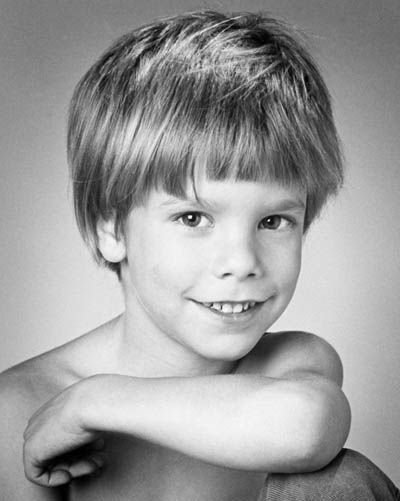
Etan Patz, Author Stanley K. Patz (CC BY- SA 3.0 Unported)
In April of last year, Operation Empty Nest (an undertaking by the U.S. Marshals Service, Southeast Regional Fugitive Task Force, Georgia Bureau of Investigation, and National Center for Missing & Exploited Children) achieved a small miracle [1][2].
Led by Gerald “Jerry” Dysart of the US Marshals Service/Missing Child Unit, this joint federal, state, and local law enforcement operation succeeded in rescuing 16 child victims of physical and sexual abuse, sex trafficking, and exploitation. Victims were between the ages of 4 and 17.
In addition to the 16 who had been reported missing, another 11 were found alive. Continue reading →
While the coronavirus has disrupted the normal school year, for some of our children this may actually have come as a relief.
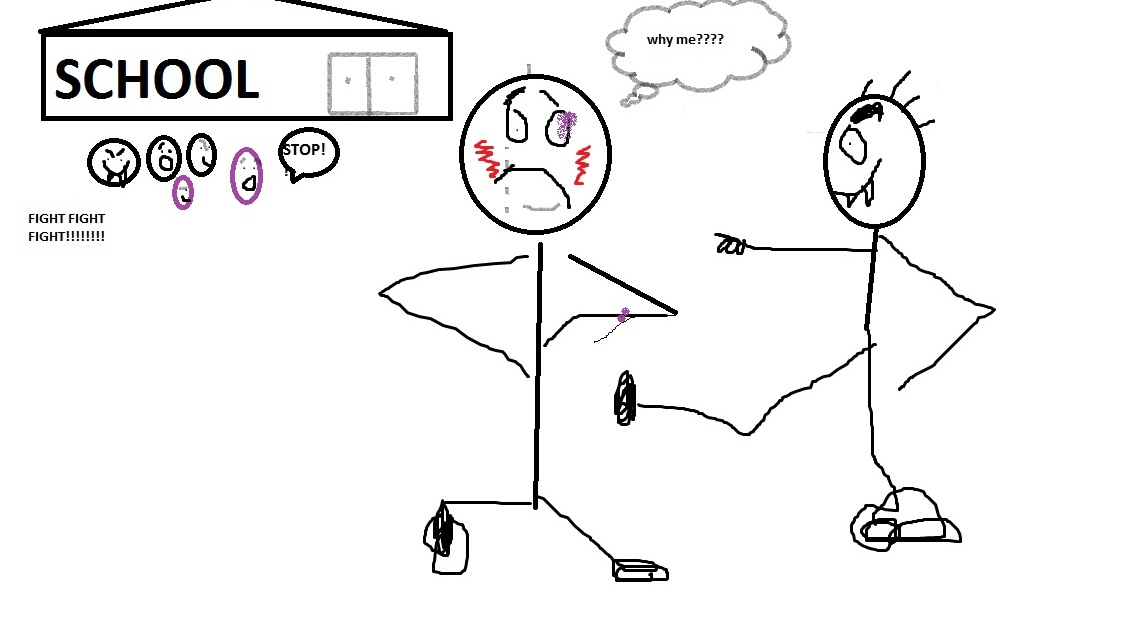
“In American schools, bullying is like the dark cousin to prom, student elections, or football practice: Maybe you weren’t involved, but you knew that someone, somewhere was. Five years ago, President Obama spoke against this inevitability at the White House Conference on Bullying Prevention. ‘With big ears and the name that I have, I wasn’t immune. I didn’t emerge unscathed,’ he said. ‘But because it’s something that happens a lot, and it’s something that’s always been around, sometimes we’ve turned a blind eye to the problem.”’
We know that we shouldn’t turn a blind eye: Research shows that bullying is corrosive to children’s mental health and well-being, with consequences ranging from trouble sleeping and skipping school to psychiatric problems, such as depression or psychosis, self-harm, and suicide.
But the damage doesn’t stop there. You can’t just close the door on these experiences, says Ellen Walser deLara, a family therapist and professor of social work at Syracuse University, who has interviewed more than 800 people age 18 to 65 about the lasting effects of bullying…”
Baby birds in nest, Author Tony Alter, Newport News, USA (CC BY-SA 2.0 Generic)
“The world breaks everyone and afterward many are strong at the broken places.”
-Ernest Hemingway, A Farewell to Arms
Though the Childhood Experience Study (ACES) identifies overall exposure to stress, it cannot assess resilience, the capacity of individuals to respond to stress [1A].
Resilience Factors
“A decent self-image comes from somebody paying attention to you as a person and respecting everything you do.”
-Berry Brazleton, world-renowned pediatrician and child development expert [1B]
“At the top of the list is always the presence of some kind of supportive relationship.”
-Jack Shonkoff, Director, Harvard Center on the Developing Child [1C]
Our capacity to respond to adversity varies widely [2]. Some of that capacity is genetic. Some of it involves choice – the determination to overcome obstacles. Some of it involves energy, effort, and tenacity.
Always at the heart of resilience, however, lies a caring relationship [1D]. Children abused by a parent may have a loving grandparent for a short while or a sibling who shares their suffering. That may be enough to keep them going. Continue reading →
“There are children who like dandelions can thrive almost in any environment…They do well even in conditions of stress and adversity. There are other children who are like orchids, who are extremely sensitive…Under the right nurturing conditions they thrive…But under conditions of adversity…they wilt and they don’t do well.”
-Dr. W. Thomas Boyce, Division of Developmental Medicine, UCSF [1A]
In the wake of World War II, 300 children who had survived the Holocaust were brought to an English estate for rehabilitation [2][3]. Children who had been torn from their parents’ arms; children who had been imprisoned, beaten, and starved; children who had witnessed murder and atrocities were taught to be human again.
In our inner cities, single mothers struggle to raise children in poverty. Children under the age of ten are killed in drive-by shootings. Children already victimized are further abused in foster care, their parents lost to addiction.
How do we survive tragedy and evil? Why are some broken by circumstances, while others endure? Continue reading →
“Well, I was there and I saw what you did.
I saw it with my own two eyes.
So you can wipe off the grin. I know where you’ve been.
It’s all been a pack of lies…
Well, I remember. I remember, don’t worry.
How could I ever forget?…
The hurt doesn’t show; but the pain still grows.
It’s no stranger to you or me.”
– In the Air Tonight by Phil Collins
Justice demands that predators – those who harm children for their own pleasure – be punished for their crimes, and prevented from harming additional victims. But the justice system necessarily has limitations.
Proof can be difficult to come by. A child may not survive the abuse or may not be able to speak of a violation for years. Parents may choose that their child not undergo the rigors of a trial. Predators may be institutionally shielded (as by the Roman Catholic Church), may relocate, assume a new identity, or even pass away, in the intervening years. Supportive evidence can be lost.
This does NOT warrant vigilantism. Whatever the temptation, we cannot ally with evil. The end does not justify the means.
What then is the fate of pedophiles? Recidivism is a grave concern. There are predators whose conscience is seared to such an extent that it no longer functions. One study, however, found that suicide among non-violent child sex offenders is 183 times more common than in the general public [1]. There are, of course, victims who commit suicide, as well.
In the end, our fate is not dependent on the fate of the predator. That bears repeating. Justice matters. But our fate is not dependent on the fate of the predator.
Whatever the outcome in a particular case, we can trust that there will be perfect justice in the next world, if not in this. “He is the Rock, His work is perfect; for all His ways are justice…” (Deut. 32: 4).
—
[1] National Center for Biotechnology Information (NCBI), US National Library of Medicine, National Institutes of Health, “Differential suicide rates in typologies of child sex offenders in a 6-year consecutive cohort of male suicides” by C. Pritchard and E. King, http://www.ncbi.nlm.nih.gov/pubmed/16040578.
Originally posted 3/2/14
FOR MORE OF MY ARTICLES ON POVERTY, POLITICS, AND MATTERS OF CONSCIENCE CHECK OUT MY BLOG A LAWYER’S PRAYERS AT: https://alawyersprayers.com


:focal(541x183:542x184)/https://public-media.si-cdn.com/filer/c4/a7/c4a78bd1-80b6-40ff-b530-078b46b8a265/batb2017textlesspostercropweb.jpg)
:max_bytes(150000):strip_icc():format(webp)/common-traits-of-adult-children-of-alcoholics-66557-01-57f5c01af0fc48458710648f985191bc.png)