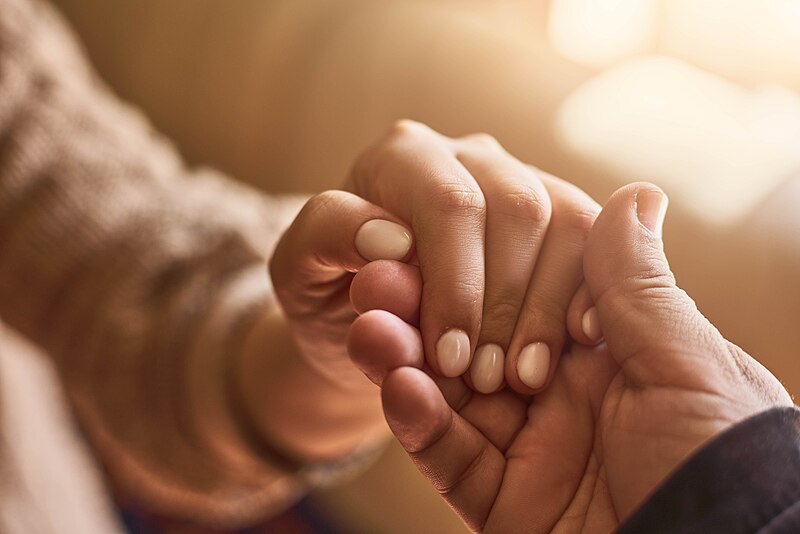
“Ich Liebe Dich (I Love You) – Broken Heart”, Source https://www.flickr.com/photos/donaldjudge/52226706001/, Author Donald Judge, (Creative Commons Attribution 2.0 Generic)
You love someone desperately. Being around the beloved is a joy, whether the interaction is romantic or not. You live on hope that a relationship will develop. Only the object of your affection does not return your love, and may not even be aware of it.
Unrequited love is the experience of strong romantic feelings that go unreciprocated [1A].
This one-sided affection leads to intense sadness, feelings of rejection, and emotional exhaustion – not surprising, since the brain processes romantic rejection similarly to physical pain [2A].
Roots of Unrequited Love
The victims of childhood abuse or neglect may be particularly vulnerable to unrequited love [3A][4A].
Abuse (whether emotional, physical, or sexual) and neglect leave us with the haunting feeling that we are damaged and unworthy of love. We idealize love, and are happy with the smallest crumbs of affection.
Attachment Styles
As a result, some of us develop an “avoidant” attachment style. Unconsciously, we pursue emotionally distant partners.
This allows us the illusion of a relationship with all its emotional highs and lows while, at the same time, preserving our control, letting us avoid vulnerability, and reinforcing our belief that we are unlovable [1B][3B].
In a genuine relationship, our flaws would be visible. The prospect of that is too frightening.
Others develop an “anxious” or needy attachment style. We may fixate on unavailable partners, but interpret unresponsiveness as a challenge to win affection [1C][3C][7]. We simply try harder.
This keeps us attached to narcissists who dole out affection with an eye dropper [3D]. In fact, we seek out partners that make us feel needed (ignoring the red flags that should send us running for safety).
The approach can, also, undermine healthy relationships. Any slight by a partner is immediately interpreted as a lack of concern or outright abandonment. No reassurance is sufficient, and the relationship eventually fails.
Impact of Unrequited Love
Unreciprocated affection can lower our self-esteem, causing us to question our desirability and value [1D][4B]. We replay conversations and events endlessly, in the fruitless search for clues to securing the love we so desire [2B].
Over time, unrequited love can lead to negative self-talk, self-doubt, and even depression [5A]. It may, also, impede forming meaningful connections with available partners [6A]. We may not even recognize that they are there.
Link to Obsession
As mentioned, childhood abuse or neglect can manifest as the maladaptive attempt to regulate our fear of abandonment and sense of unworthiness by clinging to a disinterested romantic partner [7]. The degree to which we cling to the illusion of a relationship actually reflects the emptiness inside us.
Anger and resentment can, also, emerge when our admiration for the beloved is frustrated [2C].
This is the emotional turmoil that is obsession.
Healing from Unrequited Love
Recovering from unrequited love is definitely possible. Distance from the beloved can be a major step in the direction of healing [3E][5B][6B]. This should be coupled with self-care, and supportive relationships. Professional counseling can help us gain perspective.
Our challenge is to exchange idealization for a realistic understanding of love. Neither we nor our partner will ever be perfect. We do not have to be to deserve love.
—
[1A through 1D] Science News Today, “Unrequited Love: The Science, Psychology, and Human Experience of Loving Without Return”, 11/4/25, https://www.sciencenewstoday.org/unrequited-love-the-science-psychology-and-human-experience-of-loving-without-return.
[2A, 2B, and 2C] PsyCix, “The Psychological Effects of Unrequited Love”, 11/24/25, https://www.psycix.com/article/the-psychological-effects-of-unrequited-love.
[3A through 3E] PsychCentral, “How Childhood Emotional Neglect Impacts Adult Relationships and How to Heal” by Hope Gillette, 7/13/22, https://psychcentral.com/relationships/childhood-emotional-neglect-romantic-relationships.
[4A and 4B] Brainz Magazine, “Why Childhood Sexual Abuse Could Be Affecting Your Love Life Now” by Sandra Cohen PhD, 2/19/25, https://www.brainzmagazine.com/post/why-childhood-sexual-abuse-could-be-affecting-your-love-life-now.
[5A and 5B] Marriage, “7 Possible Effects of Unrequited Love & What You Can Do” by Dylan Banks, 3/25/26, https://www.marriage.com/advice/self-love/effects-of-unrequited-love/.
[6A and 6B] Psychreg, “Unrequited Love Can Harm Your Mental Health But There Are Ways to Heal” by Dino Relojo, 11/7/25, https://www.psychreg.org/unrequited-love-can-harm-your-mental-health-but-there-are-ways-heal/.
[7] Psychology Today, “How Childhood Neglect Can Turn Love into Obsession” by Annie Tanasugarn, 12/24/25, https://www.psychologytoday.com/us/blog/understanding-ptsd/202512/how-childhood-neglect-can-turn-love-into-obsession.
FOR MORE OF MY ARTICLES ON POVERTY, POLITICS, AND MATTERS OF CONSCIENCE CHECK OUT MY BLOG A LAWYER’S PRAYERS AT: https://alawyersprayers.com