Tag Archives: bulimia

The Rose Garden, Chapter 16 – The Weight of Sorrow

File:Clothing Rack of Jeans.jpg

Clothing rack of women’s jeans, Source https://www.publicdomainpictures.net, Author Peter Griffin, (CC0 1.0 Universal Public Domain Dedication)

Man shall not live by bread alone, but by every word that proceeds from the mouth of God” (Matt. 4: 4).

It is late in the season.  I wander from one clothing rack to another, searching for my size.  The coats have been picked through.  There are few remaining.  It is unlikely I will be able to find a coat that fits, let alone flatters, me.

Please, God, I pray.  Please, let me find something.  I promise to lose weight.  I promise to try harder.

One scar of the incest has been of such magnitude in my life that it warrants separate discussion.  This is weight control.  I have prayed as fervently in the Women’s Department as in any cathedral.

For an abuse victim, the difference between size 8 and size 18 is no mere matter of discipline.  A child who is molested feels like offal.  Whatever impulses drive her abuser, she is less than nothing in his eyes, and — despite his soothing words to the contrary — she knows it.

Against this backdrop, weight often becomes a problem.  Eating disorders are common — anorexia, bulimia, binge eating, etc. [1][2][3][4].  In this, I am typical.

Distress, Defense, Punishment, and Shame

Food is a natural source of comfort for the sexually abused child, maladaptive when weight becomes an issue.

Weight serves many purposes.  It is a distress signal:  silent evidence of the molestation, the secret exposed.  It is a defense, the child’s feeble attempt to create a physical barrier against the predator; later, an emotional barrier to adult relationships.

Increased weight is a psychological way of hiding from rejection.  Failed relationships can be blamed on weight.  However painful this approach may be, it is less painful than rejection of the “true self.”

Weight is punishment for misplaced guilt.  The little girl cannot be forgiven for having engendered the violation (as if she did), and cannot forgive herself for being “unlovable.”  So her anger turns inward, with depression the result.

The cycle repeats itself — over and over — as weight is gained, lost, and regained.   In the process, weight becomes an alternate focus for the shame of the abuse.

All this is unconscious.

A Symbol of Rage and A Test

As the child grows into a woman, weight takes on even more shades of meaning.  It embodies rage at men; shouts, in effect, “Damn them all!  They’re vapid and shallow, anyway — unable to recognize real worth.”

It serves as a test for the woman.  It serves as a test for the man she hopes will love her.  It serves as punishment for the woman’s failure to be lovable, yet again.

Food as Love – An Analgesic and An Anesthetic

Food offers instant gratification while love, in her experience, does not.

Food is, of course, nourishment.  As the body requires food, so the soul requires love.  Love is vital.  The soul craves it.  Deprived of love, the soul starves.  Food becomes the unsatisfactory substitute for love denied, an analgesic against the pain.

In terms of our anger at having been abused, food is more like an anesthetic.  Unable to express that anger appropriately at the time, we forced it down with food, then “forgot” why we were eating (or denying ourselves food) so compulsively.  Attempts to diet are futile because they do not address the underlying rage.

Distrust of God

While we may not think in such terms, at a deeper level, a disordered relationship with food by abuse victims reflects a distrust of God.

Since our needs were not met as children by those who stood in God’s shoes, we have little reason to believe that God will meet them now.  So we try to meet them ourselves, try to assure that we will at least have as much (or little) food as we want.

But we cannot satisfy our hunger — our desire not only for love and justice, but for control over our own lives — since that hunger is emotional rather than physical.

God is capable of filling our needs.  However, we must first put our trust in Him.  For abuse victims, that can be a lifelong challenge.

All this applied to me; took me decades to decipher.  Continue reading

16 Comments

Filed under Child Abuse, Child Molestation, Christianity, Emotional Abuse, Neglect, Physical Abuse, Religion, Sexual Abuse

Punishing Ourselves, Part 2 – Emotional Hunger

File:Sarasota Mall at UTC corridor 6.jpg

Shopping mall, Sarasota, FL, Author PCHS-NJROTC (CC BY-SA 4.0 International)

 “But his brothers hated Joseph because their father loved him more than the rest” (Gen. 37: 4 NLT).

Human beings inherently crave connection.  When our basic need for relationship is denied, abuse victims can develop an intense emotional hunger.  Some of us attempt to satiate that hunger with food, others with possessions, still others with sex.

But these will not satisfy us.  So the emotional hunger returns, and the cycle begins all over again – each time destined to fail.

Punishment and Reward

“…the wandering of desire…is vanity and grasping for the wind” (Eccl. 6: 9)..

The reward – whether of food, material things, or sex – becomes punishment.  Each stop gap measure has negative consequences.  Each leaves us feeling empty [1].  Our sense of worthlessness resurfaces with renewed force.

Then the reward used to stem our emotional hunger becomes, itself, a source of shame.  It takes more and more food/things/sex to bring us even temporary relief.  Our desperation increases.

Punishment and Self-Forgiveness

These things I have spoken to you, that in Me you may have peace. In the world you will have tribulation; but be of good cheer, I have overcome the world” (John 16: 33).

Consciously or not, we ache for forgiveness, someone to take the guilt away.  And there is Someone who can do that.  In fact, He longs to do that.  He died on a cross to do that.

But we did nothing to “deserve” abuse.  We do not, therefore, need forgiveness for our abuse.  What Jesus Christ does to relieve us of the false guilt for which we have been punishing ourselves is reveal a truth it would have been too painful for us to accept as children, i.e. that our parents and caregivers were the ones at fault.

Where their love failed us, His will not.  And the life He offers us is everlasting.

[1]  Got Questions, “What does the Bible say about eating disorders?”, https://www.gotquestions.org/eating-disorders.html.

Originally posted 10/8/17

This series began last week with “Punishing Ourselves, Part 1 – Numbness and Deprivation”

FOR MORE OF MY ARTICLES ON POVERTY, POLITICS, AND MATTERS OF CONSCIENCE CHECK OUT MY BLOG A LAWYER’S PRAYERS AT: https://alawyersprayers.com

12 Comments

Filed under Child Abuse, Child Molestation, Christianity, Emotional Abuse, Neglect, Physical Abuse, Religion, Sexual Abuse

Psychedelics for Anxiety, Depression, and PTSD, Part 1

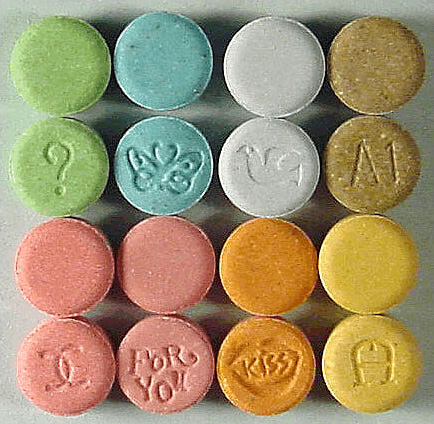
File:Ecstasy monogram.jpg

Ecstacy a/k/a Molly, Author DEA, Source https://www.dea.gov, (PD as work product of federal govt.)

“I am more convinced than ever that psychiatric medications, over the long term, cause net harm.  I wish that weren’t the case, but the evidence just keeps mounting that these drugs, on the whole, worsen long-term outcomes…The inventor of frontal lobotomy…was awarded a Nobel Prize for inventing that surgery, which today we understand as a mutilation.”

-Award-winning science author and journalist, Robert Whitaker [1][2]

Recently, a number of drug trials have been conducted re-assessing the effectiveness of psychedelics for anxiety, depression, and post-traumatic stress disorder (PTSD).

While the results of these trials have been heralded as providing new treatment options for tenacious illnesses, there are serious dangers associated with psychedelics.

Serotonin

Psychedelics act on receptors in the brain for serotonin, a neurotransmitter that effects mood.

There is some thinking that psychedelics enhance the brain’s capacity to form and reorganize synaptic connections, especially following injury [3A].  But this hypothesis needs further research.

In the therapeutic setting, psychedelics cause a receptive, dream-like state during which memories are readily accessible [3B].  The theory is that this state opens the door to fresh ideas the therapist can introduce.

Unsupervised use is not recommended. Continue reading

5 Comments

Filed under Child Abuse, Child Molestation, domestic abuse, domestic violence, Emotional Abuse, Neglect, Physical Abuse, Sexual Abuse, Violence Against Women

Reliving Trauma, Part 2

https://upload.wikimedia.org/wikipedia/commons/f/fb/Spaghetti_%26_Meatballs_%284%29_%2838218925246%29.jpgSpaghetti and Meatballs, Author John Freeman
(CC Attribution-2.0 Generic)

The Weight-Loss Battle

Again and again, you resolve to lose weight.  At times, you make heroic efforts in this direction.  You try fad diets, and supervised weight loss programs.  You try home exercise equipment and gym memberships.  You fast, may occasionally purge.

And you do lose weight, sometimes substantial amounts.  But as soon as you have acquired an attractive wardrobe in a smaller size, your weight shoots up again.  It is as if you were fighting a force outside yourself.

The pain of this is excruciating.  Giving away – one after another – the pretty items of clothing that no longer fit, you feel as if the flesh were being ripped from your bones, piece by piece.

This happens time after time, over the years, stripping you of hope.

Self-Control and a Negative Inner Dialog

Disciplined in other areas of life, you revile yourself for a lack of self-control where food is concerned, further contributing to an inner dialog which is already wholly negative.

You do your best to live a life of integrity.  But nothing you accomplish has value in your eyes, so long as you continue to have weight issues.

Scalding encounters with those who make clear their disgust at your appearance only reinforce your sense of worthlessness.

Weight Issues/Eating Disorders as a Substitute

Weight problems and eating disorders (anorexia, bulimia, binge eating, etc.) can arise from other causes than abuse [1].  But when abuse of some kind has occurred, they frequently serve as substitutes – an alternate focus for our shame, safer places to put our pain.

We may agonize over the difficulty of losing weight.  But, chances are, that is preferable to agonizing over the incest to which we were subjected.  The difficulty of the struggle reflects the depth of the wound. Continue reading

5 Comments

Filed under Child Abuse, Child Molestation, Christianity, Emotional Abuse, Neglect, Physical Abuse, Religion, Sexual Abuse

Reliving Trauma, Part 1

https://upload.wikimedia.org/wikipedia/commons/e/e3/Sugar_in_Junk_Food_-_Doughnuts%2C_Biscuits%2C_Chocolate_and_Cake.jpgJunk Food, Author formulatehealth, Source https://www.flickr.com/photos/189590028@N07/50191150823/ (CC Attribution-2.0 Generic)

Food as Comfort

You endure a childhood of sexual abuse.  Food is a comfort, solace for this inexplicable violation you have repeatedly experienced but cannot understand.

The Roots of an Eating Disorder

By your teens, you develop a weight problem, along with an eating disorder.  Though you do not realize it, both these are related to the abuse.  You deal with all the usual adolescent turmoil and the pain you carry around inside by bingeing.

Shame and Lack of Support

You have no emotional support, no one to guide you toward adulthood.  And virtually no clothes, since there is little thought given by the adults around you to the needs of a growing child.

You try on your mother’s clothes – in part so that you will have something to wear, in part to see what it feels like to be a grown woman.  But your mother is shorter in stature than you, and the clothes are too small.

You feel ashamed, unworthy to be a woman at all. Continue reading

25 Comments

Filed under Child Abuse, Child Molestation, Emotional Abuse, Neglect, Physical Abuse, Sexual Abuse

Ice Cream

Strawberry ice cream, Source sxc.hu, Author Lotus Head, Johannesburg, South Africa (Free use per OTRS ticket #2007062510004765)

“I scream
You scream
We all scream
For ice cream”

– “Ice Cream” by Howard Johnson, Billy Moll, and Robert King

We have all at one time or another over-indulged, whether in a pint of our favorite ice cream or a family size bag of chips.  And will again.  Food may not be a substitute for love, but it is readily available.

The need for love and connection is closely related to that for sustenance.  The need to reproduce is equally primal.  Human beings could not have survived without these needs being met, which is why they are so deeply ingrained in our nature.

Weight, however, is tied to self-loathing in our culture.  What American woman has not stood naked on the scale, waiting with bated breath for the dial to stop?

As many abuse victims know, the shame of abuse can be transferred to our weight.  The ongoing battle with weight provides us a permanent opportunity to vilify ourselves. Inversely proportional to our weight, our self-esteem can, quite literally, be measured by the pound.

When the damaged self-esteem resulting from abuse and the pressure on American women to be a certain size coincide, eating disorders frequently result.  Anyone acquainted with anorexia, bulimia, or binge eating knows these are often hidden.  The shame of these disorders coupled with the shame of abuse can be overwhelming.

There is worse. Some of us have eaten out of the garbage can.  This practice is not limited to the homeless among us [1].  There could hardly be a more apt symbol of low self-esteem. Continue reading

7 Comments

Filed under Child Abuse, Emotional Abuse, Neglect, Physical Abuse, Sexual Abuse

Punishing Ourselves, Part 2 – Emotional Hunger

“Joseph’s Coat of Many Colors Brought to Jacob after Joseph Is Sold into Slavery” by Diego Velazquez (1630), El Escorial (PD-Art l Old-100)

But his brothers hated Joseph because their father loved him more than the rest” (Gen. 37: 4 NLT).

Human beings inherently crave connection.  When our basic need for relationship is denied, abuse victims can develop an intense emotional hunger.  Some of us attempt to satiate that hunger with food, others with possessions, still others with sex.

But these will not satisfy us.  So the emotional hunger returns, and the cycle begins all over again – each time destined to fail.

Punishment and Reward

“…the wandering of desire…is vanity and grasping for the wind” (Eccl. 6: 9).

The reward – whether of food, material things, or sex – becomes punishment.  Each stop gap measure has negative consequences.  Each leaves us feeling empty [1].  Our sense of worthlessness resurfaces with renewed force.

Then the reward used to stem our emotional hunger becomes, itself, a source of shame.  It takes more and more food/things/sex to bring us even temporary relief.  Our desperation increases.

Punishment and Self-Forgiveness

These things I have spoken to you, that in Me you may have peace.  In the world you will have tribulation; but be of good cheer, I have overcome the world” (John 16: 33).

Consciously or not, we ache for forgiveness, someone to take the guilt away.  And there is Someone who can do that.  In fact, He longs to do that.  He died on a cross to do that.

But we did nothing to “deserve” abuse.  We do not, therefore, need forgiveness for our abuse.  What Jesus Christ does to relieve us of the false guilt for which we have been punishing ourselves is reveal a truth it would have been too painful for us to accept as children, i.e. that our parents and caregivers were the ones at fault.

Where their love failed us, His will not.  And the life He offers us is everlasting.

[1]  Got Questions, “What does the Bible say about eating disorders?”, https://www.gotquestions.org/eating-disorders.html.

This series began last week with “Punishing Ourselves, Part 1 – Numbness and Deprivation”

FOR MORE OF MY ARTICLES ON POVERTY, POLITICS, AND MATTERS OF CONSCIENCE CHECK OUT MY BLOG A LAWYER’S PRAYERS AT: https://alawyersprayers.com

5 Comments

Filed under Child Abuse, Child Molestation, Christianity, Emotional Abuse, Neglect, Physical Abuse, Religion, Sexual Abuse

Anxiety, Phobias, and PTSD – Part 1

“The Scream” by Edvard Munch (1893), National Gallery, Norway (Accession No. NG.M.00939), Source WebMuseum (PD)

God is our refuge and strength,
A very present help in trouble.
Therefore we will not fear,
Even though the earth be removed,
And though the mountains be carried into the midst of the sea
…” (Ps. 46: 1-2).

Most people have experienced anxiety, in one situation or another.

The death of a loved one, divorce, serious illness, job loss, and moving are recognized as major stressors [1].  Other anxiety producing occasions include public speaking (always a favorite), waiting on approval for a mortgage, meeting a girlfriend’s parents for the first time, and having the in-laws over for Thanksgiving.

Then, of course, there are a host of phobias.  As a general rule narrowly focused, phobias are no small matter for those suffering from them.  Phobias include the fear of heights, spiders, snakes, birds, tight spaces, bridges, flying, and blood [2].

Purpose of Anxiety

Anxiety is intended to alert us to potential danger, and prepare the body for it.

A part of the brain called the amygdala releases neuro-transmitters that initiate the so called “fight of flight” response, producing the sensations of anxiety [3].  The heart rate climbs; blood rushes to the muscles; the lungs work harder.  This process is largely autonomic.  We have, by design, very limited control.

For most, the panic associated with stressful situations quickly subsides.  Shallow breathing deepens and slows.  Rapid heartbeat subsides.

The audience does or does not throw tomatoes.  The in-laws smile or grimace – it’s sometimes hard to tell the difference – and swallow their turkey.  We eventually get the mortgage.

In short, the body figures out we are going to survive.

Anxiety Disorders

About 40 million Americans, however, suffer from anxiety disorders [4].  Severe anxiety, whatever form it takes, is debilitating and can be crippling.

A. PTSD

The severe anxiety resulting from traumas such war, rape, or child abuse is better known as Post-Traumatic Stress Disorder (PTSD) [5].

Whatever its origin, PTSD can cause recurrent, powerful, panic attacks, with or without an identifiable trigger.  These attacks are typically accompanied by heart palpitations, chest pain, the sensation of being smothered, and a feeling of dread.  A panic attack can, also, be experienced as paralysis and overwhelming fear.

PTSD sufferers may, in addition, experience flashbacks (vivid and disturbing memories, re-experienced involuntarily).  I have discussed these elsewhere [6]. Continue reading

34 Comments

Filed under Child Abuse, Christianity, Emotional Abuse, Neglect, Physical Abuse, Religion, Sexual Abuse, Violence Against Women

Pantomime

Serbian bread, Author Srdan Vesic (CC BY-SA 3.0 Unported, GNU)

Pantomime dates as far back as ancient Rome.  A form of entertainment which conveys meaning without using words, pantomime is today generally geared toward children.

That, as it turns out, is highly appropriate.

Children – especially the youngest – lack words for many of the things they experience.  They can, however, convey information without being aware of doing so.  Most of us are familiar with the use of puppets and toys to elicit information from little ones who may have been abused [1].  Pantomime can play a role, as well.

Food and Children

Food has emotional significance for children.  Food represents nurture.  It is life.  Children require both physical and emotional sustenance.  When one is lacking, the other may serve as a temporary substitute.

Food and Abuse

This can be useful in the short term.  Even as adults, we recognize the concept of “comfort” food.  However, when children are chronically deprived of love and attention, no amount of food will rectify the problem.

Unfortunately, children may ignore that reality in a futile attempt to have their emotional needs met.  Overeating can be a sign of emotional starvation [2][3].  It may, also, be a sign of sexual abuse [4].

With child molestation, a child can feel overwhelming anger, but lack the means of expressing that powerful emotion.  Food, in this context, may be used to push the anger down.  This is an instinctive response, not one consciously pursued by the child.

Lifelong Weight Issues

The child’s frantic overeating can lay the foundation for a lifelong struggle with weight.

As adults, most of us have long since forgotten what gave rise to our overeating.  Oh, we know the battle with the scale is a matter of life and death.  But our opponent is the woman in the mirror, and our motivation to get those childhood needs met.

We stuff the food down, barely tasting it, forcing our emotions down.  We eat uncontrollably, even foods we may find unappetizing.  And no matter how much we eat, we cannot get enough. Continue reading

16 Comments

Filed under Child Abuse, Christianity, Emotional Abuse, Neglect, Physical Abuse, Religion, Sexual Abuse

Ice Cream

Chocolate chip ice cream, Source sxc.hu, Author Lotus Head, Johannesburg, South Africa (Free Use per OTRS Ticket #2007062510004765)

“I scream
You scream
We all scream
For ice cream”

– “Ice Cream” by Howard Johnson, Billy Moll, and Robert King

We have all at one time or another over-indulged, whether in a pint of our favorite ice cream or a family size bag of chips. And will again. Food may not be a substitute for love, but it is readily available.

The need for love and connection is closely related to that for sustenance. The need to reproduce is equally primal. Human beings could not have survived without these needs being met, which is why they are so deeply ingrained in our nature.

Weight, however, is tied to self-loathing in our culture. What American woman has not stood naked on the scale, waiting with bated breath for the dial to stop?

As many abuse victims know, the shame of abuse can be transferred to our weight. The ongoing battle with weight provides us a permanent opportunity to vilify ourselves. Inversely proportional to our weight, our self-esteem can, quite literally, be measured by the pound.

When the damaged self-esteem resulting from abuse and the pressure on American women to be a certain size coincide, eating disorders frequently result. Anyone acquainted with anorexia, bulimia, or binge eating knows these are often hidden. The shame of these disorders coupled with the shame of abuse can be overwhelming.

There is worse. Some of us have eaten out of the garbage can. This practice is not limited to the homeless among us [1]. There could hardly be a more apt symbol of low self-esteem. Continue reading

Leave a comment

Filed under Child Abuse, Emotional Abuse, Neglect, Physical Abuse, Sexual Abuse