Category Archives: Child Molestation

Blue on Blue, Part 2 – Despair

This is a highly personal post.  Like most abuse victims and many depression sufferers, I am well familiar with despair.  Having been grievously wounded, we cannot help but wonder whether God has turned His back on us, whether He exists at all.

There are Christian denominations which view despair as sinful.  Not all Church Fathers (influential early theologians) would, however, agree [1].  Neither do I, for that matter.  This post was written to demonstrate that the despair abuse victims experience is NOT sinful, even from that strict perspective.

Out of the depths I have cried to You, O Lord; Lord, hear my voice!” (Ps. 130: 1-2).

Depression sufferers often face condemnation from their well-meaning Christian friends.  Such condemnation is misplaced.  Depression should not be confused with despair.   And for despair to be considered “sinful”, certain conditions must be met.

Depression v. Despair

Depression can arise despite our circumstances.  Despair stems from our circumstances.  Depression is the manifestation of a medical condition.  Despair is the spiritual conclusion we draw about an eternal reality.

Both will make us unhappy.  Only despair, however, can be seen as “sin” [2].

Despair as “Sin”

When we despair – as most of us use the term today – we view our suffering as pointless, and God as powerless (or uninterested) to intervene.  This is situational despair.

For our hopelessness to qualify as “sinful”, we must have a genuine understanding of God; must be above the age of reason; must be in sound mind; and — in the strictest sense — must despair not about our circumstances, but about our Salvation.

Abuse victims (and depression sufferers) simply do not satisfy these conditions.

Judas and Suicide

Judas Iscariot’s suicide is often put forward as the classic act of despair.  The apostles had daily close contact with Christ.  Judas had experienced firsthand Christ’s infinite holiness, infinite power, and infinite love.

All these Judas is said to have rejected by his self-destructive act [3][4].  Judas viewed his betrayal of Christ as so heinous it was beyond God’s capacity to forgive.  He despaired, in other words, of his Salvation.

Abuse Contrasted

By contrast, the child who is daily abused and gives up hope is not guilty of the sin of despair.  For one thing, the child may not yet have reached the age of reason.  S/he may not, therefore, be capable of forming the necessary intent.

For another thing, a child who is abused is likely to have little or no understanding of God’s true nature.   S/he has no reason to believe in a just and loving God, so cannot be penalized for the failure to trust Him.  At worst, the child rejects a flawed image of God based on tragic experience with a hostile and painful world.

As important, the abused child despairs of his/her situation (not his/her eternal Salvation).  Hell is here and now.  If anything, unfounded accusations – in reality, out and out lies – about the child’s responsibility for the abuse and overall lack of worth may make death appear inviting.

Depression and the Will

Finally, adult or child, our capacity to sin is reduced when our will is compromised as, for instance, by the brain chemistry associated with depression.

God is hardly likely to condemn us for the sins committed against us, or the scars stemming from them.  That, at least, is the opinion of this lawyer.

May the God of hope fill you with all joy and peace in believing, that you may abound in hope by the power of the Holy Spirit” (Rom. 15: 13).

[1]  Augustine believed that despair was not a sin.  Thomas Aquinas argued the point, seeing despair as a variant of pride.  Aquinas, however, distinguished hopelessness about our Salvation from hopelessness about our situation.  He explained that a physician might despair of curing a patient without committing sin.  Aquinas conceded that God could forgive despair, by way of a miracle.

[2]  It should be emphasized that not all Christian denominations view despair as equally sinful.  Unlike Catholics, Presbyterians and Baptists reject outright the concept of “mortal” sin, i.e. sin so serious it has the potential to cost us our Salvation.

[3]  Suicide has frequently been described as the “unpardonable” sin (Matt. 12: 31-32).  This though is an error.  According to Scripture, it is speaking against the Holy Spirit which will not be forgiven.  Since the Holy Spirit descended in the form of a dove when Christ’s divinity was revealed (Matt. 3: 16-17), the consensus now seems to be that the unpardonable sin actually signifies rejection of Christ’s offer of Salvation.

[4]  Even those who never publicly acknowledge Christ as their Savior may accept Him in their hearts, during their final moments.  “But do not forget this one thing dear friends:  With the Lord a day is like a thousand years, and a thousand years are like a day” (2 Peter 3: 8).

ANYONE WITH THOUGHTS OF VIOLENCE OR SELF-HARM SHOULD SEEK IMMEDIATE MEDICAL ATTENTION

FOR MORE OF MY ARTICLES ON POVERTY, POLITICS, AND MATTERS OF CONSCIENCE CHECK OUT MY BLOG A LAWYER’S PRAYERS AT: http://www.alawyersprayers.com

27 Comments

Filed under Child Abuse, Child Molestation, Christianity, Emotional Abuse, Neglect, Physical Abuse, Rape, Religion, Sexual Abuse, Sexual Assault, Violence Against Women

Blue on Blue, Part 1 – Depression

Feeding time in the fish tank, KLCC Aquaria, Malaysia, Author SAM Cheong, Source http://www.flickr.com/photos/41234325@N06/5174061688 (CC BY-SA 2.0 Generic)

Feeding time in the fish tank, KLCC Aquaria, Kuala Lumpur, Malaysia, Author SAM Cheong, Source flickr.com (CC BY-SA 2.0 Generic)

“Blue on blue, heartache on heartache
Blue on blue now that we are through…
Now the trees are bare
There’s sadness in the air
And I’m as blue as I can be”

– “Blue on Blue”, Bobby Vinton

Neglect to change the water in a fish tank, and it will soon cloud over.  Depression clouds the judgment of abuse victims, in much the same way.

Causes of Depression

Depression is a serious illness characterized by changes in brain chemistry.  Genetics, stress, major traumas such as war and child abuse, and medical conditions including AIDS, heart disease, multiple sclerosis, and lupus can all play a role.

Grief at the loss of a loved one is generally distinguished from depression.  The first can, however, lead to the second [1].

Shift Toward Blue

With depression, we see the world through “blue colored” glasses, no longer capable of assessing ourselves or our situation accurately.

All our failings – failings we have in common with the rest of humanity – are magnified.  Our defeats are remembered; our good qualities and genuine accomplishments, diminished in our eyes or forgotten entirely.

Because depression is a mood disorder, we are unaware of this shift toward blue.  The world looks bleak.  Our situation – whatever it may be – appears hopeless to us.  Our lives feel meaningless.  In effect, the water in our fish tank is cloudy, and we cannot see past the glass. Continue reading

39 Comments

Filed under Child Abuse, Child Molestation, Christianity, Emotional Abuse, Neglect, Physical Abuse, Rape, Religion, Sexual Abuse, Sexual Assault, Violence Against Women

“Never, Never, Ever, say these 15 comments to a Victim of Abuse” by Sue Cass

Sue Cass is an abuse survivor and Christian author.  She blogs at Cyber Support Group https://cybersupportgroup.org, Elah Ministries Inc. http://www.elahministries.com, and Sue’s Pen2PaperBlog https://suespen2paper.com .  I recommend her books and blogs to you.

“There’s a difference between still being a victim of abuse and a survivor of abuse.

A person that still carries the shame, guilt, unforgiveness, has not healed the emotional issues from abuse, or is still being abused is continuing to be a victim.

The person that can stand tall, speak out with no shame, no guilt, and has walked the healing path is a survivor of the abuse that was perpetrated in the past. It isn’t just having ‘lived through the abuse.’ It is a matter of having walked the healing path and by God’s grace has over come the emotional issues and is walking in freedom from the past.

Many people want to be helpful and many think that their questions and statements are innocent and do not affect those that have been abused, be it childhood sexual abuse or spousal rape and abuse, or physical and emotional abuse.

Over the years I have heard many testimonies of the added pain inflicted upon victims and survivors of these types of abuse. I have experienced many of them myself and I can tell you from experience the survivor of abuse may steal herself/himself for the onslaught of ‘innocent’ questions and statements but these questions and/or statements are knives deeply imbedding in the heart of the one who has survived the horrors of abuse.

Never, never, never, ever say these things to a victim/survivor of abuse: 

  1. ‘You could have done something to defend yourself.’

Let me ask you how a small child can defend herself against an adult? Or how can a wife defend herself against a husband that is bigger, stronger and wields some object, including his fist, at her? Or a teen girl or boy defend themselves against an angry father or mother? Children are taught to obey! Obey no matter what the parent says to do! Wives are taught to be ‘submissive’ to their husband.

  1. ‘Why didn’t you just leave?’

In the case of a small child, where would they go? A two-year old cannot support themselves, nor a 5-year-old or 7, 10, or 12-year-old. Teenagers? Some do leave and they end up on the street, homeless, the property of a pimp, or within a gang doing drugs, robbing, stealing, scavenging for food in dumpsters, and the Lord only knows what else. Many do not have relatives that will sympathize and take them in. For the grown woman, some are threatened with death if she ever leaves, she has children to consider, a homeless shelter may be a temporary answer IF they are not full, she may not have ever held a job in her life and has no means of support. The list can go on and on and on. I highly recommend the book, “The Walking Wounded: The Path from Brokenness to Wholeness” by Secret Angel for a better understanding of a wife and mother living with an abusive husband.  Available at: www.amazon.com.

  1. “Why didn’t you tell someone!” 

Many have, most won’t. With young children some have been told to “keep the secret no matter what!” Many were accused of lying, blamed for the assaults, beaten for “telling such lies,” ignored, threatened with family members being killed (and many other guilt-ridden consequences) Most have been subject to mind control from an early age, manipulated and controlled, blamed for the abuse by the abuser. One of the things I was told over and over as a young child, “Just stay away from him!” At two and three years old I was told, “If you wouldn’t sit on your dad’s lap…” We are made to feel it is all our fault! For teenagers some have been actually thrown out of the house at fifteen or sixteen years old or have run away because no-one believed them and the abuse continued. Some married the first guy to come along only to be abused now by a husband. Victims are seldom believed! Males are laughed at. “Men can’t be raped!” If that’s your attitude then read, “Unhelpful Myths About the Sexual Assault and Rape of Men.” Posted on this blog, June 10, 2015.

  1. ‘Well you should have……’ or ‘Why didn’t you…..?’

Unless you have been in our shoes there is no way you can even begin to understand or comprehend the dynamics that are or were going on in an abusive home. To lay this kind of condemnation on a victim is to jab the knife in real deep, smile sweetly, and then twist it!

  1. ‘Did you call the police?’

Young children don’t know to do that.  Some teenagers do and end up in foster care only to be abused again or bounced from one place to another to another to another. Some, when the police arrive the abuser convinces the police the teen “has some mental problems.” Unless there are obvious bruises and cuts the police will file a report and leave.  With adults, many do but out of a false sense of “I love him” or “He loves me” they refuse to press charges once the police have come. Many do not get that opportunity for the control is so great there may not even be a phone available in the home. Continue reading

52 Comments

Filed under Child Abuse, Child Molestation, Christianity, Emotional Abuse, Neglect, Physical Abuse, Prostitution, Rape, Religion, Sexual Abuse, Sexual Assault, Violence Against Women

Strength

“Spirit Flight” (copper weathervane), Author Cluffs (CC BY-SA 4.0 International)

Some abuse victims want as adults only to forget their past.  That is an entirely legitimate response, and their prerogative.

By contrast, a surprising number of us want to use our suffering to ease the suffering of others.  We want to make something purposeful – even beautiful – out of what was painful and ugly.  That is a lofty goal which may or may not be achievable [1].

In either case, a few things should be clear.

A Strong Spirit

He gives strength to the weary and increases the power of the weak” (Isaiah 40: 29).

Those who somehow survive abuse – physical, emotional, sexual abuse, and neglect or domestic violence – have a strong spirit.  This is true no matter the scars we carry forward from abuse or the fears abuse bequeathed to us.  We would not otherwise be here.

To say that we are strong does not denigrate the abuse victims who did not survive.  Even heroes are mortal.  If anything, we are their witness regarding the horrors inflicted on abuse victims (not to mention the  long-term consequences of abuse).

Layers

Abuse can be multi-layered.  While we may consider a single individual responsible for our abuse, many are likely to have contributed to it.

The abuse of a first individual will begin the lesson that we are undeserving of love and concern.  As others follow in the same footsteps, we come to believe this untruth.

Then there are those in our lives who could have intervened, but for reasons of their own did not.  This is another aspect of the tragedy of abuse.  While a non-offending parent may wield less power in the family dynamic than an offending-parent, an adult is always more powerful than a child.

We had every right to look for rescue to the adults aware of our situation.

Excuses

And still we make excuses for the loved ones who abandoned, battered, and raped us.

They didn’t understand the harm they were doing.  They led hard lives, were under a great deal of strain.  It was our fault.  We deserved it.  We were disobedient, rebellious.  We expected too much.  We complained too often.  We were too pretty, too flirtatious.  Deep down, they “really” cared.

Excuse after excuse after excuse…none sufficient to justify abuse. Continue reading

6 Comments

Filed under Child Abuse, Child Molestation, Christianity, domestic abuse, domestic violence, Emotional Abuse, Neglect, Physical Abuse, Religion, Sexual Abuse, Violence Against Women

“Letter to My 14 Year Old Self” by Marie Williams

This is a letter by Marie Williams, a gifted writer and abuse survivor. Be aware that there is difficult subject matter addressed. Despite that, Marie retains little or no rancor.  We should all extend such kindness to the child within.

You can find more of Marie’s work at Come Fly with Me – Dispensing Compassion Through Poetry http://www.mariewilliams53.wordpress.com and Blow Me Out of the Water http://www.riceandpease.wordpress.com .  

Dear Marie

Yes, you, come on now, try not to let things get you down too much. I promise life will get better. I know that you’ve had it really rough and I know that you wish your first suicide attempt at age 11 had worked, but it didn’t and that’s because you are here for a reason. I know that you can’t see that now, because all around you is chaos, but you are a divine spirit and you need to know that.

Try not to internalize the pain. I know that you feel that you have no-one to confide in, but you do. Speak to your grandfather. I know he is no longer here. I know he died in 1959, but his spirit is with you. Speak your pain and he will hear and he will try to smooth the path for you and make life a little easier. I know you’re thinking, “rubbish!” But seriously, he came to help you that painful night when you were 11. It was him you saw, when he hovered over you. It was not a figment of your imagination. He came to make sure those pills did not work.

You’re destined for great things Marie. Look at Oprah Winfrey, Maya Angelou – they suffered too but look how they have turned their lives around. They have have used their abusive pasts to build a solid framework in which to change their lives for the better. OK, so you’re never going to be Oprah or Maya with their very public profile, but you will be Marie blogging on WordPress, “sharing, hoping to inspire and motivate” others.

I know you think I’m crazy, and that this will never happen. Yes at 14, with a mother who clearly finds you an irritation and a father who gets a kick out of battering you, sending you to school with bruises on your face and body, with the explanation “If they ask you what has happened to you, tell them that you fell over some wire in the backyard”, makes the above paragraph seem like the ramblings of a mad woman, but honestly, you will survive.

People that you don’t know now, will be reading your poetry and will write to you telling you how much they love what you have written. People all over the world in France, Austria, USA, Australia will be commenting on your poetry.

There will be something called the Internet which will allow you to connect with others in a way that you can’t now. The world will be a smaller place in terms of contact and there will be vast opportunities for you to grasp and take advantage of.

I love you Marie and I want to take care of you in the only way I can. This is why I am writing to you, aged 14. I want to give you hope. I want to let you know that I am there for you.

Yours sincerely

(A much older) Marie xx

FOR MORE OF MY ARTICLES ON POVERTY, POLITICS, AND MATTERS OF CONSCIENCE CHECK OUT MY BLOG A LAWYER’S PRAYERS AT: http://www.alawyersprayers.com
3 Comments

Filed under Child Abuse, Child Molestation, Emotional Abuse, Neglect, Physical Abuse, Sexual Abuse

Topsy Turvy

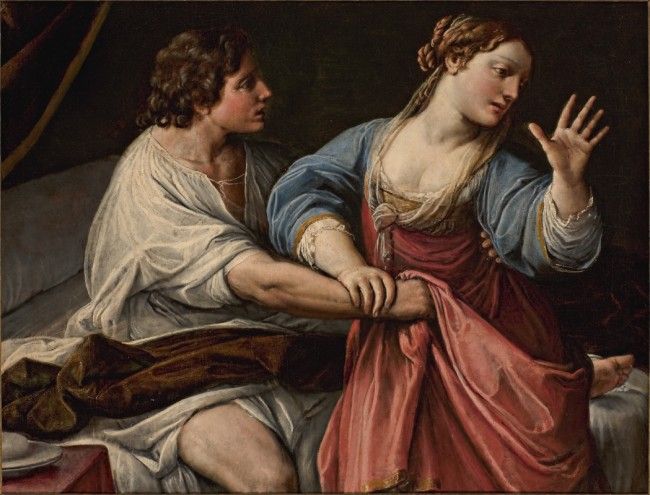
“Amnon and Tamar” (16th-17th Century), Source https://s-media-cache-ak0.pinimg.com/736x/10/4a/27/104a2757ef7c899d98a8f3cc230ae9b4.jpg (PD-Art, Old-100)

“Topsy turvy
Wake me
I’ve had enough
Topsy turvy
Don’t know
Which way is up
Or down
Tears on the ground”

– “Topsy Turvy” by Family Force 5

Child abuse victims are often scapegoated for the disharmony within their families.

The narrative fabricated is that child victims are troublemakers, “bad seeds”.  According to this distorted view, victims are by nature disobedient and rebellious, trying the patience of their loving families. They deliberately prompt family arguments, and “deserve” to be punished for the hurt they cause.

Outrageous as it may seem, the needs of child victims – for food, shelter, and comfort – are seen as an unreasonable burden in dysfunctional families. Victims are viewed as provoking the abuser to act as s/he does. In the case of sexual abuse, child victims are seen as “tempting” the adult, therefore, responsible for the abuse.

This is all a fiction – a false explanation for the dysfunction which allowed the abuse to occur, in the first place. It is, in effect, the rationalization of the abuser.

Any negative emotions the abuser may experience, in connection with his/her moral transgression, are projected onto the victim. The Bible story of the rape of Tamar by her brother Amnon illustrates this.

But she [Tamar] answered him, ‘No, my brother, do not force me…Do not do this disgraceful thing!’…However, he would not heed her voice; and being stronger than she, he forced her and lay with her. Then Amnon hated her exceedingly…” (2 Samuel 13: 12, 14-15).

Other members of the family may buy into the narrative, in self-defense. That does not, however, give it validity.

In a topsy turvy way, the very opposite of the distorted family narrative is true. Continue reading

17 Comments

Filed under Child Abuse, Child Molestation, Christianity, domestic abuse, domestic violence, Emotional Abuse, Neglect, Physical Abuse, Rape, Religion, Sexual Abuse, Violence Against Women

Dry Bones

“Prophet Ezekiel” by Michelangelo, Sistine Chapel (1510), Author/Source Web Gallery of Art (PD-Art, Old-100)

Therefore prophesy and say to them, ‘Thus says the Lord God: “Behold, O My people, I will open your graves and cause you to come up from your graves, and bring you into the land of Israel” ‘ “ (Ezek. 37: 12).

The Old Testament prophet, Ezekiel had a widely known vision in a valley of dry bones.

The corpses there had been scorched by the sun, picked over by vultures and jackals.  God spoke to Ezekiel and asked if the bones could live again, to which Ezekiel replied that only God knew the answer.  God then instructed Ezekiel to prophecy, and life was restored to what was a vast army.

Though Bible commentators agree that the bones were a symbol of Israel, this passage has a highly personal meaning for me.

Many times in my life I have been at the end of my strength.

As an abuse survivor, I have walked lonely beaches at night, and cursed hope for drawing me forward toward another dawn.  As an advocate for the poor and a lawyer responsible for the welfare of clients and staff, I have fought many a losing battle.  As a woman with chronic health problems, I have sat in emergency rooms at 3AM, and more than once lain prostrate in public restrooms, unable even to call for help.

Rarely did God make Himself known to me, in these circumstances.  Unlike Ezekiel, I saw no visions, heard no voices.  But at all times God was present.  It was from God my strength derived, and He that carried me through the worst ordeals. Continue reading

2 Comments

Filed under Child Abuse, Child Molestation, Christianity, Emotional Abuse, Law, Neglect, Physical Abuse, Religion, Sexual Abuse

Mercy

Replica of the Ark of the Covenant showing the Mercy Seat, Indonesia, Author Suseno (CC BY-SA 3.0 Unported)

WARNING: Graphic Images

“The quality of mercy is not strained. It droppeth as the gentle rain from heaven upon the place beneath.”

– Shakespeare, Merchant of Venice

  • Myl Dobson, 4 y.o. was hideously tortured by New York caretaker, Kryzie King, during the final months of his life [1]. The youngster had been left with King by his incarcerated father, Okee Wade, whose custody of the boy was actually subject to court ordered supervision. Caseworkers visited the home 9 times without recognizing that the father was absent.
  • In Pennsylvania, a 7 y.o. boy was nearly starved and beaten to death by his mother, Mary Rader, and grandparents, Dennis and Deana Beighley [2]. Weighing only 25 pounds, the child was desperate enough to eat insects on the porch where he was sometimes kept. Dr. Jennifer Wolford of the Children’s Hospital of Pittsburgh Child Advocacy Center characterized the boy as “the worst case of medical neglect that I have ever seen…” Two of the boy’s sisters appeared healthy. A 9 y.o. brother was underweight, but not to the same extent.
  • Raymond Frolander’s life was saved by the 11 y.o. boy he molested [3]. The Florida boy’s father walked in on the sexual battery in progress. He beat the predator severely, then went to the kitchen for a butcher knife. According to the father, he would have killed Frolander, if his young son had not at that point intervened.

It is not unusual for victims to exhibit more concern – more mercy, if you will – for their abusers, than those abusers do for them.

What though are we to make of predators such as these? Our first instinct is to draw back in horror, to conclude that these were not human beings at all. These were wolves. Devourers. Continue reading

Leave a comment

Filed under Child Abuse, Child Molestation, Christianity, Emotional Abuse, Justice, Neglect, Physical Abuse, Religion, Sexual Abuse

Grace

“Do not be discouraged. You…[may] not have the power to relieve yourself of sorrow or grief or pain. But Our Lord did [have that power] on the Cross. He could have turned the crown of thorns into a garland of rosebuds…He was tempted to shorten His agony, as those at the foot of the Cross taunted [Him]…But He did not come down. It is human to come down, but it is divine to hang there.”

Our Grounds for Hope, Archbishop Fulton J. Sheen

Jesus suffered and died to restore the relationship between God and man for us, a relationship sin in its many forms had fractured [1].  His sacrifice bought our freedom from sin. We can throw those shackles down.

But believing ourselves included in Jesus’ work on the cross can be a special challenge for the victims of abuse.  Often, we mistakenly take on the abuser’s guilt – feeling “unworthy” of Salvation, as if we had somehow brought on the molestation or “deserved” the abuse.

Many of us are prone to workaholism.  We strive past the point of exhaustion, in the belief our best efforts would not suffice.  It never occurs to us that Salvation might not be dependent on our efforts, but rather Christ’s.

For if by the one man’s offense death reigned…much more those who receive abundance of grace and of the gift of righteousness will reign in life through the One, Jesus Christ” (Romans 5: 17).

There is no qualification standard for Salvation in Christ.  He meets us where we are, even if we are broken and lost.  It was for the broken and lost He came.


[1] This is not, in any way, to suggest that the victims of child abuse sinned by the abuse.

FOR MORE OF MY ARTICLES ON POVERTY, POLITICS, AND MATTERS OF CONSCIENCE CHECK OUT MY BLOG A LAWYER’S PRAYERS AT: http://www.alawyersprayers.com

Leave a comment

Filed under Child Abuse, Child Molestation, Christianity, Emotional Abuse, Neglect, Physical Abuse, Religion, Sexual Abuse

View from the Crater

Satellite view of Yucatan Peninsula, Mexico, Author NASA (PD)

Beneath the foliage of the Yucatan peninsula and the waters of the Gulf of Mexico lies an ancient impact crater. Scientists believe this is the site where a meteor the size of Mt. Everest struck the earth, resulting in extinction of the dinosaurs.  Sixty-five million years later, geologic evidence for that impact is still present.

It is not uncommon for abuse victims to view abuse as the central event in their lives, and to define themselves with reference to it.

As with the Chicxulub crater, evidence of the abuse is still present years later.  Forever after, that destructive event (or series of events) will be the dividing line in victims’ lives: pre-abuse and post-abuse, the difference between innocence and innocence lost.

All too many women and children will die, as a result of abuse – some at the hands of a loved one, some by their own hand, years after the abuse has technically “ended”. Those who survive the trauma are likely to suffer from permanent physical and psychological symptoms, impacting all aspects of their lives.

There is nothing positive to be said about abuse.  Because of its very magnitude, however, survivors may find that abuse serves as a kind of standard against which other events can be measured.  What are office politics, by comparison? What are parking tickets, canceled flights, lost luggage, even stolen vehicles (so long as they do not generate more abuse)?

In a sense, we can draw strength from our bitter experience.  The abuse provides a unique perspective which puts many lesser things in their place. We have lived through a meteor strike.  What are mere hurricanes to us?

FOR MORE OF MY ARTICLES ON POVERTY, POLITICS, AND MATTERS OF CONSCIENCE CHECK OUT MY BLOG A LAWYER’S PRAYERS AT: https://alawyersprayers.com

5 Comments

Filed under Child Abuse, Child Molestation, Emotional Abuse, Neglect, Physical Abuse, Sexual Abuse