Tag Archives: abuse scars

Invisible Wounds – Emotional Abuse

Mimi & Eunice Cartoon:  “Posture”, Source https://mimiandeunice.com/2011/10/20/posture/, Author Nina Paley, (CC BY-SA 3.0 Unported)

“Ugh.  I hate the sight of your ugly face.”

“I wish I’d never had you.  I should have gotten an abortion.”

“You’re useless.  You’ll never amount to anything.”

“How can you be so stupid?  No wonder you have no friends.”

“Now, look what you made me do.  It’s all your fault.”

“No one could love you.  No one ever will.”

Emotional abuse leaves no visible scars.  But the wounds go deep.  We may as well have scalding water dumped over us.

Emotional abuse is often mischaracterized as a less damaging form of child abuse.  To the contrary, the American Academy of Pediatrics calls it, “the most challenging and prevalent form of child abuse and neglect” [1A]. 

Such abuse can carry over into adult relationships [2].  We settle for what we think we deserve.  There is, therefore, a clear link to domestic abuse [3].

Emotional abuse of children may be accompanied by physical neglect, physical abuse, or sexual abuse. 

However, there is credible evidence that the victims of emotional abuse and emotional neglect exhibit equal or worse immediate and long-term effects than the survivors of other forms of maltreatment and violence [1B].

Types of Emotional Abuse

A. Cruelty

Emotional abuse can involve name calling; constant criticism; negative remarks about a child’s (or later an adult partner’s) appearance, intellect, abilities, hopes, and dreams; cruel jokes at a child’s (or later an adult partner’s) expense; deliberate humiliation; and threats of violence or abandonment [4A]. 

A parent may permanently damage a child’s self-esteem simply by withholding all kind and encouraging remarks [4B].

B. Manipulation

There are other varieties of emotional abuse, no less harmful to a child.  These can range from manipulating or scapegoating a child; failing to promote a child’s social development by forbidding friends, and forcing isolation on a child; to making a child the parent’s emotional partner (covert incest); or exposing a child to traumatic events like domestic violence, drug and alcohol abuse [4C].

C. Excessive Control

Children can be damaged if they are pushed too hard, in order to fulfill a parent’s own ambitions, or controlled so closely that they have no lives of their own [4D].

D. Emotional Neglect

At the other extreme, children can be emotionally harmed, if they are regularly ignored [4E]. 

Failure by a parent to interact at all with a child is known as emotional neglect.  This can occur if, for instance, a parent suffers from serious mental illness.  It can be devastating for the child, even if he or she is otherwise fed and clothed.

E. Domestic Abuse

In the context of domestic violence, emotional abuse is often accompanied by extreme jealousy; isolation; enforced dependence; and coercive control by the abusive partner over money, travel, and communication with family and friends [5A]. Continue reading

23 Comments

Filed under Child Abuse, Child Molestation, domestic abuse, domestic violence, Emotional Abuse, Neglect, Physical Abuse, Sexual Abuse, Violence Against Women

False Guilt

Courtroom gavel, Author onaeg news agency, (CC BY-SA 4.0 International)

“There are two kinds of guilt.  One is true guilt, that is, it stems from sin against God; we are responsible for it and we have to deal with it.  The second is false guilt, which Satan places on us; this occurs when the devil accuses us of not living up to God’s standards.

Many people live countless years under such deceptive guilt.  They never feel as if they can quite get God’s acceptance; they think they never quite measure up and never quite please God; they believe they will never be all that God wants them to be.”

–Charles Stanley in How to Listen to God

Abuse victims are all too familiar with guilt. 

Told from childhood that we did not measure up, that everything wrong in the family was our fault, we grew up virtually enveloped in guilt.  This is compounded by the fact we are likely to believe we brought the abuse on ourselves (an outright lie, but one of which Satan is particularly fond).

All this is false guilt.

If confronted, we would have difficulty reciting our supposed “sins”.  This is because they do not exist.  Which is not to say that we do not commit real sins.  We are as fallible as the rest of mankind, in that regard.

But the guilt that is unrelenting – the guilt punishing, even crippling us – is false guilt.  We were not responsible for the abuse inflicted on us – whether it was emotional, physical, sexual or took the form of neglect.  We did not engender it.  We did not deserve it.

What we needed and deserved, but were deprived of, were love and care.

Unfortunately, what false guilt does is convince us we are still undeserving.  We labor under the weight of this lie, sometimes turning it into a self-fulfilling prophecy. Continue reading

9 Comments

Filed under Child Abuse, Child Molestation, Christianity, domestic abuse, domestic violence, Emotional Abuse, Neglect, Physical Abuse, Religion, Sexual Abuse

The Rose Garden, Chapter 20 – Progress

File:Golden Christmas Tree Ornament.jpg

Christmas tree ornament, Author Noah Wulf, (CC BY-SA 4.0 International)

For I know the thoughts that I think toward you, says the Lord, thoughts of peace and not of evil, to give you a future and a hope” (Jer. 29: 11).

I decide I want to put a tree up this year, after all.  One by one, I pull the boxes out of the closet.  Joni Mitchell sings about skating away on a river, as I gently lift the ornaments from their places.  This one with Ziggy on it is twenty-five years old.  How rapidly our lives rush by.  Here are Snoopy and the rest of the Peanuts gang.  Here are the Looney Tunes characters — Porky Pig, Tweety Bird, Bugs Bunny.

Angels, rocking horses, pipers, drummers, partridges and their kin, Santas (both lean and stout), reindeer, shepherds, teddy bears.  They crowd one upon another, each a memory, some bittersweet.

I used to dread going to my parents’ for the holidays.  The thought of pretending we were a cheerful, trouble-free family, in the same room where my father had so often molested me, would make me want to retch.  Christmas, Easter, birthdays, no excuse could justify an absence.

We would sit at the dining room table, my father in his underwear, my mother hurrying to and fro with the plates, despite repeated offers of assistance.  My father would dismember the turkey, portions enormous, notwithstanding, our protests about diet.

Without fail, at some point during dinner my father would look over at me and remark in a bemused tone, “I just can’t see you as a lawyer, Annie.”  Without fail, at some point he would make a racial comment.  On schedule, an argument would follow.

My sister and I would hurry upstairs soon after dinner, as far away from Ma and Dad as possible.  Back at my apartment after the visit, I would empty my suitcase into the hamper, strip off my clothes, then shower to remove any remaining taint.

My sister’s husband, a kind and decent man, helped change the dynamic.  Not that he was easily accepted into the family.  When they first announced their engagement, there was dead silence at the table.

Both my mother and father grew to love their son-in-law.  My father genuinely admired his skills at carpentry and household repairs.  Pop enjoyed talking with him about sports, history, and — surprisingly enough — the “old country.”

Conversation at the dinner table expanded to cover these topics.  Tensions eased. Continue reading

15 Comments

Filed under Child Abuse, Child Molestation, Christianity, Emotional Abuse, Neglect, Physical Abuse, Religion, Sexual Abuse

The Rose Garden, Chapter 19 – In the Wilderness

File:Employment Law Office.jpg
Law office boardroom, Source https://www.htwlaw.ca, Author Tony Wong (Free Use)

“Behold, I will do a new thing, Now it shall spring forth; Shall you not know it?  I will even make a road in the wilderness And rivers in the desert ” (Isa. 43: 19).

Kite flying was something I did not do well as a child.  Still, I tried every summer to make a successful kite, one that would soar overhead.

I was aware that kites could be purchased at the local five and dime, but did not think to ask for one.  It was clear such frivolities were beyond the family’s means.  Instead, I constructed my kites of the materials at hand:  loose-leaf paper and cardboard, bakery string, and rags.

The kites did rise briefly, but never very high, resolutely though I ran with them down the hill in front of our house.   I dreamed occasionally, myself, of flying — capable in dreams of rising effortlessly off the ground, like a bird, whenever I wished.

I was not very adept at sledding either.  Snow did not fall often enough in the Bronx to allow much opportunity for practice, and the hill in front of our house was not particularly steep.  I did not view these conditions as bearing on my sledding abilities.  Despite them, I persisted.

Emotional Transparency

The situation was much the same at the first legal firm at which I worked.  This was a medical malpractice firm.  I had not heard of malpractice before; knew only that I wanted litigation.  Suddenly, the biology major I had pursued made sense.

My first firm specialized in brain-damaged infant cases. These are among the most serious and difficult, with large monetary value.  Because of that, trials in this specialty are hard for a young attorney to come by.  One of the first principles driven home to me was that the attorney’s ego must be secondary to the clients’ good.

Trial work here was the Holy Grail, the measure of an attorney, but always something mysterious, as well. As young attorneys, we jockeyed over the few available trial opportunities.  Little by little, we acquired the necessary skills.

I, however, made a fundamental mistake.  I let my feelings of insecurity show at the office.

Fear is a natural component of trial work.  Those who have done it for any length will confirm this.  We carry the responsibility of the clients’ welfare.  The full force of risk falls upon us.

We have high rates of alcoholism and substance abuse; are prone to depression; die of heart failure and stroke, sometimes in the courtroom.

We are an irreverent bunch.  Some of this is due to the fact our jobs require us to push the envelope.  Some of it is a reaction to the stress — a response that, as children, my sister and I used to call “laughing in the face of death.”

Unfortunately, my emotional transparency (a consequence of boundary violation) was viewed as a vulnerability.  No matter how hard I worked, I was passed over.

As young attorneys, we often had to request the rescheduling of trial dates by the courts.  We joked that our cards should read, impressively, “Adjournments in All Courts.”

With litigation as common as it is in this country, court calendars are heavy.  Judges are impatient to move cases along.  Adjournments were not always easy to secure.

On one particular occasion, I was instructed by the Office Manager to obtain a short adjournment on a case already marked “final.”  On the way to court, I had an accident on the parkway.

It was a rainy day.  Traffic was heavy, but moving.  A vehicle entering from the right caused the driver ahead of me to stop suddenly.  I slammed on the brakes in order to avoid a collision, and went into a spin on the wet pavement.

Time seemed to stand still.  A huge truck came into view.  I closed my eyes and gripped the wheel, anticipating impact.  Expecting to die.

Instead, my vehicle came to a soft stop.  I opened my eyes to find I had spun 180 degrees and was facing the vehicle originally behind mine, our bumpers barely touching.

None of us in the vehicles involved had been injured.  The police took a report, but we decided as a group to go on with the day.  As far as I know, no litigation ever resulted.

My concern at that moment was getting to court on time.  I got back in my car, drove the rest of way, and managed to get the necessary adjournment.

To my dismay, the Managing Partner was unhappy with my efforts.  Though my inadvertent mentor, he accused me of having manipulated the situation, so that no other attorneys would be available on the adjourned date, and I could try the case.

I was stunned.  Thankfully, I could point to the Office Manager’s written instructions.

I never mentioned the accident.  There seemed no point.

Things reached such a level of frustration for me at the firm that I found myself crying in the office bathroom one day.  As I sat on the edge of the tub, it suddenly dawned on me that I deserved better.  I dried my tears, walked out, and gave notice. Continue reading

15 Comments

Filed under Child Abuse, Child Molestation, Christianity, Emotional Abuse, Law, Neglect, Physical Abuse, Rape, Religion, Sexual Abuse

The Rose Garden, Chapter 17 – Illness

File:MarkhamStouffvilleHospital23.jpg

Emergency Room, Markham Stouffville Hospital, Ontario, Author Raysonho @ Open Grid Scheduler/Grid Engine, (CC0 1.0 Universal Public Domain Dedication)

“…rejoicing in hope, patient in tribulation, continuing steadfastly in prayer…” (Rom. 12: 12).

There may be an abuse-related dimension common to all the major illnesses from which I have suffered over the years, disparate though at first they appear.

The mechanism of this is not fully understood, but is thought to involve somatization, i.e. the expression of psychological or emotional factors as physical symptoms [1].  The pain associated with somatization is a physiologic response to the stress and trauma of abuse, but all too real [2].

Abuse and Autoimmune Disease

Around the age of twelve, I suffered a major attack of hives.  Though I did not know it then, this presaged the chronic urticaria (CU) from which I suffer today.  In effect, the body does not recognize, and so attacks itself.

A growing body of research suggests a link between childhood abuse and the development of autoimmune disease [3].

At the time of the initial hives, I was repeatedly bathed in ice water as I writhed.  Since they had been on the phone to a physician, it was twenty-four hours before my mother or grandmother considered taking me to an emergency room.

Of course, my mother had gone to work with a second degree sunburn.  Her enormous blisters burst while she was on the subway.  My grandmother washed the kitchen floor on her hands and knees the day after she returned home from the hospital, following a hysterectomy.

After years of childhood earaches and tonsillitis, I finally had my tonsils removed at age nineteen.  Following surgery, I awoke from anesthesia to find my father at the foot of the hospital bed.  I cannot convey the joy I felt.  It was entirely unexpected and moved me immensely that he had taken time off from work to see me.

It strikes me as funny to this day that I shared a room with a Jehovah’s Witness and a Black Muslim.  Unable to speak, I lay there between them as my fellow patients held theological arguments at high volume across my bed.

Abuse and Endometriosis

From the time I first began to menstruate, my periods were irregular and accompanied by severe cramps.  Endometriosis was ultimately diagnosed.  Child abuse has, also, been linked to endometriosis [4].

It would not be until my thirties that I obtained any relief.  Before that, each month I would swallow as many aspirin as I could tolerate, then lie prostrate on the bathroom floor, comforted by the cool tile until the pain passed.

Again, no one took me to an emergency room.  I remember the pain ending early one Christmas morning, after I had endured it for some ten days.  Julia Child was on TV at the time, demonstrating how to stuff a turkey.  I have retained a sentimental fondness for her ever since.

The day I took the scholarship exam for college, my period came on suddenly during lunch.  We had completed the morning session and were sitting in the cafeteria.

With the onset of cramps and bleeding, I rushed to the ladies room, but could find no sanitary napkins.  Desperate, I attempted unsuccessfully to insert my first tampon, all the while doubled over in pain.

Wave after wave of cramps rolled over me.  I broke out in a sweat.  For some reason, after forty minutes, the cramps stopped on their own.  I used toilet tissue to craft a make-shift pad, and rejoined the others in time to sit for the afternoon session.

I won a full scholarship, as a consequence.  With no thought to a career, I chose biology as my major out of wonder at the beauty of the world.  Medicine — since I tend to faint at the sight of blood — was never an option.

Years later, I, too, had a hysterectomy.  I had to be taken from my office by stretcher — moaning, but issuing last minute instructions to the staff as I went.

My then Office Manager, a close friend, stayed by my side.  This was no surprise.  We had done the office budget together one weekend, as her infant daughter lay asleep in a carrier on the floor at our feet.

Abuse and Chronic Back Pain

I have had many years of back pain.  A fall may have aggravated the scoliosis from which I suffer.  It, also, produced disc herniation.  But childhood trauma is frequently associated with chronic neck or back pain [5].

At times the pain has been so severe I have wondered if it would kill me.  Ultimately, I had to undergo a spinal fusion at the cervical level, then spend three months strapped into a brace.

The procedure necessitated a bone graft from my right hip.  The night before surgery, the nurse and I laughed together as we wrote on my left side in black marker, “Wrong Hip.”

Groggy from pre-anesthesia medication and fearful that a tube could damage my vocal chords, my last words to the anesthesiologist before surgery were, “Please, be careful.  I’m a lawyer.”  He undoubtedly thought I was issuing a threat.

I did not let my mother (who was seriously ill, herself, at the time) know about my surgery until it was over.

While I recuperated, a long-time friend, arranged to have meals sent to my home.  Another close friend drove me upstate to her summer place.
Continue reading

25 Comments

Filed under Child Abuse, Child Molestation, Christianity, Emotional Abuse, Neglect, Physical Abuse, Religion, Sexual Abuse

The Rose Garden, Chapter 16 – The Weight of Sorrow

File:Clothing Rack of Jeans.jpg

Clothing rack of women’s jeans, Source https://www.publicdomainpictures.net, Author Peter Griffin, (CC0 1.0 Universal Public Domain Dedication)

Man shall not live by bread alone, but by every word that proceeds from the mouth of God” (Matt. 4: 4).

It is late in the season.  I wander from one clothing rack to another, searching for my size.  The coats have been picked through.  There are few remaining.  It is unlikely I will be able to find a coat that fits, let alone flatters, me.

Please, God, I pray.  Please, let me find something.  I promise to lose weight.  I promise to try harder.

One scar of the incest has been of such magnitude in my life that it warrants separate discussion.  This is weight control.  I have prayed as fervently in the Women’s Department as in any cathedral.

For an abuse victim, the difference between size 8 and size 18 is no mere matter of discipline.  A child who is molested feels like offal.  Whatever impulses drive her abuser, she is less than nothing in his eyes, and — despite his soothing words to the contrary — she knows it.

Against this backdrop, weight often becomes a problem.  Eating disorders are common — anorexia, bulimia, binge eating, etc. [1][2][3][4].  In this, I am typical.

Distress, Defense, Punishment, and Shame

Food is a natural source of comfort for the sexually abused child, maladaptive when weight becomes an issue.

Weight serves many purposes.  It is a distress signal:  silent evidence of the molestation, the secret exposed.  It is a defense, the child’s feeble attempt to create a physical barrier against the predator; later, an emotional barrier to adult relationships.

Increased weight is a psychological way of hiding from rejection.  Failed relationships can be blamed on weight.  However painful this approach may be, it is less painful than rejection of the “true self.”

Weight is punishment for misplaced guilt.  The little girl cannot be forgiven for having engendered the violation (as if she did), and cannot forgive herself for being “unlovable.”  So her anger turns inward, with depression the result.

The cycle repeats itself — over and over — as weight is gained, lost, and regained.   In the process, weight becomes an alternate focus for the shame of the abuse.

All this is unconscious.

A Symbol of Rage and A Test

As the child grows into a woman, weight takes on even more shades of meaning.  It embodies rage at men; shouts, in effect, “Damn them all!  They’re vapid and shallow, anyway — unable to recognize real worth.”

It serves as a test for the woman.  It serves as a test for the man she hopes will love her.  It serves as punishment for the woman’s failure to be lovable, yet again.

Food as Love – An Analgesic and An Anesthetic

Food offers instant gratification while love, in her experience, does not.

Food is, of course, nourishment.  As the body requires food, so the soul requires love.  Love is vital.  The soul craves it.  Deprived of love, the soul starves.  Food becomes the unsatisfactory substitute for love denied, an analgesic against the pain.

In terms of our anger at having been abused, food is more like an anesthetic.  Unable to express that anger appropriately at the time, we forced it down with food, then “forgot” why we were eating (or denying ourselves food) so compulsively.  Attempts to diet are futile because they do not address the underlying rage.

Distrust of God

While we may not think in such terms, at a deeper level, a disordered relationship with food by abuse victims reflects a distrust of God.

Since our needs were not met as children by those who stood in God’s shoes, we have little reason to believe that God will meet them now.  So we try to meet them ourselves, try to assure that we will at least have as much (or little) food as we want.

But we cannot satisfy our hunger — our desire not only for love and justice, but for control over our own lives — since that hunger is emotional rather than physical.

God is capable of filling our needs.  However, we must first put our trust in Him.  For abuse victims, that can be a lifelong challenge.

All this applied to me; took me decades to decipher.  Continue reading

16 Comments

Filed under Child Abuse, Child Molestation, Christianity, Emotional Abuse, Neglect, Physical Abuse, Religion, Sexual Abuse

The Rose Garden, Chapter 13 – Fighting the Scars

File:Fawn in grass 2, by Forest Wander.jpg

Fawn in grass, Source http://www.forestwander.com/fawn-in-grass-2/, Author ForestWander, (CC BY-SA 3.0 United States)

Come to Me, all you who labor and are heavy laden, and I will give you rest” (Matt. 11: 28).

Sometime in my late teens my pain and anger finally surfaced, and I lost my faith.

Throughout college, I declared to anyone within earshot that I was an atheist and existentialist.  Rather than bow before a God Who — as I saw it — would allow good people to suffer, I preferred to deny God’s existence.

Perfectionism and Procrastination

The evil in which my father had engaged produced a variety of scars on my psyche.  Perfectionism and its companion procrastination were among these.

Writing errors had to be liberally covered over by correction fluid, expunged.  Fasting was the ideal; a mouth full of food, and I was committed to bingeing.  If I so much as awoke later than planned, the day was marred.

It seemed far easier for me to be “perfect” than to be normal.  I had no idea what it was to be normal.   And if I could achieve perfection, perhaps my father would love me again.

Perfectionism is defined in Father-Daughter Incest by Judith Lewis Herman as behavior involving the setting of standards “high beyond reach or reason [1A].”  According to Lewis Herman, perfectionists strain “unremittingly toward impossible goals”; measure themselves “entirely in terms of productivity and accomplishment [1B].”

Perfectionism hinges on the belief that making mistakes is the same as failure.  Standards can be set so high they “actually interfere with performance [1C].”  The perfectionist dare not “risk being average,” yet filters out positive comments [1D].  The underlying belief of the perfectionist is that high standards will keep chaos at bay [1E].”

For incest survivors, a corollary of the belief is that lowering standards — even once, even briefly — is equivalent to the irretrievable loss of innocence.  My first panicked thought on being involved in an auto accident was that my record was now no longer spotless.

Related to perfectionism is paralysis:  better to do nothing than fail.  There is, however, another component to paralysis.

Fight or Flight Response

Most people today are familiar with the fight-or-flight response to danger.  The so-called “acute stress response” was first described by American psychologist, Walter Cannon, in 1929.  According to this theory, animals react to threats either by fleeing or facing them.

The response is automatic, with the sympathetic nervous system triggering the release of specific chemicals to prepare the body for either activity.  Stress results when we can pursue neither course of action in response to threat.

Freeze Response

More recently, psychology has begun to recognize the existence of a freeze response [2].  Think of a fawn frozen in tall grass at the approach of a predator.  The stimulus is overwhelming.  Yet neither fight, nor flight is an available option.  The fawn’s best chance of survival is, in effect, to disappear.

In humans, the freeze response is now believed the tie-in to dissociation.  The predator is so nearby his stench fills your nostrils.  The blood pounds in your ears.  Your heart threatens to explode.  Yet you cannot move, and cannot defend yourself.

Tragically, trauma in humans (especially the young) can have a permanent impact on the nervous system.  We do not possess the capacity to “unfreeze” readily when the danger has passed, so carry the trauma forward.

Situations that mimic key aspects of the traumatic event reproduce the response, and we are once again immobilized with dread.  In the context of molestation, sexual intercourse need not take place for permanent damage to be done. Continue reading

13 Comments

Filed under Child Abuse, Child Molestation, Christianity, Emotional Abuse, Justice, Law, Neglect, Physical Abuse, Religion, Sexual Abuse

The Rose Garden, Chapter 12 – The Chasm

https://upload.wikimedia.org/wikipedia/commons/9/95/Lower_Antelope_Canyon_November_2018_017.jpg

Antelope Canyon, AZ, Author King of Hearts, (CC BY-SA 4.0 International)

WARNING:  Graphic Images

Flee sexual immorality.” (1 Cor. 6: 18).

I found a way at last at age thirteen to end the molestation.  The solution was so obvious that for a long while I would not forgive myself for having failed to see it [1].  I could never again be alone with my father.  No setting was safe.

There was one final level of violation reached before this shift.  My father began to cajole my “permission.”  His face would grow red, his eyes glaze over.  His voice would turn husky.  The words remain seared in my memory.  “Please, honey.  Please, let me.  You’re so sweet.  I can’t help myself.  See how hard you make me.”

I would repeatedly push his hands away, deluded that I might actually be able to deter him.  Finally, my will was broken.  I stopped resisting, even feebly; gave up all hope, and lay there like a rag doll.

It was the request for “permission” that was insidious.  Children do not think logically.  Now, I inferred that I had given consent — against my will.  The shame was excruciating.

I find a section on bees from my father’s notebook particularly striking, in this connection:

“So, when we were kids we used to hang out around the well…It was always wet around [there], and bees loved it.  Barefoot kids, too.

So, the naughty kids, when a bee was sitting in the water or [near it] used to grab the bee by the wings, and hold it.  Naturally, the bee pulled his or her weapon.  Kids held [the bee] on their heels, and let them get stung.

I guess they must have gotten high from the effect.  Naturally, they tried to pull the bee off, but the bee was dead.  Minutes later on the heel was the bee’s needle, turning around like a drill in the foot of the kid [who] quickly pulled the needle out of his heel.

And that was the fun.  The bee was dead, and the kid has his little high fun.  Probably, like they claimed, they eventually got immune to it.”

A predator may grow immune to his victims’ pleas.  A child never develops immunity to the violation to which he or she is subjected.  Each assault leaves a fresh wound.

About this time I began dreaming that a lion had escaped and was roaming our yard.  I had no defense against this lion, and no one to ask for aid.  I would awaken from these dreams in a cold sweat.

Cold Comfort

Since we were Catholic, I had made the sacraments.  Confession, communion.  Attending parochial grammar and high schools as I did meant receiving a religious education.  Unfortunately, the theology conveyed was often riddled with error and harsh in tone.

Though the incest seemed something apart, answers to my deepest questions became increasingly difficult to obtain.  Religion provided cold comfort.

In my teens, my faith expressed itself in involvement with idealistic causes.  These were, however, turbulent years.

Fury

After my grandmother died, my younger sister and I became “latchkey” children.  Not only did we miss Grandma immensely, not only did the house become silent and cavernous in her absence, there was no longer a buffer to our father’s anger.  His fury held sway.

I know now that anger can be a useful tool for separation.  All I knew then was that my father and I argued bitterly.  Whatever the topic — why there were dishes in the sink or whether public assistance was justified — I never seemed to win these arguments.  I came away from them feeling mauled and bloody.

Grandma’s garden withered from neglect and was paved over.  Grandpa moved out.  The cherry tree was cut down.

Self-Absorbed

I taught myself about sex from the encyclopedia, the Bible, and James Bond novels.  That combination filled the gaps the regrettably mature experience imposed by my father had left; placed the assaults by him in some context.

During these years, I became self-absorbed, preferring to spend time by myself.  It is my greatest sin.  I would lock myself in my room, after we came home from school.  My sister, no more than ten at the time, would knock timidly on the door.

“Please, come out, Anna,” she would plead.

“Not now.  I’m really tired.”

“We can play a game.  Please.”

“Maybe later.  Just let me lie down for now.”

“Please, Anna.”

“Maybe in a little while.”

I would experiment with my mother’s lipstick or try on her negligees, while my sister wandered the empty house with nothing but the television for company.

I began reading books on psychology and human behavior, in an effort to better understand myself and make sense of my life.

The interest I developed in anthropology and archaeology during my teens was actually an attempt to decipher human nature and men, in particular.  It was a great comfort to think that the species could not have survived, but for millions upon millions of dedicated fathers over the millennia; that somewhere there had to be good and decent men.

Control Slipping

Meanwhile, my father felt his control over us slipping away.

As a birthday surprise for our mother, my sister and a friend of hers planted rose bushes around the yard.  When our parents arrived home after work to find the rose bushes in place, my father went into a rage.   One by one, he tore them up in the dark.  I will never forget the shock and distress on my sister’s face.

At times, I felt offered up — my father some demonic god; my mother at the altar, holding the knife.  In an effort to lift my spirits, she would tell me how “pretty” he thought I was.

Whether confused, fearful, desperate to please, or deliberately unaware — she served during these years, in effect, as his co-conspirator.   I am certain this was not intentional on her part. Continue reading

14 Comments

Filed under Child Abuse, Child Molestation, Christianity, Emotional Abuse, Neglect, Physical Abuse, Religion, Sexual Abuse

Surviving Child Abuse, Part 1 -Impact

File:Child abuse awareness ribbon.jpg

Blue Ribbon for Child Abuse Awareness, Source flickr.com, Author Trauma And Dissociation Project (CC BY-SA 2.0 Generic)

Childhood abuse — whatever form it may take, including exposure to family violence — can have long-term effects ranging from anxiety, depression, and Post Traumatic Stress Disorder (PTSD), to eating disorders and more [1A][2A][3A].

Shame and Suicide Risk

Our self-esteem is in tatters.  The shame, itself, can be crippling — no matter how misplaced [4].  The risk of suicide is greatly increased [5A].

Physiological Effects

But not all effects are so obvious.  Child abuse is, for instance, thought to contribute to such chronic health issues as heart disease, as well as such autoimmune disorders as type 1 diabetes, psoriasis, fibromyalgia, inflammatory bowel disease, and rheumatoid arthritis [1B][2B][5B]. Continue reading

15 Comments

Filed under Child Abuse, Child Molestation, domestic abuse, domestic violence, Emotional Abuse, Neglect, Physical Abuse, Sexual Abuse, Violence Against Women

Compassion and Contempt

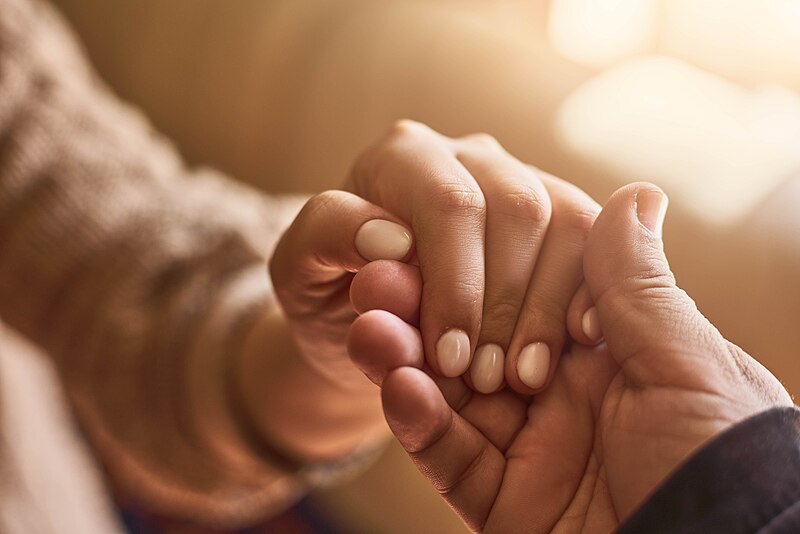
File:Compassion holding hands.jpg

Image by U3190523 (CC BY-SA International)

Those of us who somehow managed to survive childhood abuse and/or domestic violence may actually have contempt for our fellow survivors.

Why is this?  Certainly, compassion would seem more natural.  After all, we know the pain of those who shared the same experience.

The answer is surprisingly simple.  We project onto others the contempt we feel for ourselves.

Weakness

They were weak, at least we think they were.  We do not want to be associated with weakness.  That might imply we were once weak, too.

It would dredge up the fear and vulnerability — the trauma — of childhood abuse or domestic violence.  It might imply that we were powerless in the face of abuse or domestic violence.  That knowledge is too distressing for us.  Better to hold others in contempt.

That we still have such intense feelings suggests we have not fully come to terms with our experience. Continue reading

11 Comments

Filed under Child Abuse, Child Molestation, Christianity, domestic abuse, domestic violence, Emotional Abuse, Neglect, Physical Abuse, Religion, Sexual Abuse