Shrapnel – Trauma Beliefs

Shrapnel fragments visible on x-ray, Author Hellerhoff (CC BY-SA 3.0 Unported)

WARNING: Graphic Images

The sharp, jagged, metal fragments from an exploding bomb, grenade, or landmine are known as shrapnel.

Shrapnel wounds require special care.  Initially, these are open puncture wounds, with impaled objects so hot that medical personnel are strictly advised to leave them in place. Pressure on shrapnel wounds must be avoided, as this will only cause more damage to surrounding tissues and organs.

After it cools, some shrapnel can be removed surgically [1].  Often, however, surgery would do more harm than good.  There may be hundreds or thousands of small objects.

Over the years, fragments left behind can migrate within the body, making them still harder to find and access.  It is not unusual for shrapnel to remain imbedded for decades [2].

Trauma Beliefs

The same is true for trauma beliefs. When children undergo trauma, they experience strong emotions.  Like scorching metal fragments, these searing emotions highlight the traumatic event.

But children, also, draw conclusions from trauma.  This is their attempt to make sense of the world.  Unfortunately, the conclusions children draw may not be accurate [3].

Since the traumatic event is not fully understood, the child cannot fully process it. Instead, the emotions and faulty conclusions surrounding the trauma remain sharp, jagged, and are re-experienced, again and again.

This happens even after conscious memory of the event has faded.  Like shrapnel, trauma beliefs  remain in the body, and continue to do harm.

False Core Beliefs

Having been abandoned as children, we may fear that others will leave us as adults. Having been abused as children, we may believe ourselves unworthy of love as adults. These core beliefs about ourselves and the world around us may never be vocalized, never questioned.  But they are deeply held.

Trauma beliefs “feel” accurate not because they are, but because we have held them for so long [4].  They “feel” protective, but are actually self-sabotaging [5]. Continue reading

21 Comments

Filed under Child Abuse, Christianity, Emotional Abuse, Neglect, Physical Abuse, Religion, Sexual Abuse, Violence Against Women

Foster Care – A Failed System

Changes in Congregate Care in 8 States (9/30/04-9/30/13), Author US Govt. Accountability Office (GAO), Source https://www.gao.gov, (PD as work product of federal govt.)

Reporting by the Washington Post confirms what the public has long known.  Our foster care system is failing, nationwide.

One major flaw involves the use of detention centers and similar facilities to house children who have committed no infraction whatsoever [1A].

Warehousing

“…in an era when a surging number of biological parents are falling into the grips of drug addiction, and child welfare systems are struggling with a shortage of foster parents…case workers and courts have been funneling children into crowded emergency shelters, hotels, out-of-state institutions and youth prisons — cold, isolating and often dangerous facilities not built to house innocent children for years [1B].”

Both literally and figuratively, children taken into foster care for their own protection are instead being warehoused with rapists and murderers.  Some are forced to sleep on cement floors with harsh fluorescent lights on during lockdowns.

Scope of the Failure

Because foster care is decentralized, accurate figures are difficult to come by.

As of 2013, approximately 56,000 of the 400,000 children in foster care across the country (14% of the foster care population) were living in what is known as “congregate” care – group homes, detention centers, residential drug treatment facilities, and the like [2].  In West Virginia, fully 71% of 6800 foster children between the ages of 12 and 17 have been relegated to such institutions [1C].

The Opioid Crisis is greatly increasing those numbers. Continue reading

19 Comments

Filed under bullying, Child Abuse, Child Molestation, Christianity, domestic abuse, domestic violence, Emotional Abuse, Justice, Law, Neglect, Physical Abuse, Religion, Sexual Abuse

Becoming Ourselves

It has been said that we become more ourselves, as we grow older.  Superficial beauty fades, and a softer (or, in some cases, starker) beauty takes its place.  This incorporates our scars, evidence of the life we have lived, with and without our consent.

We long, in youth, to be part of a larger whole – the beloved or a noble cause, perhaps.  The paths we take determine greatly – and depend greatly on – whether or not that happens.

The heart calls us to venues and ventures we would never have thought ourselves capable of pursuing, let alone achieving.  Sometimes though it seems we are being led.  Not by our desires alone, but by some external force.

“…[H]e made me into a polished arrow and concealed me in His quiver” (Isa. 49: 2).

Most of us must deal with tragedy, along the way.  Some lives are cut short by it.  Grief and loss can arise from many causes in this imperfect world:  abuse, racism, poverty, and violence, to name a few.

We are shaped by these experiences, and can be broken by them.  Chances are, we will be forced to make difficult choices.  Almost everyone is.

For a tree branch to be made into an arrow, it must be stripped of leaves (John 15: 2); fired, so as to become pliable (Isa. 48: 10, Rom. 5: 3 and 8: 28, James 1: 2-4, 1 Pet. 1: 6-7); straightened (Eph. 2: 21 and 4: 15-16, Heb. 10: 24-25); sanded (Heb. 12: 7-11); and oiled (Ps. 104: 15, Gal. 5: 22-23, Eph. 5: 18) [1].

Ultimately, the arrow finds its target.  So, too, will our lives, in God’s hands, find their intended target…even if that target is not what we originally supposed.

We can rely on that.

[1]   All credit for this information about arrow construction, and the biblical citations associated with it goes to Fountaingate Christian Foundation. See, ChurchLink, Bible Study Warehouse, Series:  The Call – Lesson 7,  “Preparation for Ministry”,  http://www.churchlink.com.au/churchlink/bible_studies/call/call7.html. Copyright © 1981, 1996 Paul Bunty and David Collins. All rights reserved.

Originally posted 7/10/16

FOR MORE OF MY ARTICLES ON POVERTY, POLITICS, AND MATTERS OF CONSCIENCE CHECK OUT MY BLOG A LAWYER’S PRAYERS AT: http://www.alawyersprayers.com


12 Comments

Filed under Child Abuse, Christianity, Poverty, Religion, Terrorism, Violence Against Women

Vincent

“Self-Portrait” by Vincent van Gogh (1889), National Gallery of Art (Accession No. 1998.74.5), Source https://artsandculture.google.com (PD-Art, PD-old)

The artist Vincent van Gogh led a tragic life.  His art – now lauded – was ahead of its time, and unappreciated by the public.  Tormented by loneliness, Vincent longed desperately for love and friendship, but had difficulty with both.

However, Vincent and his brother, Theo, were extremely close.  Amsterdam’s van Gogh Museum is holding an exhibition in which contemporary artists and writers have responded to the hundreds of letters Vincent wrote Theo.  In these letters, Vincent movingly described his hopes and fears.  See, https://www.brainpickings.org/2014/12/01/van-gogh-purpose-letter/  and  https://www.brainpickings.org/2014/05/07/vincent-van-gogh-art-love-letters/ .

Below is an excerpt from the letter novelist, Nicole Krauss crafted [1].  I believe abuse victims may find it helpful.

“Dear Vincent,

You write about fear:  Fear of the blank canvas, but also, on a larger scale, of the ‘infinitely meaningless, discouraging blank side’ that life itself always turns toward us…

Repeating Old Patterns

It’s a strange thing about the human mind that, despite its capacity and its abundant freedom, its default is to function in a repeating pattern.  It watches…the days and seasons, the cycle of life and death all going around in an endless loop, and unconsciously…echoes these cycles.  Its thoughts go in loops, repeating patterns established so long ago we often can’t remember their origin, or why they ever made sense to us.  And even when these loops fail over and over again to bring us to a desirable place, even while they entrap us… [we] still find it nearly impossible to resist them.  We call these patterns of thought our ‘nature’ and resign ourselves to being governed by them as if they are the result of a force outside of us…

Breaking with the Past

And yet it is unquestionably within our power to break the loop…by choosing to think — and to see, and act — in a different way.  It may require enormous effort and focus.  And yet for the most part it isn’t laziness that stops us from breaking these loops, it’s fear…

Fear

And so before we can arrive at the act of breaking, we first have to confront our fear.  The fear that the blank canvas and the blank side of life reflects back to us, which is so paralyzing, as you put it, and seems to tell us that ‘we can’t do anything.’  It’s an abstract fear, though it finds a way to take on endless shapes.  Today it may be the fear of failure, but tomorrow it will be the fear of what others will think of us, and at a different time it will be fear of discovering that the worst things we suspect about ourselves are true… Continue reading

22 Comments

Filed under Child Abuse, Child Molestation, Emotional Abuse, Neglect, Physical Abuse, Religion, Sexual Abuse

Vigilance, Part 4 – Sexual Abuse

National Institutes of Health Sex Abuse Disorders Graph
(PD as work product of federal govt.)

These days, children can become victims of sexual exploitation in a variety of ways.  If the sexual predator is a parent, the incest is likely to be a closely held secret.  Whoever the predator, sexual abuse has long-term, devastating consequences.

The warning signs of sexual abuse include the following [1]:

  • A young child who suddenly has difficulty sitting or walking, suggesting injury to the genital area.
  • A child who suddenly refuses to change for gym or take part in other physical activities at school.
  • A child whose hygiene changes suddenly, since children who have been sexually abused may feel “dirty” and stop bathing (or become obsessed with cleanliness, and wash constantly).
  • A child who demonstrates unusual knowledge of sex or sexualized behavior.
  • A child who becomes pregnant or contracts a venereal disease, especially under the age of fourteen.
  • A child who says s/he has been sexually abused by a parent or caregiver.

We assume that the predator parent or caregiver (uncle, boyfriend, etc.) is likely to be secretive and isolated.  This is not always, however, the case.

The sexual predator may be unusually “protective” of the abused child, often sharply restricting a child’s contact with other children – particularly those of the opposite sex.

Guardians

We are the only guardians children have against the darkness of this world.  It is vital that we remain vigilant on their behalf.

Be sober, be vigilant; because your adversary the devil walks about like a roaring lion, seeking whom he may devour” (1 Peter 5: 8).

[1]  Prevent Child Abuse America, “Recognizing Child Abuse:  What Parents Should Know”,   https://preventchildabuse.org/resource/recognizing-child-abuse-what-parents-should-know/.

FOR MORE OF MY ARTICLES ON POVERTY, POLITICS, AND MATTERS OF CONSCIENCE CHECK OUT MY BLOG A LAWYER’S PRAYERS AT: https://alawyersprayers.com

16 Comments

Filed under Child Abuse, Child Molestation, Christianity, Emotional Abuse, Neglect, Physical Abuse, Religion, Sexual Abuse

Vigilance, Part 3 – Physical Abuse

Rib fractures in an infant, secondary to child abuse, Author/Source National Institute of Health (PD as work product of US Dept. of Health and Human Service, a federal agency)

Physical abuse is the form of child abuse most frequently reported by the media and most familiar to the public.  It is, also, the form most frequently fatal.

Children can and do sustain bumps and bruises, in the course of ordinary play.  Physical abuse, however, is deliberate harm by a parent or caregiver.

An abuser may characterize physical abuse as punishment for a perceived infraction.  But such punishment is out of all proportion to the infraction, and severe beyond a child’s capacity to understand or endure it. Continue reading

16 Comments

Filed under Child Abuse, Child Molestation, Emotional Abuse, Neglect, Physical Abuse, Sexual Abuse

Vigilance, Part 2 – Emotional Abuse

Frightened child, Author Jean-Francois Gornet, Paris, Source Selfie Velib, Originally Posted to Flickr (CC BY-SA 2.0 Generic)

Emotional abuse is an underrated form of abuse, but no less damaging for that.

The warning signs of emotional abuse include the following [1]:

  • A child who exhibits a lack of attachment to the parent.
  • A child who is delayed in physical or emotional development, unrelated to an identifiable medical or psychological condition.
  • A child who is either inappropriately adult (parenting other children) or inappropriately infantile (constantly rocking or head-banging, for example).
  • A child who exhibits behavioral extremes (acute passivity or serious aggression; demanding behavior or abject compliance).
  • A child who attempts suicide.

The parent who rejects his/her child will constantly blame, belittle, or berate that child.  The parent unconcerned about his/her child’s well-being may refuse offers of help for that child’s school problems.

On the other hand, a parent can be so self-involved that his/her child becomes little more than a pawn for manipulation.

[1]  Prevent Child Abuse America, “Recognizing Child Abuse:  What Parents Should Know”,   https://preventchildabuse.org/resource/recognizing-child-abuse-what-parents-should-know/.

This series will continue next week with Part 3 – Physical Abuse

FOR MORE OF MY ARTICLES ON POVERTY, POLITICS, AND MATTERS OF CONSCIENCE CHECK OUT MY BLOG A LAWYER’S PRAYERS AT: https://alawyersprayers.com

18 Comments

Filed under Child Abuse, Child Molestation, Emotional Abuse, Neglect, Physical Abuse, Sexual Abuse

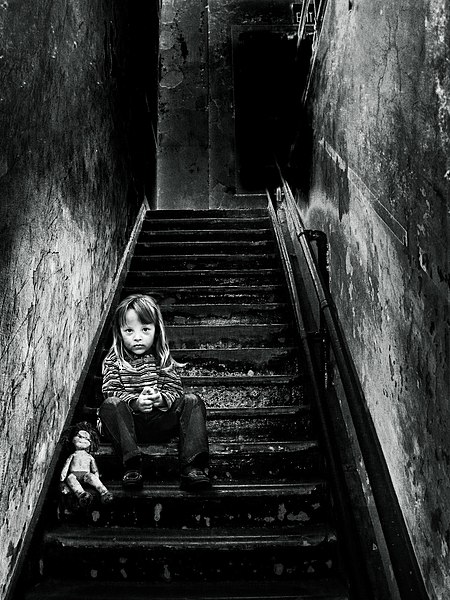
Vigilance, Part 1 – Neglect

File:Child depressed alone poverty.jpg

Sad girl with doll, Source https://pixabay.com/illustrations/image-manipulation-girl-doll-stairs-3349068/, Author DarkWorkX
(CC0 1.0 Universal Public Domain Dedication)

There are a thousand ways to harm a child.  The evidence of child abuse may be subtle or more obvious.  To remain vigilant against such abuse, those of us concerned for the welfare of children must learn to recognize the warning signs.

This series of posts will address such warning signs.  The signs here are derived from lists compiled by Prevent Child Abuse America [1A].  They fall into 4 categories:  neglect, emotional abuse, physical abuse, and sexual abuse.  More often than not, these categories will overlap in the experience of a child.

No single warning sign, by itself, is considered definitive.  Occurring repeatedly or in combination, however, these signs warrant further investigation.

General

The general signs that child abuse may be present in a family include unusual wariness on the part of a child; sudden changes in a child’s behavior; deterioration in a child’s school performance; and learning disabilities on a child’s part unrelated to an identifiable medical or psychological condition.

But the children of abuse may, also, be overachievers, anxious to please.

That said, we will begin with neglect. Continue reading

19 Comments

Filed under Child Abuse, Child Molestation, Emotional Abuse, Neglect, Physical Abuse, Poverty, Sexual Abuse

Hospital of Horrors

Lake Shore Drive, Chicago, Author Roman Boed of Netherlands, Source Flickr (CC BY-SA 2.0 Generic)

WARNING:  Graphic Images

Most of us view hospitals as places of hope and healing.  According to a federal lawsuit filed last week, Aurora Chicago Lakeshore Hospital does not fit that bill [1A].

Damning Investigations

Investigations by both the Chicago Tribune and ProPublica confirm that children confined to Aurora were subjected to physical and/or sexual abuse there [1B].

Willful Ignorance

Child welfare officials at the Illinois Dept. of Children and Family Services (DCFS) allegedly ignored the issues at Aurora due to a shortage of other psychiatric facilities willing to accept DCFS referrals.

Despite an increased number of complaints to the state’s child abuse hotline regarding Aurora, DCFS did not stop referring patients to that hospital until pressure was applied by watchdog groups and state legislators.

For those reasons, DCFS is, also, named in the suit.

Continue reading

33 Comments

Filed under Abuse of Power, Child Abuse, Child Molestation, Christianity, Emotional Abuse, Justice, Law, Neglect, Physical Abuse, Religion, Sexual Abuse, Sexual Assault

Full and Satisfying

Nativity scene at St. Viktor Church, Dulmen, Germany, Author/Source Dietmar Rabich (CC BY-SA 4.0 International)

Can the victims of abuse ever lead full and satisfying lives?  That depends, to a large extent, on how we define “full and satisfying”.

There is no question that abuse can kill.  Those of us who survive may be left with lifelong physical and emotional scars.  Abuse can leave victims struggling with depression, anxiety, and PTSD.  Abuse can turn sex into a weapon, in the desperate search for love.  Abuse can lead to self-medication, with drugs or alcohol.

But that is not the whole story.  Not by a long shot.

“…even the helpless victim of a hopeless situation facing a fate he cannot change, may rise above himself, may grow beyond himself, and by so doing change himself.  He may turn a personal tragedy into a triumph.”

– Viktor Frankl, Man’s Search for Meaning

The psychiatrist and Holocaust survivor, Viktor Frankl, in Man’s Search for Meaning described his experiences as a prisoner at Auschwitz concentration camp.  He concluded that human beings strive for purpose, and that – whatever our circumstances – we have the ability to give life meaning through love, work, and suffering.

At first glance, that may not make sense.  Oh, most of us would agree that life can be given meaning by romantic love, perhaps brotherly love.  After some thought, we might be persuaded that life can be given meaning by work – even tedious or menial work, if done to support the ones we love.

Yet suffering? Not such a stretch as it might seem.  We recognize the concept of sacrifice in a noble cause (love of God, love of country, etc.), and sacrifice for the sake of a beloved.  Mothers who have lost a child will understand that their grief is, in part, a testament to that child.

How does this relate to abuse victims?  Well, we have certainly suffered.  That our suffering was not to any purpose makes it all the more cruel.  We were innocent victims.  Blameless.

And that is the place to start… Continue reading

19 Comments

Filed under Child Abuse, Christianity, Emotional Abuse, Neglect, Physical Abuse, Religion, Sexual Abuse