Tag Archives: depression

Invisible Wounds – Emotional Abuse

Mimi & Eunice Cartoon:  “Posture”, Source https://mimiandeunice.com/2011/10/20/posture/, Author Nina Paley, (CC BY-SA 3.0 Unported)

“Ugh.  I hate the sight of your ugly face.”

“I wish I’d never had you.  I should have gotten an abortion.”

“You’re useless.  You’ll never amount to anything.”

“How can you be so stupid?  No wonder you have no friends.”

“Now, look what you made me do.  It’s all your fault.”

“No one could love you.  No one ever will.”

Emotional abuse leaves no visible scars.  But the wounds go deep.  We may as well have scalding water dumped over us.

Emotional abuse is often mischaracterized as a less damaging form of child abuse.  To the contrary, the American Academy of Pediatrics calls it, “the most challenging and prevalent form of child abuse and neglect” [1A]. 

Such abuse can carry over into adult relationships [2].  We settle for what we think we deserve.  There is, therefore, a clear link to domestic abuse [3].

Emotional abuse of children may be accompanied by physical neglect, physical abuse, or sexual abuse. 

However, there is credible evidence that the victims of emotional abuse and emotional neglect exhibit equal or worse immediate and long-term effects than the survivors of other forms of maltreatment and violence [1B].

Types of Emotional Abuse

A. Cruelty

Emotional abuse can involve name calling; constant criticism; negative remarks about a child’s (or later an adult partner’s) appearance, intellect, abilities, hopes, and dreams; cruel jokes at a child’s (or later an adult partner’s) expense; deliberate humiliation; and threats of violence or abandonment [4A]. 

A parent may permanently damage a child’s self-esteem simply by withholding all kind and encouraging remarks [4B].

B. Manipulation

There are other varieties of emotional abuse, no less harmful to a child.  These can range from manipulating or scapegoating a child; failing to promote a child’s social development by forbidding friends, and forcing isolation on a child; to making a child the parent’s emotional partner (covert incest); or exposing a child to traumatic events like domestic violence, drug and alcohol abuse [4C].

C. Excessive Control

Children can be damaged if they are pushed too hard, in order to fulfill a parent’s own ambitions, or controlled so closely that they have no lives of their own [4D].

D. Emotional Neglect

At the other extreme, children can be emotionally harmed, if they are regularly ignored [4E]. 

Failure by a parent to interact at all with a child is known as emotional neglect.  This can occur if, for instance, a parent suffers from serious mental illness.  It can be devastating for the child, even if he or she is otherwise fed and clothed.

E. Domestic Abuse

In the context of domestic violence, emotional abuse is often accompanied by extreme jealousy; isolation; enforced dependence; and coercive control by the abusive partner over money, travel, and communication with family and friends [5A]. Continue reading

23 Comments

Filed under Child Abuse, Child Molestation, domestic abuse, domestic violence, Emotional Abuse, Neglect, Physical Abuse, Sexual Abuse, Violence Against Women

Healing from Abuse

Flowers growing from cement, Author Frederick Depuydt (CC BY-SA 4.0 International)

Healing from child abuse is possible.  But healing is a process [1].  In this regard, healing from domestic abuse is not very different. 

Necessary elements include recognizing the full impact of the trauma we experienced; processing the emotions the trauma generated; developing healthy coping mechanisms; and rebuilding a sense of safety and self-worth. 

Both healing from child abuse and healing from domestic abuse require courage and patience with ourselves.

The Impact of Trauma

The impact of childhood trauma is multi-faceted.  It can range from rage, self-hatred, anxiety, depression, and PTSD (nightmares, flashbacks, emotional detachment, etc.) to sexual addiction, sexual dysfunction, chronic physical ailments (migraines, backaches, etc.), drug or alcohol addiction, and eating disorders [2].  

Similarly, domestic violence can result in anxiety, depression, PTSD, and a host of physical ailments from gastrointestinal and cardiovascular issues to traumatic brain injury [3][4].

It bears mention that child abuse and domestic abuse can both result in death, either at the hand of the abuser or by way of suicide years later.

Professional counseling can be of great assistance to survivors in dealing with trauma, re-establishing necessary boundaries, and developing healthy coping skills [5].

Rebuilding Self-Worth

At the deepest level, victims must reclaim a sense of self-worth.  This is an enormous challenge.  Child victims of abuse are taught from the outset they are dung.  Adult victims (having survived turbulent childhoods) are gradually deprived of their power and self-respect by abusive partners. Continue reading

16 Comments

Filed under Child Abuse, Child Molestation, Christianity, domestic abuse, domestic violence, Emotional Abuse, Neglect, Physical Abuse, Religion, Sexual Abuse

Fighting Demons

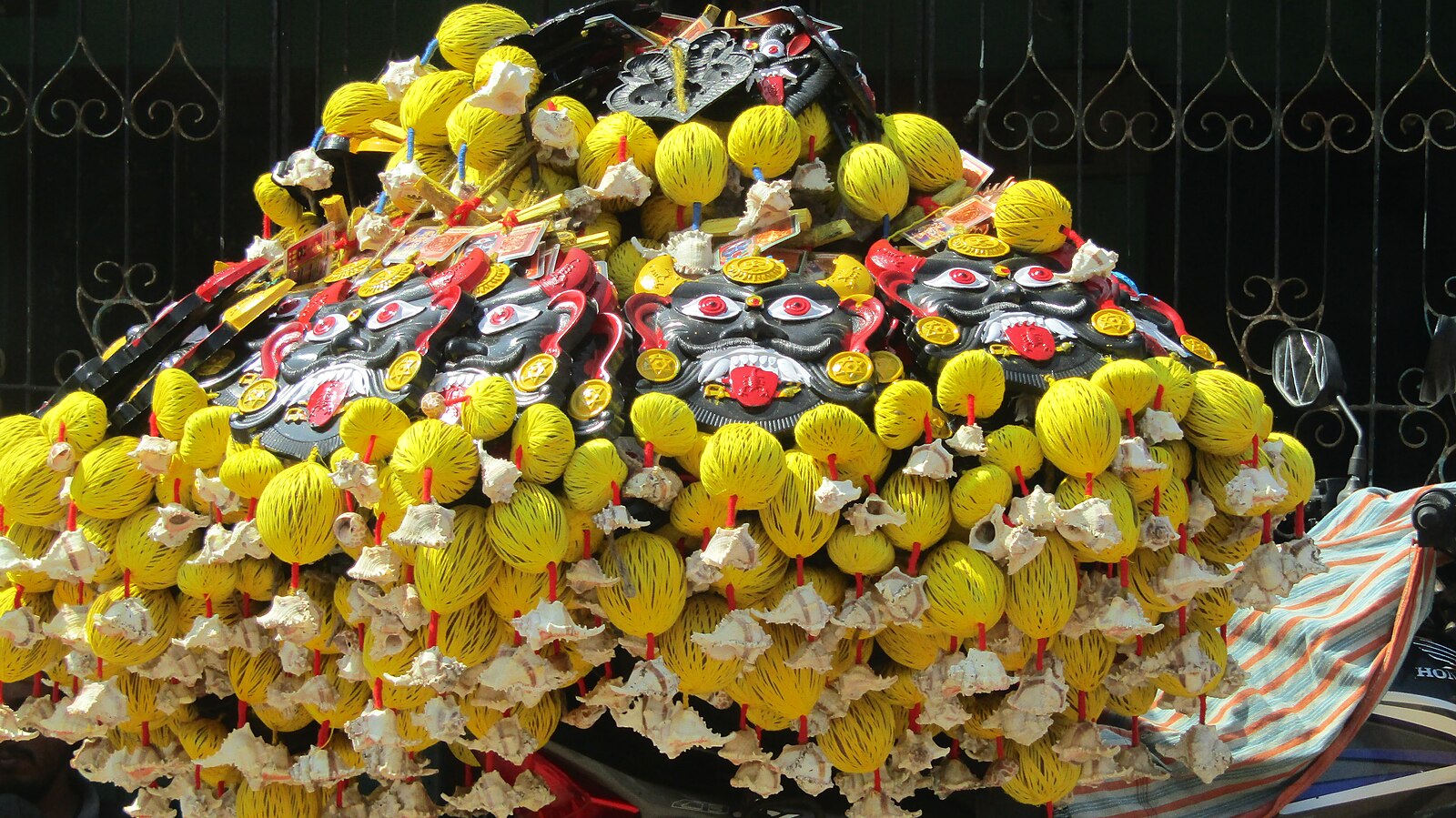
Black Demons, Author Ramya srivastav, (CC BY-SA 4.0 International)

Fighting the demons of anxiety, depression, and PTSD or trauma-related addictions and eating disorders is a little like playing football [1][2].  We make headway then lose ground.  But the fight never really ends, not the way a game of football does.  There is no score.

We win by surviving another day.

Across Decades

It can be enormously discouraging to wrestle with the scars of abuse, sexual assault, or other trauma, decade in and decade out.  Surely, we must after all this time have made progress.

But progress is not linear.  Despite the passage of time, and an extensive list of medications – not to mention therapy – familiar demons can resurface.

Factors Impacting Our Success

So, are anxiety, depression, and PTSD or trauma-related behaviors ever really “conquered”?  Can they, at least, be fought to a standstill?  The answer depends.

The factors include the length and severity of the trauma we sustained; our particular genetics; the quality and extent of our medical treatment; our psychological and spiritual resources; the emotional support we have available; and the other stressors to which we are subjected.

None of these can be quantified.  Most such demons can and do vary over the course of a lifetime.

The Struggle

Why not just throw in the towel (to mix sports metaphors)?  After all, the struggle is exhausting.  The struggle, however, is life. Continue reading

12 Comments

Filed under Child Abuse, Child Molestation, Christianity, Emotional Abuse, Justice, Neglect, Physical Abuse, Poverty, Rape, Religion, Sexual Abuse, Sexual Assault, Sports, Violence Against Women

Invalidation

Distressed woman, Source https://pixaby.com, Author pixaby user “Free-photos” (Creative Commons CC0 1.0 Universal Public Domain Dedication)

“You’re overreacting.”

“You’re being overly sensitive.”

“You shouldn’t take things so personally.”

“You make a big deal out of everything.”

“I’m sure it wasn’t that bad.”

“You probably misunderstood.”

“It never happened that way.  You’re making things up.”

“You shouldn’t be angry [or hurt or sad].”

Invalidation of our feelings, when it becomes a pattern of behavior, is a form of emotional abuse [1A].  Depending on our upbringing, it can begin in childhood, occur during an adult friendship or romantic relationship, or both.

Feelings As Valid

We are born with the capacity to feel in response to our environment and those in it.  Emotions are an important source of information for us [1B].  They help us identify danger, and protect ourselves against it.

Feelings, in themselves, are not right or wrong.  They are the result of thoughts, prior life events, and perceptions unique to ourselves [1C].  Two people can legitimately have different emotional responses to the same situation.

Emotional validation is a critical communication tool, particularly in families [2A].  It helps sustain emotional connection, making us feel safe and secure.  Its absence has the opposite effect.

Mechanism of Invalidation

At various times our feelings may be [1D]:

  • Minimized as excessive for a given situation;
  • Dismissed as inappropriate or groundless, because our assessment of the situation is supposedly inaccurate; or
  • Ignored entirely, as if we were invisible and not experiencing them (or our experience was irrelevant to the abuser which – sad to say – it frequently is).

This can cause enormous shame, over and above the emotion we are actually experiencing and attempting to convey.

Impact on Children

Children who regularly experience emotional invalidation may learn to ignore, hide, or distrust their own emotions, while striving ever harder to please others [2B].  This leaves them dependent on and vulnerable to external validation. 

Invalidation can lead to emotional detachment or, in extreme cases, borderline personality or narcissism.  It is, also, a tool used by narcissists on children and adults alike.

Adult “Gaslighting”

Among adults, invalidation is a powerful if subtle means of manipulation known as “gaslighting” which allows the abuser to alter the victim’s reality.  Abusers routinely use it to blame the victim, and diminish their responsibility for the harm they have done [1E]. Continue reading

24 Comments

Filed under Child Abuse, Child Molestation, Christianity, domestic abuse, domestic violence, Emotional Abuse, Neglect, Physical Abuse, Religion, Sexual Abuse

Light from Darkness, Part 1

Margeaux Gray, Image courtesy of The Pixel Project

Margeaux Gray is a survivor of childhood sex trafficking, having been sold into slavery at the age of 5 [1][2][3].  She is, also, an artist who uses her talent both to convey the trauma of abuse and to honor the individual, no matter how broken. 

Ms. Gray advocates against all forms of abuse.  She mentors at-risk youth, speaks publicly about abuse, and confers with physicians and organizations about improving health care and social services for victims.   

Below are excerpts of an interview with Ms. Gray and images of her work:

“Human trafficking…thrives on the ignorance of family and the community.  I was sexually exploited and sold into sexual slavery by a man who had my trust and the trust of my family…I was not kidnapped or locked away in a basement.  My mom, sister, and aunt did not think twice about the two of us going out and doing things together.”

“Untitled” by Margeaux Gray at age 13, Image courtesy of AMA Journal of Ethics

“At around fourteen years old, I disclosed to a healthcare worker that I was being sexually abused.  This was before human trafficking was a definition.  It was reported to police.  After that the trafficking lessened, but continued.  I had an emotional attachment to the man who trafficked me. This is…referred to as traumatic bonding…It took four years for me to gain a greater understanding of the what had been and was continuing to be done to me.”

“A victim of slavery is a trauma victim and every survivor deals with trauma in different ways…Many victims…suffer with alcohol and drug addiction, Post Traumatic Stress Disorder (PTSD), depression, and sexually transmitted diseases to name a few.”

“Universal Light, Nurture and Nursing” by Margeaux Gray, Image courtesy of AMA Journal of Ethics

“Art…was a strategic way for me to cope and find some freedom when I had little. Through my healing it has allowed me a way to process my emotions resulting from being trafficked. Today I use it as an extension of my voice.  I have specifically used visual art to educate, inspire, and empower others.”

Not all abuse victims are talented artists.  But the arts — writing, drawing, painting, music, theater — are a way to reveal the pain we have endured while reaching toward something better, something more. 

We need not become professionals to do this.  We need not even share the results of our efforts with others, if that feels too intimidating.  We need only allow the soul to express itself.

Even concentration camp victims have done this [4].  Because light is stronger than darkness.  And love is stronger than hate.

[1]  The Pixel Project, “Inspirational Interview:  Margeaux Gray – Part I”, 10/26/14,  https://www.thepixelproject.net/2014/10/26/inspirational-interview-margeaux-gray-part-i/.

[2]  The Pixel Project, “Inspirational Interview:  Margeaux Gray – Part II”, 10/27/14, https://www.thepixelproject.net/2014/10/27/inspirational-interview-margeaux-gray-part-ii/.

[3]  AMA Journal of Ethics, “Out of Darkness, Light:  Drawing and Painting by Margeaux Gray” by Margeaux Gray and Mary Richards, 1/19/17, https://journalofethics.ama-assn.org/article/out-darkness-light-drawing-and-painting-margeaux-gray/2017-01.

[4]  Yad Vashem Collection, “Art from the Holocaust”, January 2016, https://www.yadvashem.org/yv/en/exhibitions/art/index.asp.

This series will conclude next week.

FOR MORE OF MY ARTICLES ON POVERTY, POLITICS, AND MATTERS OF CONSCIENCE CHECK OUT MY BLOG A LAWYER’S PRAYERS AT: https://alawyersprayers.com

12 Comments

Filed under Child Abuse, Child Molestation, domestic abuse, domestic violence, Emotional Abuse, human trafficking, Neglect, Physical Abuse, sex trafficking, Sexual Abuse, Slavery, Violence Against Women

Vigilance, Part 3 – Physical Abuse

“Dr. Payne’s Electroshock Apparatus” (2022) by Tania Love Abramson and Paul R. Abramson, Image courtesy of AMA Journal of Ethics https://journalofethics.ama-assn.org/

Physical abuse is the form of child abuse most frequently reported by the media and most familiar to the public.  It is, also, the form most frequently fatal.

Children can and do sustain bumps and bruises, in the course of ordinary play.  Physical abuse, however, is deliberate harm by a parent or caregiver.

An abuser may characterize physical abuse as punishment for a perceived infraction.  But such punishment is out of all proportion to the infraction, and severe beyond a child’s capacity to understand or endure it.

The warning signs of physical abuse include the following [1][2]:

  • A child who has unexplained burns, bruises, bite marks, or broken bones.
  • A child who has fading bruises after an absence from school, particularly patterned injuries (in the shape of a belt buckle or stove burner, for example) or injuries in normally protected areas of the body like the genitals, inner arms, back, or buttocks.
  • A child who shrinks from adults, as if fearful of being struck.
  • A child who seems reluctant to go home after school, and/or frightened of his/her parents.
  • A child with mental health issues such as PTSD, anxiety, and/or depression.
  • A child who says his/her injury was caused by a parent or caregiver.

Children subjected to physical abuse like “Shaken Baby” Syndrome during the early years of life can experience brain damage, loss of hearing, injury to the spinal cord, and death.

The parent responsible for inflicting injury on a child – or attempting to “cover” for an offending partner – may offer inconsistent (or unconvincing) explanations for that child’s injuries.

Such a parent may describe his/her child as “evil” or in other highly negative terms. The parent may use (or recommend that a teacher use) harsh physical discipline on his/her child.

Other potential danger signals include a prior history of abuse by the parent with the same or another child, and/or physical abuse of that parent as a child.

[1]  Prevent Child Abuse America, “Recognizing Child Abuse:  What Parents Should Know”,   https://preventchildabuse.org/resource/recognizing-child-abuse-what-parents-should-know/.

[2]  First Cry – Parenting, “Neglect – Causes, Effects, and Prevention” by Romita P, 2/12/18,  https://parenting.firstcry.com/articles/child-neglect-causes-effects-and-prevention/.

 Originally posted 1/19/20

This series will conclude next week with Part 4 – Sexual Abuse

30 Los Angeles detention officers have been charged with child abuse for staging at least 69 “gladiator fights” between minors at Los Padrinos Juvenile Hall in 2023.  Some 143 children and teens were involved.

See, https://www.nbcnews.com/news/us-news/30-officers-facilitating-gladiator-fights-minors-la-area-juvenile-hall-rcna194632.

FOR MORE OF MY ARTICLES ON POVERTY, POLITICS, AND MATTERS OF CONSCIENCE CHECK OUT MY BLOG A LAWYER’S PRAYERS AT: https://alawyersprayers.com

24 Comments

Filed under Child Abuse, Child Molestation, Emotional Abuse, Neglect, Physical Abuse, Sexual Abuse

The Rose Garden, Chapter 19 – In the Wilderness

File:Employment Law Office.jpg
Law office boardroom, Source https://www.htwlaw.ca, Author Tony Wong (Free Use)

“Behold, I will do a new thing, Now it shall spring forth; Shall you not know it?  I will even make a road in the wilderness And rivers in the desert ” (Isa. 43: 19).

Kite flying was something I did not do well as a child.  Still, I tried every summer to make a successful kite, one that would soar overhead.

I was aware that kites could be purchased at the local five and dime, but did not think to ask for one.  It was clear such frivolities were beyond the family’s means.  Instead, I constructed my kites of the materials at hand:  loose-leaf paper and cardboard, bakery string, and rags.

The kites did rise briefly, but never very high, resolutely though I ran with them down the hill in front of our house.   I dreamed occasionally, myself, of flying — capable in dreams of rising effortlessly off the ground, like a bird, whenever I wished.

I was not very adept at sledding either.  Snow did not fall often enough in the Bronx to allow much opportunity for practice, and the hill in front of our house was not particularly steep.  I did not view these conditions as bearing on my sledding abilities.  Despite them, I persisted.

Emotional Transparency

The situation was much the same at the first legal firm at which I worked.  This was a medical malpractice firm.  I had not heard of malpractice before; knew only that I wanted litigation.  Suddenly, the biology major I had pursued made sense.

My first firm specialized in brain-damaged infant cases. These are among the most serious and difficult, with large monetary value.  Because of that, trials in this specialty are hard for a young attorney to come by.  One of the first principles driven home to me was that the attorney’s ego must be secondary to the clients’ good.

Trial work here was the Holy Grail, the measure of an attorney, but always something mysterious, as well. As young attorneys, we jockeyed over the few available trial opportunities.  Little by little, we acquired the necessary skills.

I, however, made a fundamental mistake.  I let my feelings of insecurity show at the office.

Fear is a natural component of trial work.  Those who have done it for any length will confirm this.  We carry the responsibility of the clients’ welfare.  The full force of risk falls upon us.

We have high rates of alcoholism and substance abuse; are prone to depression; die of heart failure and stroke, sometimes in the courtroom.

We are an irreverent bunch.  Some of this is due to the fact our jobs require us to push the envelope.  Some of it is a reaction to the stress — a response that, as children, my sister and I used to call “laughing in the face of death.”

Unfortunately, my emotional transparency (a consequence of boundary violation) was viewed as a vulnerability.  No matter how hard I worked, I was passed over.

As young attorneys, we often had to request the rescheduling of trial dates by the courts.  We joked that our cards should read, impressively, “Adjournments in All Courts.”

With litigation as common as it is in this country, court calendars are heavy.  Judges are impatient to move cases along.  Adjournments were not always easy to secure.

On one particular occasion, I was instructed by the Office Manager to obtain a short adjournment on a case already marked “final.”  On the way to court, I had an accident on the parkway.

It was a rainy day.  Traffic was heavy, but moving.  A vehicle entering from the right caused the driver ahead of me to stop suddenly.  I slammed on the brakes in order to avoid a collision, and went into a spin on the wet pavement.

Time seemed to stand still.  A huge truck came into view.  I closed my eyes and gripped the wheel, anticipating impact.  Expecting to die.

Instead, my vehicle came to a soft stop.  I opened my eyes to find I had spun 180 degrees and was facing the vehicle originally behind mine, our bumpers barely touching.

None of us in the vehicles involved had been injured.  The police took a report, but we decided as a group to go on with the day.  As far as I know, no litigation ever resulted.

My concern at that moment was getting to court on time.  I got back in my car, drove the rest of way, and managed to get the necessary adjournment.

To my dismay, the Managing Partner was unhappy with my efforts.  Though my inadvertent mentor, he accused me of having manipulated the situation, so that no other attorneys would be available on the adjourned date, and I could try the case.

I was stunned.  Thankfully, I could point to the Office Manager’s written instructions.

I never mentioned the accident.  There seemed no point.

Things reached such a level of frustration for me at the firm that I found myself crying in the office bathroom one day.  As I sat on the edge of the tub, it suddenly dawned on me that I deserved better.  I dried my tears, walked out, and gave notice. Continue reading

15 Comments

Filed under Child Abuse, Child Molestation, Christianity, Emotional Abuse, Law, Neglect, Physical Abuse, Rape, Religion, Sexual Abuse

Surviving Child Abuse, Part 1 -Impact

File:Child abuse awareness ribbon.jpg

Blue Ribbon for Child Abuse Awareness, Source flickr.com, Author Trauma And Dissociation Project (CC BY-SA 2.0 Generic)

Childhood abuse — whatever form it may take, including exposure to family violence — can have long-term effects ranging from anxiety, depression, and Post Traumatic Stress Disorder (PTSD), to eating disorders and more [1A][2A][3A].

Shame and Suicide Risk

Our self-esteem is in tatters.  The shame, itself, can be crippling — no matter how misplaced [4].  The risk of suicide is greatly increased [5A].

Physiological Effects

But not all effects are so obvious.  Child abuse is, for instance, thought to contribute to such chronic health issues as heart disease, as well as such autoimmune disorders as type 1 diabetes, psoriasis, fibromyalgia, inflammatory bowel disease, and rheumatoid arthritis [1B][2B][5B]. Continue reading

15 Comments

Filed under Child Abuse, Child Molestation, domestic abuse, domestic violence, Emotional Abuse, Neglect, Physical Abuse, Sexual Abuse, Violence Against Women

Domestic Violence and Suicide

File:Day 353 - West Midlands Police - Tackling Domestic Violence (8284795632).jpg

West Midlands Police – Tackling Domestic Violence Campaign, Author West Midlands Police, United Kingdom (CC BY-SA 2.0 Generic)

Historically, the focus in suicide prevention has been on men because of their longstanding higher suicide rate [1A].  This has overshadowed the growing rate of attempted suicide and self-harm among women, and the close link with domestic abuse.

“…when a woman presents to [mental health] services in suicidal distress it is likely that she’s a victim of domestic abuse.

–Sally McManus, Sr. Lecturer in Health at the Violence and Society Centre

A groundbreaking study in the United Kingdom last year found that women subjected to domestic abuse (physical, psychological, or economic) are three times more likely to attempt suicide [2A].

Women who have experienced sexual abuse within their relationship are seven times more likely to self-harm [2B].   And women are ten times more likely to experience sexual abuse by a partner than straight or gay men are [1B].

Intimidation, Threats, and Force

Domestic abusers attempt to control their victims through intimidation, threats, and/or actual force [3A].  Typically, they humiliate their partners; isolate partners from friends and family; rigidly regulate what partners may do; and deny partners access to money or other basic necessities [3B].

Emotional Toll

Fear, shame, learned helplessness, a perceived lack of support by family members and friends, hopelessness, and despair are likely to result [3C][4A].  Intimate partner victimization is associated with an increased risk of depression, anxiety, and Post Traumatic Stress Disorder (PTSD), in both men and women [4B]. Continue reading

5 Comments

Filed under domestic abuse, domestic violence, Rape, Sexual Assault, Violence Against Women

Abuse and Defensiveness, Part 2

https://upload.wikimedia.org/wikipedia/commons/d/dd/Cath%C3%A9drale_d%27Amiens%2C_fa%C3%A7ade_-_d%C3%A9tail.JPG

Depiction of Final Judgment on the facade of Amiens Cathedral, France, Author Savant-fou (CC BY- SA 3.0 Unported)

We continue our discussion of defensiveness with an examination of the impact of this psychological defense mechanism on relationships, and the tactics abuse victims can use to stop relying on it.

Impact of Defensiveness

When defensiveness is frequently employed by partners (romantic and otherwise), it is likely to become a vicious cycle with both parties critical and entrenched in their positions before any real discussion of an issue can take place [1A][2A].

Situations easily become tense and hostile.  Everything seems to escalate into a fight [2B].  Issues are never resolved.

In a business context, this is likely to cause isolation from colleagues, and may put a job in jeopardy [2C][3A].  In a romantic context, it will interfere with empathy and intimacy, ultimately becoming destructive to the relationship [1B][3B].

Tactics to Overcome Defensiveness

Professional counseling is one technique for overcoming defensiveness (along with underlying mental health issues like anxiety, depression, and PTSD), particularly as such counseling will increase our awareness of the problem [1C][4A].  Journaling can, also, assist, in this regard [4B].

Acknowledging (rather than attempting to deflect) our feelings can help validate them, and defuse a situation before it gets out of hand [4C].  This allows us to remain calm, listen, express empathy, and focus on the issue at hand without rushing to judgment [2D][4D].

Taking responsibility for something we may truly have done wrong is an opportunity for growth, not a sign of weakness [4E].

Other tactics include building self-esteem, and learning more beneficial communication skills [1D].  Assertiveness training is, for instance, available [5].

Once we recognize the triggers for our defensiveness and understand what may be prompting it, we can more readily ask ourselves what behaviors might be more effective in achieving the specific outcomes we desire while preserving the relationships we value [1E].

Recognition and Eternal Rewards

And whatever you do, do it heartily, as to the Lord and not to men, knowing that from the Lord you will receive the reward of the inheritance; for you serve the Lord Christ” (Col.  3: 23-24).

This is a flawed and broken world.  We will not always receive from it the justice we believe we deserve or the recognition we desire.  As followers of Christ, we will, in fact, be rejected, reviled, and persecuted (1 Peter 4: 12).

God, however, knows our hearts, as well as our failings.  He knows the experiences, positive and negative, which have shaped our lives.  He knows our pain, and our good intentions, whether we can fully express them or not.

Since He sees and knows all things — but loves us immeasurably, despite that — excuses before God are worthless (Luke 8: 17).  Imperfect as we are, He purchased us at the price of His blood.  This makes defensiveness with Him unnecessary, reducing the pressure on us to employ it with others.

God alone is the final Judge, in any case, the only One whose opinion of us really matters in the end.

[1A through 1E]  Healthy Love & Money, “What Is Defensiveness and How It Becomes a Vicious Cycle” by ED Coambs MBA, MA, MS, LMFT, 10/20/22, https://www.healthyloveandmoney.com/blog/what-is-defensiveness-and-how-it-becomes-a-vicious-cycle.

[2A through 2E]  Verywell Mind, “How to Stop Being Defensive” by Sanjana Gupta, https://www.verywellmind.com/how-to-stop-being-defensive-7187366.

[3A and 3B]  Wikipedia, “Defensive communication”, https://en.wikipedia.org/wiki/Defensive_communication.

[4A through 4E]  Verywell Mind, “What Is Defensiveness?” by Arlin Cuncic MA, https://www.verywellmind.com/what-is-defensiveness-5115075.

[5]  Wikipedia, “Assertiveness”, https://en.wikipedia.org/wiki/Assertiveness.

Part 1 in this series was posted last week.

FOR MORE OF MY ARTICLES ON POVERTY, POLITICS, AND MATTERS OF CONSCIENCE CHECK OUT MY BLOG A LAWYER’S PRAYERS AT: https://alawyersprayers.com

6 Comments

Filed under Child Abuse, Child Molestation, Christianity, domestic abuse, domestic violence, Emotional Abuse, Neglect, Physical Abuse, Religion, Sexual Abuse