Tag Archives: abuse and sexuality

The Rose Garden, Chapter 12 – The Chasm

https://upload.wikimedia.org/wikipedia/commons/9/95/Lower_Antelope_Canyon_November_2018_017.jpg

Antelope Canyon, AZ, Author King of Hearts, (CC BY-SA 4.0 International)

WARNING:  Graphic Images

Flee sexual immorality.” (1 Cor. 6: 18).

I found a way at last at age thirteen to end the molestation.  The solution was so obvious that for a long while I would not forgive myself for having failed to see it [1].  I could never again be alone with my father.  No setting was safe.

There was one final level of violation reached before this shift.  My father began to cajole my “permission.”  His face would grow red, his eyes glaze over.  His voice would turn husky.  The words remain seared in my memory.  “Please, honey.  Please, let me.  You’re so sweet.  I can’t help myself.  See how hard you make me.”

I would repeatedly push his hands away, deluded that I might actually be able to deter him.  Finally, my will was broken.  I stopped resisting, even feebly; gave up all hope, and lay there like a rag doll.

It was the request for “permission” that was insidious.  Children do not think logically.  Now, I inferred that I had given consent — against my will.  The shame was excruciating.

I find a section on bees from my father’s notebook particularly striking, in this connection:

“So, when we were kids we used to hang out around the well…It was always wet around [there], and bees loved it.  Barefoot kids, too.

So, the naughty kids, when a bee was sitting in the water or [near it] used to grab the bee by the wings, and hold it.  Naturally, the bee pulled his or her weapon.  Kids held [the bee] on their heels, and let them get stung.

I guess they must have gotten high from the effect.  Naturally, they tried to pull the bee off, but the bee was dead.  Minutes later on the heel was the bee’s needle, turning around like a drill in the foot of the kid [who] quickly pulled the needle out of his heel.

And that was the fun.  The bee was dead, and the kid has his little high fun.  Probably, like they claimed, they eventually got immune to it.”

A predator may grow immune to his victims’ pleas.  A child never develops immunity to the violation to which he or she is subjected.  Each assault leaves a fresh wound.

About this time I began dreaming that a lion had escaped and was roaming our yard.  I had no defense against this lion, and no one to ask for aid.  I would awaken from these dreams in a cold sweat.

Cold Comfort

Since we were Catholic, I had made the sacraments.  Confession, communion.  Attending parochial grammar and high schools as I did meant receiving a religious education.  Unfortunately, the theology conveyed was often riddled with error and harsh in tone.

Though the incest seemed something apart, answers to my deepest questions became increasingly difficult to obtain.  Religion provided cold comfort.

In my teens, my faith expressed itself in involvement with idealistic causes.  These were, however, turbulent years.

Fury

After my grandmother died, my younger sister and I became “latchkey” children.  Not only did we miss Grandma immensely, not only did the house become silent and cavernous in her absence, there was no longer a buffer to our father’s anger.  His fury held sway.

I know now that anger can be a useful tool for separation.  All I knew then was that my father and I argued bitterly.  Whatever the topic — why there were dishes in the sink or whether public assistance was justified — I never seemed to win these arguments.  I came away from them feeling mauled and bloody.

Grandma’s garden withered from neglect and was paved over.  Grandpa moved out.  The cherry tree was cut down.

Self-Absorbed

I taught myself about sex from the encyclopedia, the Bible, and James Bond novels.  That combination filled the gaps the regrettably mature experience imposed by my father had left; placed the assaults by him in some context.

During these years, I became self-absorbed, preferring to spend time by myself.  It is my greatest sin.  I would lock myself in my room, after we came home from school.  My sister, no more than ten at the time, would knock timidly on the door.

“Please, come out, Anna,” she would plead.

“Not now.  I’m really tired.”

“We can play a game.  Please.”

“Maybe later.  Just let me lie down for now.”

“Please, Anna.”

“Maybe in a little while.”

I would experiment with my mother’s lipstick or try on her negligees, while my sister wandered the empty house with nothing but the television for company.

I began reading books on psychology and human behavior, in an effort to better understand myself and make sense of my life.

The interest I developed in anthropology and archaeology during my teens was actually an attempt to decipher human nature and men, in particular.  It was a great comfort to think that the species could not have survived, but for millions upon millions of dedicated fathers over the millennia; that somewhere there had to be good and decent men.

Control Slipping

Meanwhile, my father felt his control over us slipping away.

As a birthday surprise for our mother, my sister and a friend of hers planted rose bushes around the yard.  When our parents arrived home after work to find the rose bushes in place, my father went into a rage.   One by one, he tore them up in the dark.  I will never forget the shock and distress on my sister’s face.

At times, I felt offered up — my father some demonic god; my mother at the altar, holding the knife.  In an effort to lift my spirits, she would tell me how “pretty” he thought I was.

Whether confused, fearful, desperate to please, or deliberately unaware — she served during these years, in effect, as his co-conspirator.   I am certain this was not intentional on her part. Continue reading
14 Comments

Filed under Child Abuse, Child Molestation, Christianity, Emotional Abuse, Neglect, Physical Abuse, Religion, Sexual Abuse

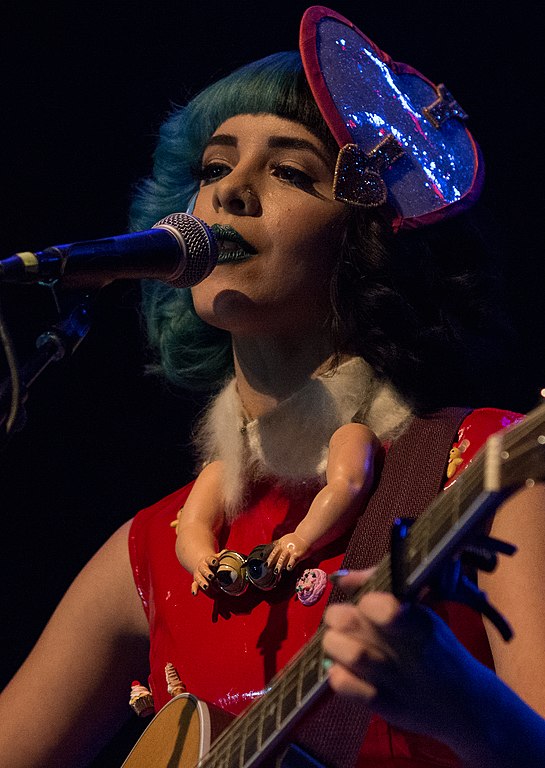
Alternative Girls

Singer Melanie Martinez, Author DeShaun Craddock, Original Source flickr (CC BY-SA 2.0 Generic)

Definition: Alternative Girls – Girls with colored hair, tattoos and piercings [Surgical decoration of the body, esp. the ears, nostrils, eyebrows and navel; sometimes the tongue, nipples, or genitalia.  Considered attractive by some, disgusting by others].

They usually started out as a scene [good, amazing, fun, etc.], punk or goth chick in High School.

Melanie Martinez is an alternative girl singer.

– Urban Dictionary

There is a cultural phenomenon these days known as the “alternative” girl.  Alternative girls favor a lifestyle different from the norm [1].  They have a fashion sense, musical tastes, and opinions different from those of the population in general.

Whatever the origin of this phenomenon, it closely parallels the experience of many child abuse victims.

Desperate for love, we offer up to the world the worst possible aspects of ourselves in the forlorn hope of acceptance and redemption. Continue reading

20 Comments

Filed under Child Abuse, Child Molestation, Christianity, Emotional Abuse, Neglect, Physical Abuse, Religion, sex trafficking, Sexual Abuse

Lovelorn, Part 2

A single red tea rose, Author Brandy Cross (CC BY-SA 3.0 Unported)

A single red tea rose, Author Brandy Cross (CC BY-SA 3.0 Unported)

No child is morally culpable for having been sexually violated.

Tragically, child abuse can have a significant impact on sexual identity (the gender with which victims identify), sexual orientation (the gender to which victims are attracted), and sexuality (victims’ capacity for sexual feelings).

Unfortunately, whether out of modesty or embarrassment, Christians may find it difficult to discuss sex.  This difficulty is compounded for abuse victims.

Sexual Identity/Sexual Orientation

That the trauma of child molestation can impact sexual identity and sexual orientation makes intuitive sense.

As children, we can do little to vent the confusion, fear, shame, and rage abuse causes us.  At a deep level, we either adopt the manner and attitudes of our abuser or reject them.  The decision is not an intellectual one.  It is a matter of survival [1].

This is not to suggest that all victims of childhood sexual abuse are impacted sexually.  Nor is it to suggest that child molestation is the only factor impacting sex and sexuality.

Sexual Addiction (Pornography)

The victims of childhood sexual abuse tend to take one of two paths:  sexual addiction or sexual aversion.  Again, this is a generalization only.  Each individual is unique.

An interest in sex is, by itself, normal and healthy.  Sexual addiction is, by contrast, a compulsion to engage in sex.

In the context of abuse, sexual addiction is a desperate search for love and value, often confused with lax morals.  It is the futile attempt to fill a gaping emptiness inside with substitutes for intimacy.

However – and this is important – sexual addiction can, also, result from bipolar disorder, obsessive-compulsive disorder, or borderline personality disorder.

There is a distinction between sexual addiction and pornography addiction [2].  Sex addicts crave partners; pornography addicts can satisfy their urges without a partner (for example, by using an x-rated video).  Sex addicts are more likely to be social; pornography addicts, more likely to be reclusive.

Pornography addicts may prefer the glossy perfection of an unresponsive image to the reality of a responsive partner.  Live partners require time and attention.  Centerfolds do not.  Live partners are flawed, and likely to discover the flaws in the addict.  With a video or magazine, the pornography addict is not confronted by his/her own shortcomings.  Continue reading

11 Comments

Filed under Child Abuse, Child Molestation, Christianity, Emotional Abuse, Religion, Sexual Abuse

Carnality

Walt Whitman, c. 1860, Author Matthew Brady, Source Library of Congress  (PD-Age)

“The man’s body is sacred and the woman’s body is sacred, No matter who it is, it is sacred…”

–        Walt Whitman, “I Sing the Body Electric”

The great American poet, Walt Whitman, was roundly criticized for publishing those words.  Whitman’s landmark Leaves of Grass, the book containing “I Sing the Body Electric”, was initially ignored by the public then viewed as controversial.  The poem – dealing as it does with the human body – was labeled obscene [1].

Whitman celebrates the body, in all its physicality – the stomach, the lungs, the bones and marrow, the heart, the bowels, and the rest.  The poet speaks of apprentices, laborers, farmers, firemen…even slaves.  He praises infants, girls and boys, mothers and fathers, daughters and sons.

What Whitman concludes is that the body is an expression of the soul.  “And if the body were not the soul, what is the soul?” he asks.

The question is worth considering.

A Temptation to Sin

“You don’t have a soul.  You are a soul.  You have a body.”

–        Gnostic heresy [2]

Christians often view the body as a temptation to sin and nothing more.  In this view, the body is a sort of overcoat to be used, beaten into submission, then discarded.

Abuse victims understand that outlook far too well.  Often, we despise our bodies.  In an effort to distance ourselves from the abuse, we distance ourselves emotionally from the flesh which was subjected to such pain and humiliation.

Emotional distance becomes our refuge.  We hide our bodies in drab and shapeless clothing; disguise them in layers of fat; or cut them as punishment for the unforgivable crime of serving as targets for our abuse.

Abuse and Sexuality

Because of that alienation, it can be extremely difficult for child abuse victims to reconnect to their sexuality, as adults.  Some of us never do.  We carry that secret shame as long as we live – a “defect” for which we feel somehow responsible, though it is as much a scar of our abuse as any other. Continue reading

17 Comments

Filed under Child Abuse, Christianity, Emotional Abuse, Neglect, Physical Abuse, Prostitution, Religion, Sexual Abuse