Tag Archives: abuse and PTSD

The Rose Garden, Chapter 15 – Chocolate or Vanilla

File:Vegan Double Chocolate Brownie Chunk Ice Cream (4869832969).jpg

Brownie and Ice Cream, Source https://flickr.com, Author Veganbaking.net

The day for building your walls will come, the day for extending your boundaries” (Micah 7: 11).

A commentary in The Woman’s Study Bible makes an essential distinction between guilt and shame:

“Guilt is a God-given emotion that occurs when a woman’s mistakes and faults are brought to her own mind or publicly exposed…

Shame, however, says that the person herself is bad…that she is hopelessly defective, unlovable, inferior, and worthless.  Shame begins externally with a subtle implication through silence and neglect or verbal denunciation through words of abuse.  When such messages are repeated often enough, whether through words or actions, they become internalized into a false belief:  I must be bad to deserve such terrible treatment.  This becomes the core identity and the basis of thousands of future, flawed choices for the one suffering from shame [1A].”

The Study Bible goes on to say:

Healing of shame begins when a woman identifies the lies she believed about herself…

Sometimes [however] the victimizing acts done to a person may be so shame-producing that she is still emotionally bound by that shame, though she understands mentally her [true] worth in God’s eyes.  In these situations, she must bring her shame…to Jesus.  Ultimately, only He can bring full emotional cleansing and freedom [1B].”

This is not easy for me, even today.  It is an ongoing process.

As victims, we are not the guilty parties.  However, it mistakenly feels that way.  Therefore, we punish ourselves.  Self-deprivation is one means.

Self-Deprivation

The victims of abuse will often deny themselves the essentials.  Some children will not wash.  They feel dirty and, at an unconscious level, want the world to know.  Other children become obsessed with cleanliness, as I did.

Since expiation cannot be accomplished (it is the wrong party being punished), the behavior is difficult to overcome.

My sister and I have more than once bought for each other the blouse, skirt, or coveted bangle we could not bring ourselves to buy.  As a result of her early trauma, my mother could not choose between chocolate and vanilla ice cream.

“Which would you like, Ma?”

“Either one is okay.”

“Really, it’s no trouble.  I have both.”

“You choose.”

“Do you want both, Ma?  A little of both, maybe?”

“Doesn’t matter.  You choose.”

This excessive desire to please on my mother’s part may have been the result of codependence.  But self-deprivation, also, played a role.  We kept for years in a plastic bag at the back of the refrigerator, behind the vegetable bin, a small fox stole my great aunt had given us.  It was, after all, too good to wear.

I have, myself, slept on the couch because there were new sheets on the bed.  Clothes are somehow more perfect hanging in the closet, clean and untouched.  New lingerie can stay in the drawer for months.  I have difficulty even today allowing myself the small luxury of a manicure.

There are echoes of my grandmother in this.

I can count on one hand the number of full-fledged vacations I have taken.  A friend called mine “Waldherrian” vacations.  These are never actualized:  all fantasy, no fun.

The best of my vacations — to England — was actually arranged as a surprise by my mother and sister for my 30th birthday.  To her great credit, my mother, also, paid for a school trip to Italy which lingers sweetly in memory.

When my grandfather died, college friends called with their condolences.

“We were so sorry to hear, Anna.  Is there anything you need?  Anything we can do?”

“No, thank you.  Not really.”

“We’re calling to find out where the wake is being held.”

“The wake?  You want to come to the wake?!”

“Of course.  We want to be there for you.”

“It’s all the way up in the Bronx.  I don’t want to put you guys to all that trouble.  Really, you don’t have to come.”

“But we want to.  Everyone’s here.  Everyone.  Dressed and ready.  We just need directions to the funeral parlor.”

“Thank you.  I’m grateful.  Truly I am.  But it’s better if you don’t.”

And so it goes.  Our instinct is to deny ourselves comfort in any form. Continue reading

21 Comments

Filed under Child Abuse, Child Molestation, Christianity, Emotional Abuse, Neglect, Physical Abuse, Religion, Sexual Abuse, Sexual Assault

Surviving Child Abuse, Part 1 -Impact

File:Child abuse awareness ribbon.jpg

Blue Ribbon for Child Abuse Awareness, Source flickr.com, Author Trauma And Dissociation Project (CC BY-SA 2.0 Generic)

Childhood abuse — whatever form it may take, including exposure to family violence — can have long-term effects ranging from anxiety, depression, and Post Traumatic Stress Disorder (PTSD), to eating disorders and more [1A][2A][3A].

Shame and Suicide Risk

Our self-esteem is in tatters.  The shame, itself, can be crippling — no matter how misplaced [4].  The risk of suicide is greatly increased [5A].

Physiological Effects

But not all effects are so obvious.  Child abuse is, for instance, thought to contribute to such chronic health issues as heart disease, as well as such autoimmune disorders as type 1 diabetes, psoriasis, fibromyalgia, inflammatory bowel disease, and rheumatoid arthritis [1B][2B][5B]. Continue reading

15 Comments

Filed under Child Abuse, Child Molestation, domestic abuse, domestic violence, Emotional Abuse, Neglect, Physical Abuse, Sexual Abuse, Violence Against Women

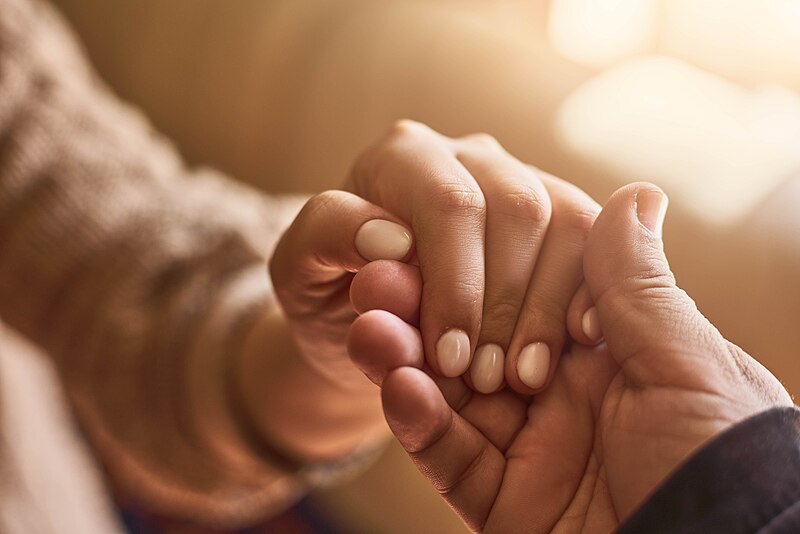
Compassion and Contempt

File:Compassion holding hands.jpg

Image by U3190523 (CC BY-SA International)

Those of us who somehow managed to survive childhood abuse and/or domestic violence may actually have contempt for our fellow survivors.

Why is this?  Certainly, compassion would seem more natural.  After all, we know the pain of those who shared the same experience.

The answer is surprisingly simple.  We project onto others the contempt we feel for ourselves.

Weakness

They were weak, at least we think they were.  We do not want to be associated with weakness.  That might imply we were once weak, too.

It would dredge up the fear and vulnerability — the trauma — of childhood abuse or domestic violence.  It might imply that we were powerless in the face of abuse or domestic violence.  That knowledge is too distressing for us.  Better to hold others in contempt.

That we still have such intense feelings suggests we have not fully come to terms with our experience. Continue reading

11 Comments

Filed under Child Abuse, Child Molestation, Christianity, domestic abuse, domestic violence, Emotional Abuse, Neglect, Physical Abuse, Religion, Sexual Abuse

Abandonment

Abandoned teddy bear, Author Ryan Hodnett (CC BY-SA 4.0 International)

WARNING:  Graphic Images

Brittany Gosney, a 29 y.o. Ohio woman charged with murdering her 6 y.o. son James Hutchinson, has pleaded not guilty by reason of insanity [1]. 

In a confession now being contested, Gosney alleged that her boyfriend, James Hamilton, urged her to abandon all three of her children.  She proceeded to do this, leaving the children in a parking lot at Rush Run Wildlife Area.  The youngest grabbed the car door as Gosney gunned the engine, and was apparently dragged. 

Gosney turned the vehicle around to check on the boy, and found he was dead.  She then loaded the body and her two living children (7 y.o. and 9 y.o.) back into the car, and returned home.  Gosney and Hamilton later tossed the little boy’s remains into the Ohio River, and attempted to pass his absence off as a disappearance.

Abandonment

Child abandonment is the practice of relinquishing interest in and legal rights over one’s children in an illegal manner, the intention being never to resume guardianship [2A].  As in the Gosney case, this is often done in such a reckless way that the children’s welfare and their very lives are placed at risk.

The term “abandonment” is generally used to describe physical abandonment of a child.  It can, also, however, include severe neglect and emotional abandonment, as when parents fail to provide financial and/or emotional support to  minor children for a prolonged period of time.

Apart from the damage severe neglect can cause, this particular form of abandonment may expose a child to sexual abuse by other adults with whom the child then comes into contact.  It is not unheard of for addicted parents to trade their young children to sex traffickers in exchange for drugs. Continue reading

18 Comments

Filed under Child Abuse, Child Molestation, Christianity, Emotional Abuse, Neglect, Physical Abuse, Poverty, Religion, sex trafficking, Sexual Abuse

Heroes

The film The Magnificent Seven is a classic Western about a group of gunslingers who selflessly defend a town against enormous odds.

In the 1960 version (starring Yul Brynner and Steve McQueen), the men fight off bandits in a Mexican village.  In the 2016 version (starring Denzel Washington), they combat a ruthless robber baron in a frontier town.

Demons 

In both versions of the film, the gunfighters are unquestionably heroes – strong, courageous, and expert at their craft.  In each version, however, one man in the group wrestles with demons from his past.

In the 1960 version, the character “Lee” (played by Robert Vaughn of “Man from UNCLE” fame) fears he has lost his nerve.  Haunted by the enemies he has killed, Lee suffers from nightmares.  He drinks.  His hands tremble.  He breaks out in a cold sweat at the thought of battle.

In the 2016 version, the character “Goodnight Robicheaux” (played by Ethan Hawke) is a former Confederate marksman who now has difficulty taking aim.  Goodnight sees hallucinations that he fears foretell his death.

Both men worry that they will not be able to perform when called upon to do so, that they will let others down.  Both consider themselves weak and cowardly.

A Different Perspective

But the audience does not view them that way.  The audience feels enormous compassion for these characters.

Both men stumble.  Yet they somehow find the courage to face their fears, in defense of others.  That they are flawed is one reason The Magnificent Seven has such a powerful impact.  Their internal struggles make the film more compelling. Continue reading

12 Comments

Filed under Child Abuse, Child Molestation, domestic abuse, domestic violence, Emotional Abuse, Neglect, Physical Abuse, Sexual Abuse

Filth

Ancient Jewish bath for ritual immersion (“mikveh”), Author Arie Darzi to memorialize the Jewish communities in Spain, Source http://yavan.org.il/pws/gallery!82 (CC BY-SA 3.0 Unported)

WARNING:  Graphic Images

We have been made as the filth of the world, the offscouring of all things…” (1 Cor. 4: 13).

Filth pours out of the wall.  It may look like water, cool clear water, but it is filth.

In fact, the entire bathroom is contaminated.  God knows when it was last cleaned.  The room reeks of the sweat of prior occupants, is covered in a fine white powder from the predator’s own ablutions.

The door cannot be locked; the predator has seen to that.

You take your clothes off preparing to shower, but cannot find a place to lay down the cotton pajamas into which you plan to change.  Perhaps the toilet seat will suffice, if the clothes do not touch the floor, do not touch the wall, do not touch the tank.

You stand naked on the throw rug, an old shag which is, also, filthy, and prepare to step into the tub.  You grit your teeth, avoid looking at yourself in the small mirror that hangs over the sink.  The tub, too, is contaminated.  You know this must be done, so you step over the edge, cringing, toes curled under.

In the shower, you scrub your skin till it is raw.

You dread having to use the only towels available, stiff and worn, rough and faded towels.  You pull one down onto the floor, in order to be able to step out of the tub.  You carefully avoid touching the walls, touching the toilet tank.

You dry yourself awkwardly, as if drying off a stranger, avoid making eye contact with your image in the mirror.  Then you dress, step into slippers, gather your clothes and the used towels in a bundle for the hamper, and step over the threshold, out of the room.

You can never really get clean.  The bathroom may be contaminated by the predator.  But the dirt, the sin, is inside you.

No Escape

“…and though the…young woman cried for help there was no one to rescue her” (Deut. 22: 27).

This is how a victim of sexual abuse feels.  We despise ourselves, loathe our bodies, would shed them if we could [1].  This flesh is what he wants.  His hands have been all over it, taking possession of what is no longer ours.

Desperation alternates with hopelessness.  But there is no sign of rescue and no escape. Continue reading

15 Comments

Filed under Child Abuse, Child Molestation, Christianity, Emotional Abuse, Religion, Sexual Abuse