
WARNING: Graphic Images
FOR MORE OF MY ARTICLES ON POVERTY, POLITICS, AND MATTERS OF CONSCIENCE CHECK OUT MY BLOG A LAWYER’S PRAYERS AT: https://alawyersprayers.com
WARNING: Graphic Images
FOR MORE OF MY ARTICLES ON POVERTY, POLITICS, AND MATTERS OF CONSCIENCE CHECK OUT MY BLOG A LAWYER’S PRAYERS AT: https://alawyersprayers.com
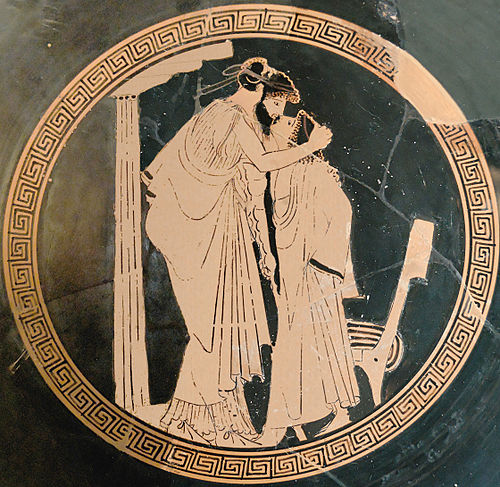
Ancient Greek pederast kissing a young boy (4th Century BC), Louvre Museum (Accession No. G 278), Author Marie-Lan Nguyen (PD)
Many today are adherents of a pernicious philosophy, a false religion, whose name they do not know [1]. It masquerades as ancient wisdom, secret knowledge, a path to self-fulfillment. But it incorporates Satan’s oldest and most effective lies.
Gnosticism is a heresy that seeks to undermine Christian doctrine. It promises that men can become godlike, and exalts inner “perception” over outer reality. Its beliefs are at the root of the Transgender Movement, and are paving the way for the normalization of pedophilia [2][3][4].
This is not to say that Gnostics are pedophiles or even aware of the connection to pedophilia. Most Gnostics would undoubtedly dispute the connection. Not that pedophiles need much help in normalizing their perversion.
Legitimizing Pedophilia
B4U-ACT is part of a growing movement to legitimize sexual attraction to children [5]. Founded by social worker Russell Dick and convicted child sex offender Michael Melsheimer, this Maryland group maintains that sexual attraction to children is not a psychiatric disorder, but an identity to be affirmed.
A list of pedophilia advocacy groups can be found on Wikipedia [6]. Like B4U-ACT, they hold that attempts to reduce or control pedophiles’ attraction to children through cognitive behavior therapy or drugs are not only pointless, but unethical.
Never mind the lasting harm pedophiles do to children. Continue reading
Filed under Child Abuse, Child Molestation, Christianity, Emotional Abuse, Justice, Law, Neglect, Physical Abuse, Religion, Sexual Abuse

“The Damned” by Luca Signorelli (1499-1502), Chapel of San Brizio, Orvieto, Source Web Gallery of Art (PD)
The A&E Network has been running a series titled “Secrets of the Bunny Ranch”, an expose of legalized prostitution at the infamous Bunny Ranch in Nevada. Episodes can be viewed online at https://www.aetv.com/shows/secrets-of-the-bunny-ranch.
Marketing v. Reality
Some years ago HBO aired a puff piece on the Bunny Ranch titled “Cathouse: The Series” [1]. Presented as a documentary, this was essentially a marketing and recruitment device which portrayed brothel life as fun, lucrative, and safe. Nothing could have been further from the truth.
By contrast, the A&E series examines the sordid underbelly of prostitution: the grooming, the trafficking, the rape, the drugs, the violence, the financial irregularity, and the law enforcement corruption.
Virgins are auctioned off to the highest bidder. Pregnant women are offered for sale by the hour to those with a fetish for them. Sex workers are regularly abused, and kept in permanent debt bondage.
Many prostitutes already have a history of childhood abuse and/or domestic violence. They are already wounded, their choices severely limited. Continue reading
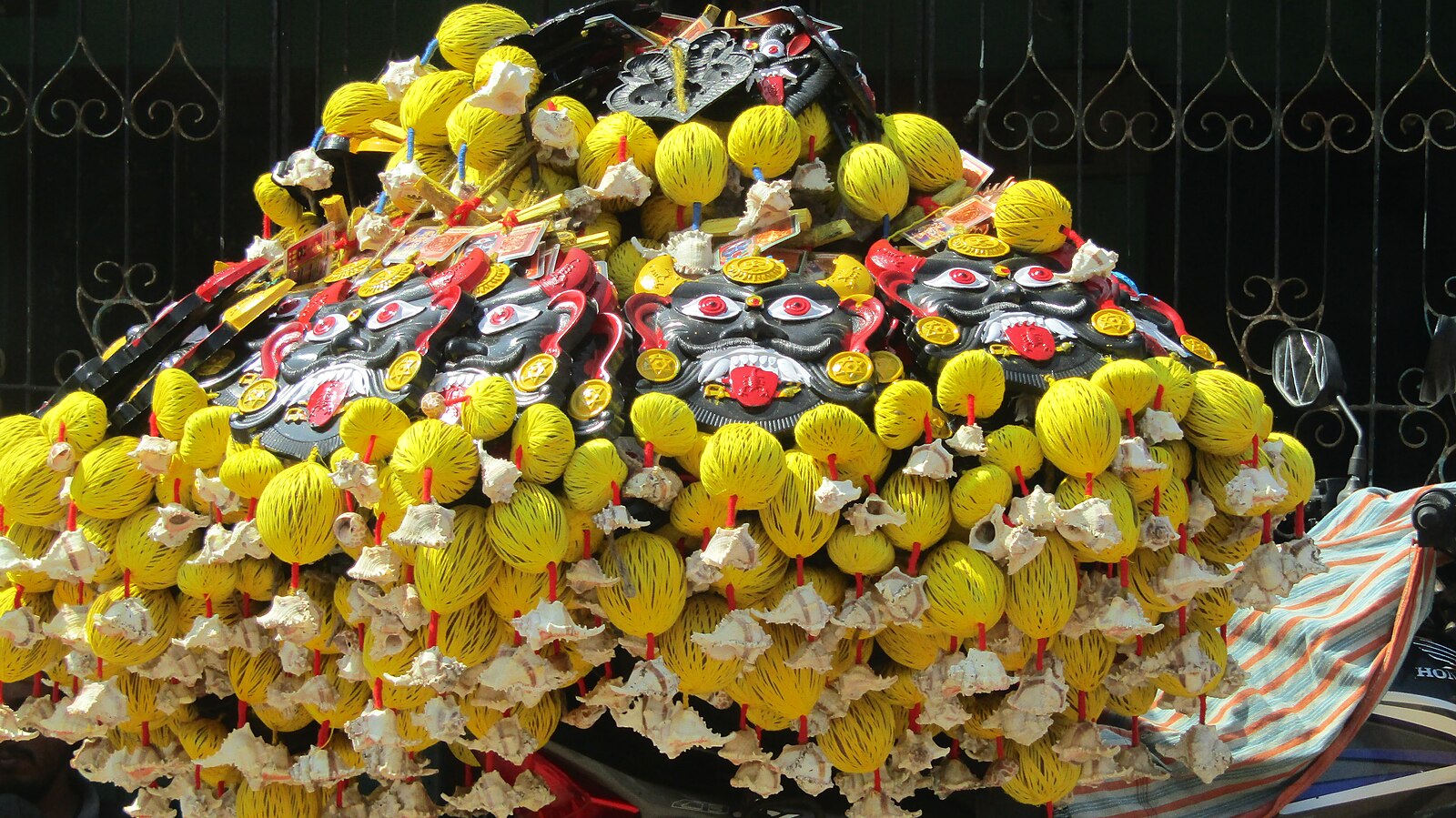
Black Demons, Author Ramya srivastav, (CC BY-SA 4.0 International)
Fighting the demons of anxiety, depression, and PTSD or trauma-related addictions and eating disorders is a little like playing football [1][2]. We make headway then lose ground. But the fight never really ends, not the way a game of football does. There is no score.
We win by surviving another day.
Across Decades
It can be enormously discouraging to wrestle with the scars of abuse, sexual assault, or other trauma, decade in and decade out. Surely, we must after all this time have made progress.
But progress is not linear. Despite the passage of time, and an extensive list of medications – not to mention therapy – familiar demons can resurface.
Factors Impacting Our Success
So, are anxiety, depression, and PTSD or trauma-related behaviors ever really “conquered”? Can they, at least, be fought to a standstill? The answer depends.
The factors include the length and severity of the trauma we sustained; our particular genetics; the quality and extent of our medical treatment; our psychological and spiritual resources; the emotional support we have available; and the other stressors to which we are subjected.
None of these can be quantified. Most such demons can and do vary over the course of a lifetime.
The Struggle
Why not just throw in the towel (to mix sports metaphors)? After all, the struggle is exhausting. The struggle, however, is life. Continue reading

Japanese girl group 9nine, Author Hitoshi 061311 (CC BY-SA 3.0 Unported)
Cyber harassment, like that involving the online influencer Bianca Devins and her family, is defined as the use of electronic technologies (computers, cell phones, and other electronic devices) to distress, stalk, or threaten someone [1][2][3][4A].
“The common factor is the use of technology to establish power and control by causing fear and/or intimidation [4B].”
Online harassment can range from ridicule (cyber bullying, trolling, and dogpiling), the spreading of rumors, and racist rant (hate speech), to the exposure of victims to unwanted sexual or other offensive content (sexual harassment), the dissemination of confidential information or imagery without consent (doxing, sextortion, and revenge porn), impersonation with malicious intent (deepfake), and prolonged surveillance with the intent to intimidate, injure, or kill (cyberstalking).
Victims may experience stress (severe embarrassment, humiliation, etc.), anxiety, hypervigilance, feelings of powerlessness, and fear for their own safety or the safety of loved ones. Performance in school and work suffers. Suicide can result.
The public can protect itself against cyber harassment by using current security software; strong passwords; and regularly updated privacy settings. Personal and location information should never be shared online.
Offenses should be reported to the social media platform, the educational institution or employer (as applicable), and police. Continue reading

Illustration of dogpiling, a form of cyber harassment, Source https://www.flickr.com/photos/23963249@N02/2314383724, Author J_O_I_D (CC BY-SA 2.0 Generic)
WARNING: Graphic Images
Bianca Devin’s, a 17 y.o. online influencer with a small following, was brutally murdered in 2019 by a fan with whom she had become familiar [1]. Her murderer, Brandon Clark, researched beforehand the “best” ways to kill people and livestream the event [2].
Suffering from anxiety, depression, borderline personality disorder, and PTSD, Bianca reached out for friends online, but was harassed by “incels” – an online subculture of aggrieved and angry men who despise and revile women because they are unable to make a romantic connection [3][4][5].
That was not the end of the tragedy. Bianca’s death went viral, with graphic images of her body circulating online for years. The murder was discussed on social media in offensive and misogynistic terms. Bianca’s family members were repeatedly exposed to bloody images of their daughter, as well as being told she deserved to die.
The Devins family ultimately lobbied for the passage of a law protecting families against this type of violation [6]. “Bianca’s Law”, as it is known, makes it a crime in New York to post graphic personal images online of those involved in traumatic situations, and creates a private right of action for victims [7].
—
[1] Wikipedia, “Murder of Bianca Devins”, https://en.wikipedia.org/wiki/Murder_of_Bianca_Devins.
[2] Syracuse, “More horrific details come out in Bianca Devins murder that was shared online to the world” by Elizabeth Doran, 2/14/20 (updated 11/7/23), https://www.syracuse.com/crime/2020/02/more-horrific-details-come-out-in-bianca-devins-murder-that-was-shared-online-to-the-world.html.
[3] Wikipedia, “Incel”, https://en.wikipedia.org/wiki/Incel.
[4] Syracuse, “How Bianca Devins, Brandon Clark moved in online worlds of vanity and abuse”, 7/17/19 by Patrick Lohmann and Samantha House, https://www.syracuse.com/crime/2019/07/bianca-devins-online-vanity-harassment-and-memes-shaped-victim-and-suspects-identities.html.
[5] These men do not seem to realize a major reason they cannot make a romantic connection may be they are so hate-filled.
[6] YouTube, “Crime Weekly News: Kim Devins Discusses Bianca’s Law”, https://www.youtube.com/watch?v=fkFNO90mrXw.
[7] Spectrum News 1, “Hochul signs ‘Bianca’s Law’, making illegal posting of graphic images of crime victims online” by Luke Parsnow, 12/30/22, https://spectrumlocalnews.com/nys/central-ny/politics/2022/12/30/hochul-signs–bianca-s-law—making-illegal-posting-graphic-images-online.
Part 2 in this series will be posted next week.
FOR MORE OF MY ARTICLES ON POVERTY, POLITICS, AND MATTERS OF CONSCIENCE CHECK OUT MY BLOG A LAWYER’S PRAYERS AT: https://alawyersprayers.com
Filed under bullying, Child Abuse, Cyber Harassment, domestic abuse, Emotional Abuse, Justice, Law, Violence Against Women

WARNING: Graphic Images
“Madam, we the women of East London feel horror at the dreadful sins that have been lately committed in our midst.”
–Petition to Queen Victoria by 4000 impoverished women of Whitechapel
In fear for their lives, the women of London’s Whitechapel petitioned Queen Victoria for relief when Jack the Ripper was at large [1][2]. The Ripper is known to have murdered 5 women, but the exact number of his victims is uncertain [3]. These women were all characterized as prostitutes, though they may simply have been destitute women.
Serial Killings
Despite his infamy, Jack the Ripper was not the first serial killer of women. Nor will he be the last. The savagery of such attacks will not be addressed here.
There are, however, men who have no compassion for women — whether they ever become serial killers or not. They do not recognize women as human beings, and feel entitled to use and degrade them. A few celebrity predators come to mind, though fame is not a prerequisite.
Sex Trafficking
Worldwide, of course, there are sex traffickers who exploit women by force, fraud, and coercion for their own financial gain. Drugs are commonly employed to secure control over women in the sex trade.
Rape by Proxy
Dominique Pelicot, aged 71, went a step further. Pelicot was recently convicted in France of repeatedly drugging Gisele (his wife of 50 years), then recruiting 50 different men to rape her over a 10 year period [4A]. The men (who, themselves, ranged in age from 26 to 68) were likewise convicted, though some claim they believed they were taking part in an erotic game [5].
Pelicot took thousands of videos of these men abusing his unconscious wife. Though she was asleep during the assaults, Gisele Pelicot suffered large gaps in memory, hair and weight loss, as side effects of the drugs her husband was surreptitiously administering to her [4B]. She feared she was developing Alzheimer’s Disease or a brain tumor. Continue reading

Scales of Justice, Author St. Louis Circuit Attorney’s Office, (CC BY-SA 4.0 International)
WARNING: Graphic Images
“…we also glory in tribulations, knowing that tribulation produces perseverance; and perseverance, character; and character, hope” (Rom. 5: 3-4).
The American Psychiatric Association defines three major dissociative disorders [1]:
These conditions arise from shocking, distressing, and/or painful events, including severe neglect or repetitive physical, emotional, and/or sexual abuse. Symptoms can range from memory loss to disconnected identities.
Thankfully, I never, myself, suffered from suppressed memories or alternate identities. There were, however, three aspects to my personality as a result of the incest: an inner child; a capable woman; and a cynic. By the grace of God, I have since managed to integrate these aspects with one another.
What purpose, I ask myself, did these aspects of my personality serve?
The Inner Child
The inner child preserved the feelings I experienced as a child. She represented my lost innocence.
The child made a rare public appearance on the one occasion I was required to testify at trial, on my own behalf. All legal knowledge on my part evaporated. I leaned tensely forward on the witness stand, responding to each question precisely and with extreme care, my eyes fixed on opposing counsel.
Jurors commented afterwards that I seemed too sincere for an attorney, must have been holding some part of myself back. Little did they realize how much I had actually revealed.
The Capable Woman
The woman was the attorney — competent, dignified. She predominated. Although heavily focused on work, she was able to function.
The Cynic
The cynic was a source of passion and strength. She had no problem expressing anger. And the cynic had a voice that the child did not.
Surprisingly, it was foul language which first allowed me access to that voice. Not having heard such language as a child, I was not denied it. That was the key.
The equipment necessary to the practice of law is located above the neck. I acquired profanity as a way of conveying that fact to fools in the legal profession who actually believed gutter language a demonstration of strength.
Profanity is a weapon denied women, if they are to be considered ladies by our culture. Though I do not endorse it, I ask to be judged by the same standards applied to men for utilizing that weapon.
I never aspired to be a lady. I aspired to be a hero. Continue reading
Filed under Child Abuse, Child Molestation, Christianity, Emotional Abuse, Justice, Law, Neglect, Physical Abuse, Rape, Religion, Sexual Abuse

“Storm on the Sea of Galilee” by Rembrandt (1633), stolen from Isabella Stewart Gardner Museum (1990) (PD)
“…I know you by name” (Ex. 33: 17).
If I had abandoned God, He had not abandoned me.
By His grace, the college I attended required theology classes among its core requirements. I will never forget the professor who taught the majority of those classes. Not only was I impressed by the faith of the biblical authors of whom he spoke, he at last took my questions about meaning seriously.
I still have one of the papers that professor graded. On it he commented about my “religious irreligiosity.” To my doubts about God, he responded:
“I hope that the uncertainty will be the gate to a richer level of life — but every horizon means death to the past, and that is hard. Yet that is the price of growth. You must trust in your own worth, and build from there.”
When I began to practice law, I became acutely aware of my limitations. There was a church nearby one of the courthouses, and I would regularly stop in. Sure that I had no right to ask, I would beg the Lord for courage, beseech Him to watch over my clients. Praying for my clients became a habit.
Faith Restored
Still my faith wavered. Then in 1999, a couple of evangelical friends suggested we have Sunday brunch following their church service. I assumed the service would be harmless, so agreed. My life has not been the same since.
The sermon was from the Book of Ruth, always a favorite of mine. Ruth, a young widow, chooses not to abandon her, also, widowed mother-in-law.
Reduced to poverty, Ruth is permitted by a distant kinsman to gather the grain left in his fields. He comes to love her. It is from this story that we derive the beautiful lines: “Wherever you go, I will go; and wherever you lodge, I will lodge. Your people shall be my people; and your God, my God” (Ruth 1: 15-17).
It was one of the hymns that brought me to tears. Entitled “He Knows My Name” the song went, in part:
“He knows my name.
He knows my every thought.
He sees each tear that falls,
And hears me when I call.
I have a Father.
He calls me His own.
He’ll never leave me,
No matter where I go.”
Suddenly, I was suffused in love; overwhelmed with the reality of Christ’s presence and the knowledge that He had been with me all the times I thought I had been forsaken and alone. I felt cleansed and forgiven.
By the time the song ended, I was sobbing so hard I could not make it forward for the altar call.
We see God through the clouded lens of our experience. Having been molested, I rejected what I saw as a harsh Father. Life had distorted the lens. But Christ from the cross said, “Father, forgive them, for they do not know what they do” (Luke 23: 34).
Thankfully, I had the opportunity to forgive my father.
Storm
Initially, it was my mother we were concerned about. In 1999, we were told by my mother’s internist that her condition was terminal. My mother had developed mitral prolapse. In light of the fact she was on blood thinners, surgery to replace the heart valve would not be possible.
For more than a year, we labored under that assumption, as my mother’s condition worsened. My parents had lost the store when her heart first failed.
In trying to sort things out at the time, I dug through twenty years’ worth of Blue Cross records she had accumulated. Paper was everywhere, except in the cabinet I have given her for that purpose. In shoeboxes, under the couch, beneath seat cushions. Evidence of her own scars.
When matters reached a head, I left my job in order spend time with Ma. The doctor reversed himself. Ma had a heart valve successfully installed.
I commuted for months from Pennsylvania to New York before, during, and after. I spent hours on the turnpike weeping (having, also, ended a relationship with someone I loved at this time).
Somewhere in heaven there must be a silver lake of tears.
For a short period, it was necessary for me to stay at my parents’ house. There were no hotels in the area at the time. My sister was by now married and living on Staten Island, well over an hour away. The moment to moment emergent conditions and New York City traffic did not make staying with her a realistic option.
The thought of being alone in the house with my father was unbearable. The day I arrived, I sat parked in front of the house trembling, and could not bring myself to go in.
I drove up to the water; sat there for awhile, trying to compose myself. I drove back to the house, but still could not go in. I would be sleeping upstairs; my father, downstairs. There were no locks, however, on the doors between us.
Finally, I determined, if he made an advance toward me, I would kill him. I had no idea how. But I was so distraught I could see no other option. Thankfully, it never came to that.
Instead, my father’s health began to deteriorate. He experienced a series of strokes and was briefly hospitalized. I had by this point started another position.
Again, I commuted. When he was released, his memory, balance, and impulse control could no longer be relied on.
My father had vehemently resisted discharge to a rehabilitation facility. “Please, please, let me go home!” Hoping to assist Ma (who was still, herself, recuperating from surgery), and fearful he might leave the stove on at the house or somehow injure himself, we arranged home care.
The practical nurse who arrived was an older woman. When my father introduced us, he said, “This is my daughter, Annie. Doesn’t she have a great figure?” I felt mortified. Flayed. The nurse and I exchanged looks — hers, knowing; mine, that of a trapped animal.
My parents discharged her within two days. They did not feel comfortable having a stranger in the house. No amount of convincing could change their minds.
Confronting the Abuser
Though I returned home to Pennsylvania, I kept in close touch. One phone call was pivotal.
I was in increasing distress during the call; kept trying to hold back, in light of my father’s now physical and mental limitations; kept trying to get off the phone. The blood was pounding in my ears.
How exactly we got on the topic, I cannot say. It was the sex scandal in the Roman Catholic Church, I think, that set him off. My father’s mind had always ranged widely.
“Those priests were something, weren’t they? Imagine hurting a child!”
“Mmm.”
“Animals. They should all be shot!”
“They certainly caused a lot of harm.”
“We had priests at home in Hungary like that, too. The old fat one ate like a pig. Everyone knew he slept with his housekeeper.”
“Mmm.”
“You remember. I told you. Whenever we served at the mass, the young one would say, ‘No. No, that’s enough wine. Just a drop.’ The old one would get pissed off, if we didn’t keep pouring.”
“Yes, you said.”
“What a shame you have to live so far away, honey. I always imagined we would all live together under one roof.”
“I like it in Philadelphia, Pop.”
“And it’s a shame you never married. A pretty girl like you.”
“Pop, I have to go run errands now.”
“You know, I have time on my hands these days. I look back. If we had only pushed you a little to that guy at the beach. Maybe things would be different.”
“No, Pop. They wouldn’t.”
“Come on, honey. A little sex would have been good for you.”
“Please, stop, Daddy. Let’s talk about something else.”
“I tried to teach you. You were always so interested in sex as a little girl.”
“That’s a lie, Daddy. You did to me what those priests did. It influenced every relationship I had with a man. It hurts me to this day!”
“But you wanted it.”
“No! That’s another lie!! You can tell yourself whatever you want. But it’s a lie!”
“Does Margaret know?”
“Yes.”
“Don’t tell Mommy. Please. Whatever you do, don’t tell Mommy.”
As with my statement to the anesthesiologist, it was a plea, not a threat.
Heading back to New York the day my father was returned to the hospital, I was caught in an enormous traffic jam at the George Washington Bridge. He had suffered a stroke at home in the early hours of the morning, been intubated, and taken away by ambulance. I sat at the bridge, sobbing.
The doctors tried everything. Fluid continued to build up in my father’s lungs. He remained in the Intensive Care Unit. The tube could not be removed without endangering his life. Unable to communicate, my father became increasingly agitated, gesticulating in frustration.
Weeks went by before we remembered the health care proxy he had executed. That he and my mother would actively pursue health care proxies had come as a surprise. Neither my sister nor I had suggested the idea. We agreed to it only at our parents’ insistence.
All of us knew how much my father feared hospitals and hated doctors. It suddenly came to us that he had been making writing gestures, referring to the proxy. Despite our best intentions, we had been ignoring his wishes. The ICU confinement had been torture for him.
We consulted my father’s physicians about a prognosis. Short of exploratory surgery (with risk of greater harm and very little hope for success), they had no more ideas. We contacted and spoke at length with the ethicist on duty. The ethicist met with my father and laid this all out for him.
In our presence, my father repeatedly confirmed that he wanted the breathing tube removed. He was conscious and aware; nodded or shook his head at appropriate times. Asked if he wanted to die, my father mournfully shrugged his shoulders—clearly unhappy at that prospect. His intentions now, however, were clear. Plans were made to remove the tube.
The evening the procedure was to take place, our family gathered in the ICU, outside my father’s cubicle. Within earshot, not ten feet away, a group of physicians were discussing the case, and disparaging the decision. I went ballistic.
“How long have you known this man?! Do you have any idea how much love for him there is represented by the three of us? Well over a hundred years! Do you think you can match that? Your arrogance is appalling. How dare you!”
They backed off, visibly shaken by the madwoman.
When I was last alone with my father, he looked pleadingly at me and reached out his hand — the first two fingers extended; thumb, ring finger, and little finger curled under.
I was immediately certain what he meant. I knew what he was asking, as clearly as if he had spoken aloud. But I did not trust my judgment. I could not risk hurting him, in that final moment. So, I told him only that I loved him.
He died the next morning, having slipped into a restful sleep. The nurse let us know she had rarely seen such a peaceful end.
“F” is for forgiveness. It is the letter of the alphabet my father was attempting to form.
Waiting in a friend’s living room, some weeks later, I had time to contemplate the picture on her wall. It was of a boat in a storm — suggesting that storm on the Sea of Galilee, when the Lord calmed the wind and the waters. My storm had been raging so long. I felt so battered; felt I had so little left to offer.
Softly, slowly, I felt an idea unfold. Only the craft tested by storms do we know to be seaworthy. Those new and brightly painted boats bobbing by the shore are untried.
Peace settled over me.
Generational Abuse
Since child molestation can be generational, I have asked myself whether my paternal grandfather ever molested one of his daughters. I have my suspicions, but no actual proof.
There is mention in my father’s notebook of an uncle who seemed overly familiar with his own daughter. That makes the hair on the back of my neck stand on end.
What I believe happened is that my father imitated the actions of his father and/or uncle. He took such behavior as his right, without any thought as to the impact on his victim. I confess that this is sheer speculation on my part. Child abuse victims can, as adults, see abuse where it does not exist. So I may be wrong.
Was my father, himself, molested? By a priest perhaps? If so, he never said. And my father was not one to remain silent about such a violation, if he had suffered it.
Either way, I suspect the cramped physical conditions and enforced intimacy of my father’s childhood surroundings, together with the emotional unavailability of his own father, led to a situation of covert incest between my father and his mother. She relied on her son too heavily and too early for emotional support.
World War I left its mark on my paternal grandfather. World War II left its mark on my father.
His father’s harsh treatment diminished my father’s view of himself. The war experience increased the weight of responsibility on my father’s shoulders, making him feel yet more vulnerable and small. A boy in a man’s body.
Those same two factors combined to blunt my father’s sensitivity toward others. He carried those scars forward. My mother’s fragile emotional make-up set the stage for a repeat scenario.
Millions have endured war without becoming child molesters. On the other hand, if my parents had not been deported, they would never even have met.
An Admission of Guilt
Did my father realize what he was doing was wrong? Yes, without doubt. Evil may find rationalizations. All his denials aside, my father’s request that I not tell my mother was an admission of guilt.
Did my father molest additional children? This is another question I cannot answer. I think his actions were confined to the family setting. I hope and pray they were.
The Existence of Evil
Evil exists in the world, even if the lines between right and wrong are today being blurred. Any assertion that sexual contact between an adult and child can benefit the child is a despicable lie. I can state that unequivocally.
Whatever our background, we are not a mere conglomeration of impulses. We make choices. And choices have consequences — for the victim and abuser, both.
There is a distinction under the law between rights and privileges. Rights are entitlements. Privileges — for instance, the privilege of living in vicinity to a school — can be revoked. And they should be forfeit, even if an offender has otherwise served his or her time.
There can be no other course, if a society is to protect its weakest members.
Forgiveness for the Sake of the Victim
About a month after my father died, I dreamed of him. I could see him standing outside the house, his face childlike and alight with wonder.
How can pedophilia ever be forgiven? Forgiveness is not a feeling. It is a deliberate decision to put something aside. I have heard it described as an act of will, with a prayer attached.
Had I not been able to forgive my father, my scars would be even deeper than they are. But I do not presume to grant all pedophiles a blanket pardon.
God is amazing. I can think of my father today with almost the love I felt for him as a child. The sight of an older man on a bicycle without fail will bring a smile to my face.
Now an evangelical Christian, myself, I had the chance to co-found and lead a volunteer organization providing legal aid to the inner city poor. I know the joy of mentoring underprivileged children. I laugh as hard and often as I can.
The giant is no more, but a Japanese cherry tree stands just off my balcony. I still love the wind in my hair. I write on the desk we used to keep socks in.
Young or old, rich or poor, captive or free, priest or judge, physician or fisherman, the authors of the Bible all concluded that God is a good and holy God — doing so even in the face of suffering, as Job and the prophet, Jeremiah, testify.
It was Jeremiah, you may remember, who was thrown into the pit (Jer. 38: 6-7). It was Jeremiah who cried out in despair, “Cursed be the day in which I was born!” (Jer. 20: 14). Yet, it was Jeremiah who wrote to the captives in Babylon who felt they had been forsaken:
“Then you will call upon Me and go and pray to Me, and I will listen to you. And you will seek Me and find Me, when you search for Me with all your heart” (Jer. 29: 12-13).
Job declared of God, “Though He slay me, yet will I trust Him” (Job 13: 15).
In suffering or loss, I simply follow in the footsteps of my Lord and Savior. With a cloud of witnesses like my mother and grandmother as encouragement, how can I do otherwise?
Copyright © 2008 – Present Anna Waldherr. All rights reserved.
ISBN: 978-1-60247-890-9
Filed under Child Abuse, Child Molestation, Christianity, Emotional Abuse, Justice, Law, Neglect, Physical Abuse, Religion, Sexual Abuse

 A Voice Reclaimed, Surviving Child Abuse and More