Category Archives: domestic abuse

Compassion and Contempt

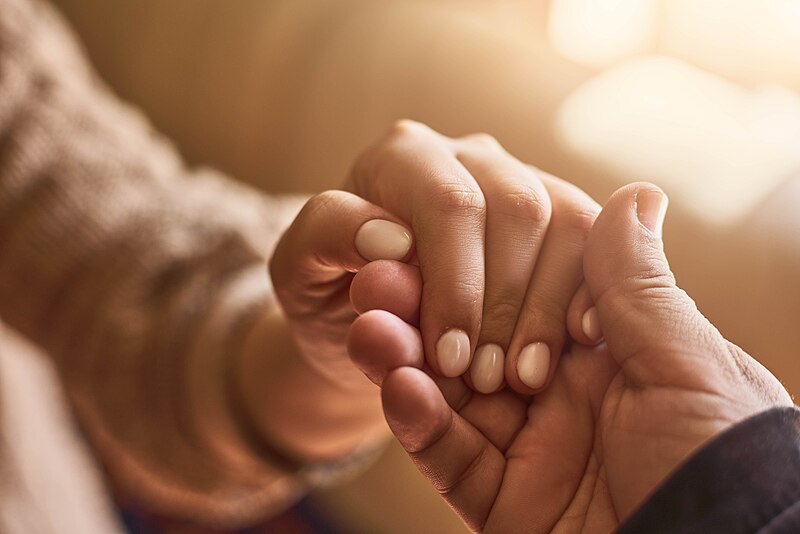
File:Compassion holding hands.jpg

Image by U3190523 (CC BY-SA International)

Those of us who somehow managed to survive childhood abuse and/or domestic violence may actually have contempt for our fellow survivors.

Why is this?  Certainly, compassion would seem more natural.  After all, we know the pain of those who shared the same experience.

The answer is surprisingly simple.  We project onto others the contempt we feel for ourselves.

Weakness

They were weak, at least we think they were.  We do not want to be associated with weakness.  That might imply we were once weak, too.

It would dredge up the fear and vulnerability — the trauma — of childhood abuse or domestic violence.  It might imply that we were powerless in the face of abuse or domestic violence.  That knowledge is too distressing for us.  Better to hold others in contempt.

That we still have such intense feelings suggests we have not fully come to terms with our experience. Continue reading

11 Comments

Filed under Child Abuse, Child Molestation, Christianity, domestic abuse, domestic violence, Emotional Abuse, Neglect, Physical Abuse, Religion, Sexual Abuse

Imperfection

File:Hand Pinted Kintsugi Pottery Bowl.jpg

Hand-painted Kintsugi pottery bowl by Artist Ruthann Hurwitz, Author Ruthann Hurwitz, (CC BY-SA 4.0 International)

One of the greatest challenges for those of us who have lived through abuse is coming to terms with our own imperfections.

Not Unworthy of Love

We were taught — endlessly, often by the most brutal means — that our imperfections made us unlovable, unworthy of love.

That, of course, was a lie.  However, it left us believing that any imperfection at all was unacceptable, in effect, that it disqualified us from membership in the human race.

Yet, humanity is defined by imperfection.  We may strive for excellence — at times even achieve it.  But all human beings are by nature flawed. Continue reading

11 Comments

Filed under Child Abuse, Child Molestation, Christianity, domestic abuse, domestic violence, Emotional Abuse, Neglect, Physical Abuse, Religion, Sexual Abuse

Enslaved 2024 – Part 3

File:Human Trafficking.jpg

Human Trafficking, concept image by Tapas Kumar Halder, Author Tapas Kumar Halder, (CC BY-SA 4.0 International)

We conclude our discussion of the blight of human trafficking with suggestions as to how the public can prevent and respond to this profound evil [1].

What You Can Do

Concerned as they may be, most people are overwhelmed by the magnitude of human trafficking — at a loss for how they can make a difference.  But there are things the average person can do [2]:

  • Become educated about human trafficking, and stay alert to the situations people may be experiencing.
  • Share information about human trafficking with family, friends, neighbors, business associates, and fellow bloggers.
  • Support local anti-trafficking organizations, either financially or by volunteering.  Pro bono attorneys are especially needed.  An online directory of community organizations is available here:  https://humantraffickinghotline.org/en/find-local-services.
  • Buy with care.  Consider where (and by whom) food, clothing, jewelry, electronics, and other items were produced.  An extensive list of items made by forced labor or child labor can be found here:  https://www.dol.gov/agencies/ilab/reports/child-labor/list-of-goods.
  • Get help for a family member, co-worker, student, tenant, patient, or someone else in need.  The National Human Trafficking Hotline https://humantraffickinghotline.org/en/contact provides free confidential support, 24/7.  Call 1-888-373-7888 or text HELP to 233733 (BEFREE).
  • Partner with the schools, healthcare providers, and other institutions and professionals serving those experiencing human trafficking.  Together with them, craft student safety programs for children at risk, fair workplace protocols, and ethical procurement practices at places of employment.  Work for safe and affordable housing, and accessible healthcare.
  • Speak out.  Inquire what elected representatives are doing about human trafficking.  Urge that trafficking be made a priority.

Continue reading

10 Comments

Filed under Child Abuse, Child Molestation, Christianity, Community, domestic abuse, domestic violence, Emotional Abuse, human trafficking, Neglect, Physical Abuse, Poverty, Prostitution, Rape, Religion, sex trafficking, Sexual Abuse, Slavery, Violence Against Women

Enslaved 2024 – Part 2

As discussed in Part 1 of this series, human trafficking is the form slavery takes today [1].

Red Flags

The red flags for trafficking include the following [2]:

A.  In the Workplace, Generally

  • A job offer that seems to be too good to be true.
  • A job offer that requires a move far from family and friends, where the recruiter or prospective employer declines to provide detailed information about the job.
  • A prospective employer who refuses to provide a signed contract, or asks employees to sign a contract in a language they cannot read.
  • A prospective employer who collects fees from a potential employee for the mere “opportunity” to work at a particular job.
  • Promised pay withheld by a recruiter or employer after work has been done.
  • Dangerous work conditions without training, adequate breaks, safety gear, or other protections.
  • Inhumane living conditions provided by an employer.
  • Monitoring by an employer of all interaction with others.
  • Isolation by an employer from support systems.
  • Pressure by an employer to stay on the job.
  • Control by an employer of a passport and identity documents.
  • Threats of deportation or other harm by an employer.

Continue reading

9 Comments

Filed under Child Abuse, Child Molestation, domestic abuse, domestic violence, Emotional Abuse, human trafficking, Neglect, Physical Abuse, Poverty, Prostitution, Rape, sex trafficking, Sexual Abuse, Slavery, Violence Against Women

Enslaved 2024 – Part 1

File:ValentinGalochkin 1965 Slavery.jpg

“Slavery – A Study in Marble” by Valentin Galochkin, Author Valentin Galochkin, (PD)

The White House has proclaimed January as Slavery and Human Trafficking Prevention Month [1].

Scope

Over 40 million people are trafficked worldwide [2A].  Women and girls constitute about 71%  of all human trafficking victims [2B].  In fact, one in every four victims of modern slavery is a child [2C].

Geographic Distribution

Trafficking centers around areas with international travel hubs (airports and seaports), access to highways, seasonal work, a hospitality industry (often associated with tourism), a sharp disparity between rich and poor, and a large immigrant population [3A][8].

A. Overseas

According to the International Labor Organization, Asia and the Pacific region have the highest incidence of forced labor and forced marriages [5].

B. United States

In our country, experts estimate that there are over 199,000 instances of human trafficking (which includes sex trafficking) annually [4A].

The top ten states for trafficking in 2022 were Mississippi, Nevada, Missouri, Nebraska, Florida, Texas, California, Arkansas, Oregon, and Georgia [2D]. Continue reading

14 Comments

Filed under Child Abuse, Child Molestation, domestic abuse, domestic violence, Emotional Abuse, human trafficking, Neglect, Physical Abuse, Poverty, Prostitution, Rape, sex trafficking, Sexual Abuse, Slavery, Violence Against Women

Who I Was Born to Be

Wishing All of You a Happy New Year!

FOR MORE OF MY ARTICLES ON POVERTY, POLITICS, AND MATTERS OF CONSCIENCE CHECK OUT MY BLOG A LAWYER’S PRAYERS AT: https://alawyersprayers.com

16 Comments

Filed under Child Abuse, Child Molestation, Christianity, domestic abuse, domestic violence, Emotional Abuse, Neglect, Physical Abuse, Religion, Sexual Abuse, Violence Against Women

Christmas Star

All of us were children once.  What we survived over the years shaped our character and our lives.

At Christmas we celebrate the birth of another child, a Savior who came into this broken world for our sakes.  We were not all rescued, but we can — because of Him — be redeemed.

Wishing All of You a Merry Christmas!

FOR MORE OF MY ARTICLES ON POVERTY, POLITICS, AND MATTERS OF CONSCIENCE CHECK OUT MY BLOG A LAWYER’S PRAYERS AT: https://alawyersprayers.com

15 Comments

Filed under Child Abuse, Child Molestation, Christianity, domestic abuse, domestic violence, Emotional Abuse, Neglect, Physical Abuse, Religion, Sexual Abuse, Violence Against Women

Headphones and a Vape Pen – Juvenile Crime

File:Sennheiser hd-25 headphones.jpg

Sennheiser HD-25-1 headphones, Author Bizzarle (CC BY-SA 4.0 International)

WARNING:  Graphic Images

Eight Las Vegas teens have been charged with murder, in connection with the beating death of a classmate widely distributed on social media [1].  The assailants range in age from 13 y.o. to 17 y.o.  Their victim, Jonathan Lewis Jr., was 17 y.o.  The altercation was apparently about headphones and a vape pen.

It is difficult to say which aspect of this crime is most disturbing:  the age of the victim whose life was taken, the age of his assailants and their relationship to him, the trivial cause for this violence, or the fact the crime was shared on social media.

Causes of  Violence

Most of us assume that children are incapable of violence, certainly incapable of murder.   We are shocked when confronted with the facts.

In 2020, there were 930 arrests made nationally for murder or manslaughter where the perpetrator was 17 y.o. or younger [2A].   There were 19,140 arrests made for aggravated assault in that age range, and another 70, 940 made for simple assault [2B].

Gang dynamics, the psychology of crowds, and peer pressure all have bearing on the crime here.  Abuse is likely, also, to have played a role.

A.  Gangs

Gang violence in the United States emerged as early as 1783.  In New York City, in particular, gangs were well organized by 1826 [3].

Dangerous street gangs, outlaw motorcycle clubs, organized crime (once actually termed gangland), and drug cartels are all representative of this underworld culture.  Little has changed with time, except that drugs have been added to the mix.

Teens and young men are known to have been participants from the start (though girls and young women are not immune to the lure).  Depending on age, young people serve as messengers, look-outs, bagmen, thieves, and thugs (some later specializing as enforcers or hitmen).

Although gangs may thrive on violence, they provide a sense of acceptance, security, inclusion, and identity to their members [4].  In effect, they substitute for the family structure many young people lack.

B.  Crowds and Peer Pressure

It is well recognized that human beings will do in a crowd what they might never do alone [5].  The bounds of acceptable behavior are more easily transgressed in a group.  Personal responsibility is abandoned.  Morals are swept aside in the frenzy of the moment.

This applies to young people even more so than adults.  Still trying to decide who they are, anxious to fit in, teens and pre-teens are more susceptible than adults to peer pressure. Continue reading

16 Comments

Filed under bullying, Child Abuse, Child Molestation, Christianity, domestic abuse, domestic violence, Emotional Abuse, Justice, Law, Neglect, Physical Abuse, Religion, Sexual Abuse

Passed Over at the Dance – Love and Failure

File:Rose by manuel gegenhuber.jpgImage by Manuel Gugenhuber (CC BY-SA 3.0 Unported)

Many of us feel that we failed at love.  We were passed over at the dance.  We picked the wrong partners — those who did not or could not love us, those who loved us once but no longer care.  Those who raised our hopes, then shattered our dreams.  Those who simply walked away.

There are countless reasons for this.  It may be that childhood abuse colored our choices.  It may be that those choices were limited by our circumstances.  It may be that a partner changed over the years…or that we changed.  It may be that a partner was equally wounded from the start.

Rejection is heartbreaking.  The end of love is heartbreaking.  We think the years we invested were wasted, that our lives were wasted.  That our love was poured out on sand.

But heartbreak and failure are not one and the same.  Nearly everyone alive has experienced heartbreak, at one time or another.  Sad love songs are more popular than upbeat ones.

God, Himself, is love (1 John 4: 16).  He created us to know, love, and serve Him.  We do that by obeying His laws (1 John 5: 2), and serving others (Eph. 2: 10).

None of us live up to God’s standards — not as we should, not on a constant basis.  We stray.  We make mistakes, despite our good intentions.  But if we pour out our love, as best we can — whether on spouses, lovers, siblings, friends, children, or strangers — we have fulfilled the central purpose for which we were created (Luke 7: 47).

That is not failure.  Whatever the outcome, that is not failure.

FOR MORE OF MY ARTICLES ON POVERTY, POLITICS, AND MATTERS OF CONSCIENCE CHECK OUT MY BLOG A LAWYER’S PRAYERS AT: https://alawyersprayers.com


11 Comments

Filed under Child Abuse, Child Molestation, Christianity, domestic abuse, domestic violence, Emotional Abuse, Neglect, Physical Abuse, Religion, Sexual Abuse, Violence Against Women

“Stages of Trauma Bonding” by Cynthia Bailey Rug

7 Stages Of Trauma Bonding explained on a dark navy background

Image courtesy of Sandstone Care

Below is a post by the Christian author, Cynthia Bailey Rug.  While this post is specifically directed toward the victims of narcissism, it is highly relevant to the victims of childhood abuse and/or domestic violence who are particularly vulnerable to trauma bonding.

Cynthia Bailey Rug blogs at https://cynthiabaileyrug.wordpress.com  .  The full text of this post dated 10/14/23 can be found there.

“Trauma bonding, also known as Stockholm Syndrome, is a common & strange phenomenon among victims of ongoing abuse [1][2].  It happens when abusers aren’t abusive all of the time, & show their victims random kindnesses.  Those kindnesses seem to prove to victims that their abuser isn’t all bad, & they really do care for their victim.  That thinking bonds the victim to their abuser & makes them more willing to tolerate abuse.

Narcissists are exceptionally good at trauma bonding their victims to them.  It happens very subtly & in gradually increasing stages of toxicity.  Trauma bonding is much like the story of putting a frog in a pot of water.  If the water is boiling when he goes in, he recognizes the danger & hops out immediately.  But, if it’s warm & gradually the temperature increases to boiling, he won’t notice he’s in danger until it’s too late…

The first stage of trauma is love bombing.  This is when the narcissist [or other abuser] showers you with love, praise & adoration.  You can do no wrong.  You are absolutely perfect!…Gifts can be a part of love bombing too…” Continue reading

20 Comments

Filed under Child Abuse, Child Molestation, domestic abuse, domestic violence, Emotional Abuse, Neglect, Physical Abuse, Sexual Abuse, Violence Against Women