Category Archives: Child Molestation

Sins Against Self, Part 2

“Jesus of the Stripped Loyalty with Green Tunic” (10th Station of the Cross), Source/Author Aendomekio3 (CC BY-SA 4.0 International)

We continue our examination of sins against the self to which abuse victims are prone [1].

Self-Pity/Self-Hatred/Self-Harm

We hate ourselves not only for the sins against us, but for the sins we have committed, and the mistakes we have made – sometimes wallowing in self-pity, sometimes consumed with self-contempt [2][3].  This manifests as a harshly self-critical inner dialog or continuous stream of negative thoughts.  We may even contemplate self-harm [4].

Self-Reliance

In fleeing from a God we hold responsible for our abuse or believe abandoned us, we may choose extreme self-reliance [5].  This is a brittle defense which fails to take into account the fact that all we are, and all we have, is from God.  Endurance, itself, is a form of His grace.

Suffering as a Gift

Whether we realize it or not, we are engaged in a lifelong spiritual battle.  Not because we were once victimized, but because Satan wants all of us (abuse victims or not) to feel victimized for the rest of our lives.  He wants us focused inward on ourselves and our wounds, rather than outward toward God and others.

That is not, however, God’s plan for us.  Which is why He sent His Son, Jesus, to die on the cross for us – for our sins, the whole long list.  And to offer us instead an abundant life. Continue reading

3 Comments

Filed under Child Abuse, Child Molestation, Christianity, domestic abuse, domestic violence, Emotional Abuse, Neglect, Physical Abuse, Religion, Sexual Abuse, Violence Against Women

Sins Against Self, Part 1

Medieval flagellants as pictured in Nuremberg Chronicle by Hartmann Schedel (1440-1514) (PD)

As abuse victims, we are, for the most part, more sinned against than sinning.  Abuse leaves a devastating scar across our lives.  About that there is no doubt.

That does not, however, mean we do not sin, ourselves.  Many of our own sins are against the self, a direct result of the abuse we suffered [1][2].  And God loves us so much He wants better for us than that.

Low Self-Esteem

Believing ourselves worthless, we treat ourselves that way.  We view any kindness toward ourselves as undeserved, and turn aside those who would love us (sometimes causing unintended pain to others, in the process).

Disordered Sexuality

In a desperate effort to find the love we were denied, we seek it in all the wrong places.  Far too often, we are drawn to partners who re-enact the abuse so familiar to us.  Or we settle for less than we deserve, giving ourselves away to any comers, rather than respecting our own bodies. 

A few of us take the other direction, and forego the sexuality with which God endowed us or reject the gender God assigned us.  That is no wiser, though it may temporarily feel safer.

We may assume this does not grieve God, but it does [3].  He suffers with us, and weeps for us. Continue reading

9 Comments

Filed under Child Abuse, Child Molestation, Christianity, domestic abuse, domestic violence, Emotional Abuse, Neglect, Physical Abuse, Religion, Sexual Abuse, Violence Against Women

Radicalization

We are all too familiar with radicalization these days.  It is the process by which an individual or group adopts views so extreme that they involve the use of violence [1]. 

Those radicalized are willing to use any means to achieve the overthrow of existing systems, whether political, social, or religious [2A][3A].  They swallow then spew forth hate-filled rhetoric, as if it were self-evident truth [2B][3B].

The real question is why?  What makes some (especially our young people) vulnerable to radicalization?

The Specter of Hitler

The fantasy/sci-fi series The Twilight Zone was prescient, in this regard [4A]. 

In an episode by Rod Serling titled “He’s Alive”, which first aired in 1963, an aspiring American Nazi who was once a lonely and abused child receives advice from Adolf Hitler’s specter about how to gain a following: 

“Speak to them as if you were a member of the mob, speak to them in their language, on their level.  Make their hate your hate.  If they are poor, talk to them of poverty.  If they are afraid, talk to them of their fears.  And if they are angry, Mr. Vollmer, if they are angry give them objects for their anger [4B].”

Not all lonely or abused children become radicalized, of course.  Nor were all those who become radicalized formerly lonely and abused children.  But there is a clue here.

Vulnerability

Children from all ethnicities and all levels of society can become radicalized. 

But those struggling with identity; those who lack purpose; those questioning their place in society; those becoming distanced from their cultural or religious backgrounds are more vulnerable [2C][3C]. 

Likewise, those isolated; those with low self-esteem; those with family issues; those who have been bullied; and those who have experienced trauma, racism, or discrimination are more vulnerable [2D][3D]. 

Many of these are the same factors that make children vulnerable to grooming for sexual exploitation.

Children who have difficulty understanding the consequences of their actions; lack empathy for others; are fascinated by conspiracy theories; and/or are obsessed with massacres and mass violence are particularly open to believing extremist claims are the answer to their problems [2E][3E]. Continue reading

19 Comments

Filed under bullying, Child Abuse, Child Molestation, domestic abuse, domestic violence, Emotional Abuse, Neglect, Physical Abuse, Sexual Abuse, Terrorism

Parental Rights

Mother, father, and child, Source https://pxhere.com/tr/photo/1445573, Author @mohamed hassan (CC0 1.0 Universal Public Domain Dedication)

The US Supreme Court has handed down a significant decision in Mirabelli v. Bonda reaffirming parental rights [1][2].

California law had required that schools effectively mislead parents about their children’s gender presentation, withholding information from parents as to their children’s use of preferred pronouns at school.  California viewed such disclosure as “forced outing” – as if the state had a greater interest in the welfare of children than their own parents [3].

The US Supreme Court ruling upheld the constitutional rights of parents to freely exercise their religion and direct the upbringing and education of their children [4][5].

In a related decision, Regino v. Staley, the 9th Circuit Court of Appeals last year pointed out that although the right of parents to make decisions for their children is not unbounded, the inquiry in cases of substantive due process is “whether the asserted fundamental right is objectively, deeply rooted in this Nation’s history and tradition, and implicit in the concept of ordered liberty, such that neither liberty nor justice would exist if it was sacrificed [6].”

The existence of the family could hardly be more fundamental, and long predated the existence of the state.

Continue reading

11 Comments

Filed under Abuse of Power, Child Abuse, Child Molestation, Christianity, Emotional Abuse, Neglect, Physical Abuse, Religion, Sexual Abuse

Baby Trafficking

Pregnant woman, Source https://www.flickr.com/photos/aurimas_m/3423098686/, Author Aurimas Mikalauskas of Paliūniškis, Lithuania (CC BY-SA 2.0 Generic)

WARNING:  Graphic Images

In a joint operation between the United States and Mexico, authorities last year captured Martha Mendez Aguilar, known as “La Diabla” (“The Devil”), the head of a grisly baby trafficking ring called the Jalisco New Generation Cartel [1A].

“[This is an] example of what terrorist cartels will do to diversify their revenue streams and finance operations [1B].”

–Joe Kent, Dir. of National Counterterrorism Center

Pregnant women, often from impoverished circumstances, were lured to remote locations.  Once there, the mothers were murdered, and their organs and infants harvested for sale.  The infants were sold to couples for around $14,000 each.

Tragically, this cartel was not the only one to pursue baby trafficking.

Indonesian police uncovered an international baby trafficking ring believed to have sold at least 25 infants to buyers in Singapore since 2023 [2A].  Using Facebook, WhatApp, and other channels, this syndicate targeted expectant mothers who allegedly did not want to raise their infants.

Delivery costs were covered and a small amount of compensation paid to the mothers.  Then the infants were handed over.

In some cases, infants were actually reserved in the womb for purchasers and housed for as long as a year after birth, while fraudulent birth certificates, parental consent forms, medical records, and immigration documents were prepared.

Desperate Straits

“These clinics or shelters use language that sounds compassionate at first, such as ‘you can give birth and take your baby home’.  But in reality, they offer money and illegally transfer custody of the baby [2B].”

— Ai Rahmayanti, Commissioner of the Indonesian Child Protection Commission (KPAI)

Child trafficking cartels are extremely sophisticated, often posing as maternity clinics, orphanages, or shelters which appear to care for vulnerable women and children [2C].

Typically, they target women in desperate straits – those suffering from financial hardship, trapped in debt bondage, abandoned by a spouse or partner, pregnant as the result of sexual violence whether by a partner or stranger, or simply pregnant from a casual sexual relationship [2D].

When manipulation fails, cartels will resort to criminal approaches including direct abduction (whether from hospitals, schools, playgrounds, or other public spaces), and crisis exploitation (natural disasters, civil unrest, or refugee settings) [7A].

Purposes

Infants and children may be trafficked for illegal adoption, prostitution or other sexual abuse, forced marriage, forced organ donation, forced labor or slavery, use in the drug trade, use as beggars, and use as child soldiers [3][4][5].  These can overlap [6]. Continue reading

11 Comments

Filed under Child Abuse, Child Molestation, Christianity, domestic abuse, domestic violence, Emotional Abuse, human trafficking, Justice, Law, Neglect, Physical Abuse, Poverty, Prostitution, Rape, Religion, sex trafficking, Sexual Abuse, Sexual Assault, Slavery, Terrorism, Violence Against Women

The Trouble with Throuples

File:ST TroubleWithTribbles.jpg

Screenshot of William Shatner as Captain James Kirk surrounded by tribbles, Source Star Trek:  The Original Series, Episode “The Trouble with Tribbles”, Copyright © 1967 Paramount Pictures (Fair Use)

There was an old Star Trek episode titled “The Trouble with Tribbles” [1].  Cute and furry little creatures, tribbles multiplied rapidly when fed, and had the potential to destroy entire ecosystems as a result.  The trouble with throuples is not dissimilar.

Throuples, for those unfamiliar with the term, are sexual relationships comprised of three individuals [2].  The fad is a modern variant on polygamy which is again in vogue, as People Magazine and reality TV reflect.

The concept may at first seem titillating.  Why not explore our sexuality to the fullest extent?  It’s “obvious” no single individual can fulfill all our needs.  And why should we have to fulfill the needs of someone else, when that burden can so easily be shared?

Theoretically, each member of a throuple is an equal partner.  Presumably, however, the group can decide to distribute power differently.  With or without consent, both power and attraction can, also, shift within the group.

Unfortunately, tensions that can exist between a married couple are multiplied in the context of a throuple, not diminished. That applies whether the group involves one man/two women, one woman/two men, three women, or three men (and whatever the sexual orientation within the group). Continue reading

11 Comments

Filed under Child Abuse, Child Molestation, Christianity, domestic abuse, domestic violence, Emotional Abuse, Neglect, Physical Abuse, Religion, sex trafficking, Sexual Abuse, Violence Against Women

How Tech Giants Delay Child Abuse and Drug Investigations

US police confirm that Meta and Snapchat (parent company Snap Inc.) routinely delay or reject subpoenas and warrants [1A].  These tech giants frequently fail to provide law enforcement with critical information in a timely manner, and fail to take timely action against unlawful activity on their platforms.

This greatly hinders investigations in child abuse, sex trafficking, and drug cases.

Obtaining a response of any kind may require repeated requests and take weeks or months.  Even then the response is often incomplete.  Warrants have been rejected for technical errors as small as the misplacement of a dash or comma.

“Every day of delay puts a child at risk. It can exacerbate damage and even cost lives. We can’t afford to let the delays continue [1B].”

— Shawnna Hoffman, Chief Exec. of International Center for Missing and Exploited Children

While Meta contends that it produced data in 88% of the nearly 75,000 requests it received from authorities between July and December 2024, the International Center for Missing and Exploited Children has called for clearer rules and faster processes. Continue reading

10 Comments

Filed under Abuse of Power, Child Abuse, Child Molestation, Emotional Abuse, human trafficking, Justice, Law, Neglect, Physical Abuse, Sexual Abuse

Minimizing Pain

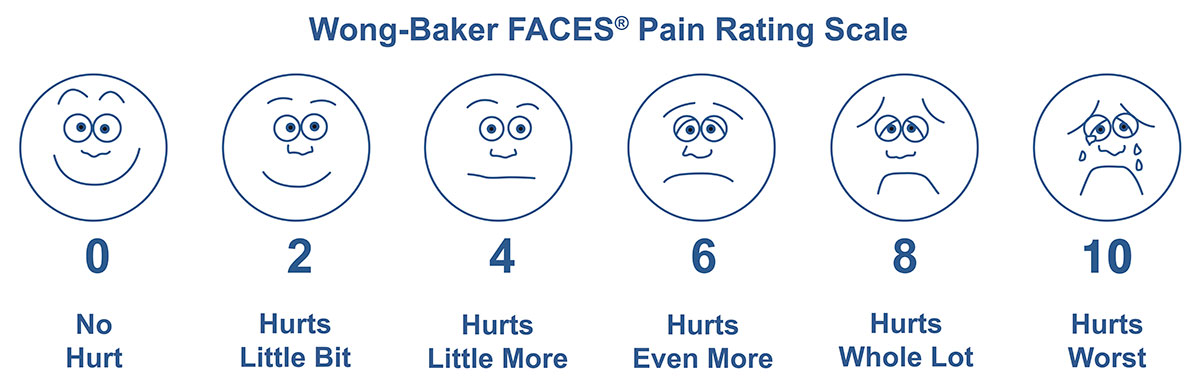
FACES_English_Blue_no copyright info

As abuse victims, we will often minimize our pain.  We may downplay our pain out of fear, guilt, or a desperate need to believe that the parent/caregiver or partner who caused that pain “deep down” loves us.

This is a short-term coping mechanism, a way of assuring ourselves that we will survive the harm done to us.

It is, also, a way of minimizing the responsibility of those who inflicted that harm on us (and avoid or defer dealing with the anger and grief their betrayal caused us).

Denial v. Reality

Both the victims of childhood abuse and the victims of domestic abuse may employ this coping mechanism, sometimes despite clear evidence to the contrary [1].  A woman whose partner blackened her eyes and knocked her teeth out may, nonetheless, seek to assure concerned family members, “Really, it’s not so bad.”

The problem with this coping mechanism is that it does not address the abuse.  The victim denies the reality that he or she has been seriously harmed; may fail to obtain necessary medical treatment; and continues to remain in the abusive situation. Continue reading

28 Comments

Filed under Child Abuse, Child Molestation, Christianity, domestic abuse, domestic violence, Emotional Abuse, Neglect, Physical Abuse, Religion, Sexual Abuse, Violence Against Women

Children Molesting Children

Minneapolis SlutWalk Protesting Stigmatization of Victims of Sexual Assault (2011), Author Alan from Minneapolis, (CC Attribution 2.0 Generic)

A North Carolina couple are suing the Wake Forest Magnet Elementary School where they say their 6 y.o. son was sexually assaulted multiple times by a classmate, even after the abuse was reported to a teacher and the school’s principal [1].

We do not hear of the tragedy of child-on-child sexual abuse often.  But children do at times molest other children [2].

Force, Threats, and Trickery

Child-on-child sexual abuse is to be distinguished from the normal, anatomical curiosity of children.  It may involve physical force, threats, or trickery.  The victim may actually “cooperate” – not comprehending, by reason of his or her tender years, the nature of what is being done.

Child-on-child sexual abuse can, in fact, take place between siblings.  The victims of this type of incest may develop a distorted recollection of the violation (picturing, themselves, as the initiator or the sex acts as consensual, as a means of psychological self-protection).

Causes

A.  Sexual Abuse

Young children who engage in sexual abuse may, themselves, have been sexually abused [3A].

B.  Exposure to Sexual Activity 

They may repeatedly have witnessed the sexual activity of adults at an early age, and be attempting to imitate their elders [3B].  They may, for instance, live with adults (or teens) who act out sexually after drinking or taking drugs.  They may even live in a household where sexual services are bartered for rent or sold outright. 

C.  Exposure to Pornography

They may simply have been exposed to pornography, or confused and overwhelmed by the amount of sexual imagery on TV, in movies and videos, in video games, and on the internet [3C]. Continue reading

17 Comments

Filed under Child Abuse, Child Molestation, Emotional Abuse, Neglect, Physical Abuse, Sexual Abuse

Chocolate

Chocolate fudge cake, Urban Diner, Edmonton, Canada, Author Mack Male (CC BY-SA 2.0 Generic)

Chocolate is a pure delight.  But there is a bitter truth behind the sweet taste.  Child labor is heavily involved in cocoa product [1][2][3].

Multiple human rights organizations confirm that over 1.5 million children in West Africa work under hazardous conditions to produce cocoa.  Many of these children are the victims of forced labor, human trafficking, and modern slavery.  They are deprived of an education, and exposed to dangerous chemicals and equipment.

This exploitation is ongoing despite the public pledges made by major chocolate companies over the past 20 years to eliminate child labor from their supply chains.  Some of the most recognizable chocolate brands still associated with unethical practices include:  Hershey’s Chocolate; Nestle’s Chocolate (Kit Kat, Butterfinger); Mars Chocolate (M&M’s, Snickers, Twix); Ferrero (Nutella, Kinder); and Mondelez (Toblerone, Cadbury). Continue reading

14 Comments

Filed under Abuse of Power, Child Abuse, Child Molestation, Christianity, Emotional Abuse, human trafficking, Justice, Law, Neglect, Physical Abuse, Poverty, Religion, Sexual Abuse, Slavery