Category Archives: Violence Against Women

Unbiblical, Part 1 – Submission v. Self-Defense

In a misguided effort to provide comfort and direction to abuse victims, well-meaning Christians will often quote Bible verses out of context or cite biblical principles which do not apply to abuse, thereby actually exacerbating the pain victims feel.

As a result, victims may turn away from the real comfort they would find in Christ.

This series of articles is intended to clarify – both for Christians, and abuse victims interacting with them – certain Scriptural passages and principles that could otherwise be misunderstood or misinterpreted.

Submission v. Self-Defense

Perhaps the most damaging is the principle of “headship”.  The basis for this can be found in Chapter 5 of St. Paul’s Epistle to the Ephesians, among a set of instructions on holy living for both men and women.  The entire chapter speaks of Christians loving and being “submissive” to one another.

The frequently overlooked instruction to husbands (highlighted below) is an integral part of the principle:

Wives, submit yourselves unto your own husbands, as unto the Lord. For the husband is the head of the wife, as also Christ is the head of the church; and He is the Savior of the body. Therefore, just as the church is subject to Christ, so let the wives be to their own husbands in everything. Husbands, love your wives, just as Christ also loved the church, and gave Himself for her [Emphasis added]…” (Eph. 5: 22-25).

God alone knows how many battered women have lost their lives on bad and unbiblical advice from a priest or minister that they return to a dangerous household, and submit to the will of their abusive, alcoholic, or drug addicted husbands. Continue reading

12 Comments

Filed under Child Abuse, Christianity, Emotional Abuse, Neglect, Physical Abuse, Religion, Sexual Abuse, Violence Against Women

Conned

A New Jersey nurse conned by the man she had hoped to marry has turned her attention to changing the state rape law [1]. Mischele Lewis wants scammers such as the one who victimized her treated as sex offenders.

Lewis met William Allen Jordan through an online dating service. He gave her a false name, false employment history, and false marital history. Only after the two had become engaged, and Mischele was pregnant, did she discover Jordan’s true identity and background.

As it turned out, William Allen Jordan had a bevy of ex-wives and fiancees, along with 13 children by 6 different women. One of Jordan’s British victims had gone so far as to write a book about him. Worse yet, Jordan had been convicted of child molestation, and had served time in prison for bigamy and fraud before becoming involved with Mischele.

On her own initiative, Mischele Lewis devised a sting operation that resulted in Jordan’s arrest. She compiled bank statements, emails, and photos; and secretly recorded conversations with Jordan. He subsequently pleaded guilty, and is facing a three year sentence.

Lewis does not believe this is adequate.

Since her consent to the relationship with Jordan was obtained under false pretenses, Mischele Lewis argues that Jordan’s scam amounted to sexual assault by deception. The New Jersey courts do not currently approve this theory of liability, which is why Lewis has been lobbying the legislature for a change in the law. Assemblyman Troy Singleton has now drafted the necessary bill.

Opponents of the proposed change contend that the new law could be so broadly interpreted as to turn common seduction ploys into potential felonies. It may be reprehensible for traveling salesmen to pretend they are single (when that is not the case) or for suitors to portray themselves as wealthier than their bank accounts might reflect. The question is: Should this behavior be criminalized?

Mischele Lewis maintains that women deserve protection against con men who take sexual advantage of them, as well as financial.

Something to watch.

[1] NBC News, “ ‘I Wanted Justice’: Con Victim Turns Focus to Changing Rape Law” by Jon Schuppe, 1/24/15, http://www.nbcnews.com/news/us-news/i-wanted-justice-con-victim-turns-focus-changing-rape-law-n291661.

FOR MORE OF MY ARTICLES ON POVERTY, POLITICS, AND MATTERS OF CONSCIENCE CHECK OUT MY BLOG A LAWYER’S PRAYERS AT: http://www.alawyersprayers.com

 

8 Comments

Filed under Child Abuse, Emotional Abuse, Justice, Law, Violence Against Women

Topsy Turvy

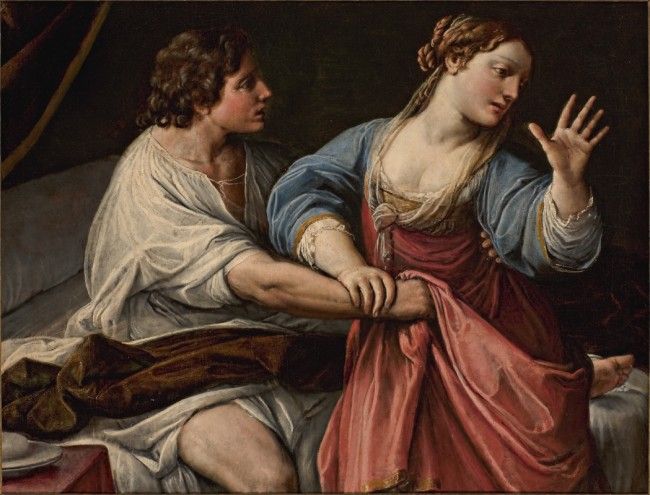
“Amnon and Tamar” (16th-17th Century), Source https://s-media-cache-ak0.pinimg.com/736x/10/4a/27/104a2757ef7c899d98a8f3cc230ae9b4.jpg (PD-Art, Old-100)

“Topsy turvy
Wake me
I’ve had enough
Topsy turvy
Don’t know
Which way is up
Or down
Tears on the ground”

– “Topsy Turvy” by Family Force 5

Child abuse victims are often scapegoated for the disharmony within their families.

The narrative fabricated is that child victims are troublemakers, “bad seeds”.  According to this distorted view, victims are by nature disobedient and rebellious, trying the patience of their loving families. They deliberately prompt family arguments, and “deserve” to be punished for the hurt they cause.

Outrageous as it may seem, the needs of child victims – for food, shelter, and comfort – are seen as an unreasonable burden in dysfunctional families. Victims are viewed as provoking the abuser to act as s/he does. In the case of sexual abuse, child victims are seen as “tempting” the adult, therefore, responsible for the abuse.

This is all a fiction – a false explanation for the dysfunction which allowed the abuse to occur, in the first place. It is, in effect, the rationalization of the abuser.

Any negative emotions the abuser may experience, in connection with his/her moral transgression, are projected onto the victim. The Bible story of the rape of Tamar by her brother Amnon illustrates this.

But she [Tamar] answered him, ‘No, my brother, do not force me…Do not do this disgraceful thing!’…However, he would not heed her voice; and being stronger than she, he forced her and lay with her. Then Amnon hated her exceedingly…” (2 Samuel 13: 12, 14-15).

Other members of the family may buy into the narrative, in self-defense. That does not, however, give it validity.

In a topsy turvy way, the very opposite of the distorted family narrative is true. Continue reading

17 Comments

Filed under Child Abuse, Child Molestation, Christianity, domestic abuse, domestic violence, Emotional Abuse, Neglect, Physical Abuse, Rape, Religion, Sexual Abuse, Violence Against Women

Murder in the Family

Many news stories in December were overshadowed by the ongoing Ferguson controversy, the SONY hacking, and a terrorist siege in Sydney which left fatalities. Two, however, warrant our attention.

In Pennsylvania, Bradley Stone killed his ex-wife Nicole and five of her relatives before turning a knife on himself [1]. Victims included Nicole’s mother, grandmother, sister, brother-in-law, and a 14 y.o. niece. A 17 y.o. nephew is recovering from his wounds. Thankfully, the two Stone daughters were spared.

According to the prosecutor, Stone’s attack was clearly pre-meditated. It has been attributed to a custody dispute. Since Stone was a veteran and briefly on tour in Iraq during 2008, there was speculation that Post Traumatic Stress Disorder (PTSD) might have played a role. The Marines who served with Stone dispute this.

In Australia, a suburban mother (also, wielding a knife) killed seven of her own children and a niece – all youngsters between the ages of 18 months and 15 years [2]. A 20 y.o. sibling found the children. The woman unsuccessfully attempted suicide. She is now under arrest. Continue reading

4 Comments

Filed under Child Abuse, Physical Abuse, Terrorism, Violence Against Women

“Opportunities in Trials” by Bill Sweeney

There is no doubt that abuse victims have suffered.  If we look around us though we will see that there are many others, also, suffering…with cancer, with cerebral palsy, with epilepsy, with infertility, with schizophrenia.  The list is nearly endless.

This post is by a man who has for 18 years suffered from ALS (Amytrophic Lateral Sclerosis, also, known as “Lou Gehrig’s Disease”).  Bill Sweeney is paralyzed, using a computer to write with his eyes.  Yet he consistently writes about hope. 

You can find the original post at Bill’s website, Unshakable Hope, http://unshakablehope.wordpress.com/. I highly recommend the site.

“In the midst of a trial, the greatest temptation we face is to hunker down and wait for the storm to pass. I don’t believe this is ever God’s will.

We tend to view trials as a kind of imprisonment, thinking our life is on hold until the day we’re released from the grip of the life challenge. ALS has made me a virtual prisoner of my own body for the last 18 years. It has been a very cruel warden. But I look around me and see other people fighting illness or trying to overcome addictions, depression, abuse, debt and so many other cruel masters.

We must continue to hope and pray for freedom from whatever is trying to ‘hold us,’  and we should do everything in our power to move toward that goal. But, in the meantime, we should look for opportunities for God to use us right where we are. This is what the Apostle Paul did, and I’m convinced it’s what God wants us to do.

It was from prison that Paul wrote the following: ‘Now I want you to know, brethren, that my circumstances have turned out for the greater progress of the gospel…'(Philippians 1:12)

We don’t usually associate the word ‘progress’ with imprisonment or any kind of trial, but I believe that we should. If we wait until we ‘have it all together’ before we try to help and give hope to others, many will go without help and die without hope.

Would I be a hypocrite telling people that God still heals when I’ve been held in the grip of a terminal disease for 18 years?

Let me answer that with another question: Was Paul a hypocrite for writing about freedom in Christ from the depths of what was likely a rat infested dungeon?

Paul was almost stoned to death by an angry mob and severely beaten other times. He also suffered from what he called ‘a thorn in his flesh’ (many Bible scholars say this ‘thorn’ was poor eye sight). Regardless, it’s unlikely that Paul was the handsome and strong man depicted in the Bible movies. After spending much of his time in prison and enduring countless beatings, he was likely pale and scarred, and probably in pain 24/7. Yet, God used this suffering servant to heal and give hope to others.

The Apostles faced the same trials, temptations and human frailties that we face. Yet, in the midst of trying to overcome their own trials and temptations and battling their own demons, they were feeding the poor, healing the sick and giving hope to others by spreading the good news.

People don’t care about how much we know until they know how much we care. Maybe we wouldn’t have truly learned to care apart from our suffering.

I hope you’re successful in keeping all of your New Year’s Resolutions, and 2015 is the best year you’ve had so far. But we cannot wait for all of our hopes to be fulfilled before we offer help and hope to others.

We overcome as we help others to overcome.”

FOR MORE OF MY ARTICLES ON POVERTY, POLITICS, AND MATTERS OF CONSCIENCE CHECK OUT MY BLOG A LAWYER’S PRAYERS AT: http://www.alawyersprayers.com

Leave a comment

Filed under Child Abuse, Christianity, Community, Religion, Violence Against Women

The Dysfunctional Lawyer, Part 2

“A Bailiff and An Attorney – A Match for the Devil” (1760), Source Library of Congress, British Cartoon Prints Collection (Digital ID cph. 3c05267)

“The first thing we do, let’s kill all the lawyers.”

–  Dick the Butcher, from Shakespeare’s Henry VI

Despite the large number of lawyer jokes, most lawyers are not dysfunctional human beings.

We articulate and guard the rights of our clients in a non-violent arena, i.e. the courtroom, in which confrontation takes the place of combat.

And we are ethically bound to put the client’s interests before our own. That requires us, among other things, to decline (or withdraw from) cases where some mental or physical condition on our part would materially impair our ability to represent the client.

The Dysfunctional Lawyer

Regrettably, the legal profession is not free of dysfunctional individuals. Abuse victims may be especially vulnerable to such individuals, and should be on the lookout for these characteristics.

A. The Large Ego

Deservedly or not, lawyers are regularly praised by those who want something from them. That stroking can produce an enlarged ego. But a sense of self-importance is not an indication of real ability on a lawyer’s part.

The lawyer with a large ego may be entirely competent. However, s/he is likely to be difficult for clients to deal with (reinforcing the supplicant role abuse victims are seeking to escape).

Large egos are, also, fragile. They must be propped up. Alcohol and drug abuse are not unknown among lawyers. These obviously interfere with judgment. The state bar will know whether a lawyer’s license has ever been suspended or revoked.

B. Entitlement

A large ego can lead to a sense of entitlement. More than a character flaw, the sense of entitlement may cause a lawyer to rationalize the misuse of client funds to support a lavish lifestyle.

Alternatively, a sense of entitlement can be used to “justify” the initiation of a sexual relationship with an emotionally fragile client. Continue reading

9 Comments

Filed under Abuse of Power, Law, Violence Against Women

Human Contact

Ours is now a culture in which social media play an important role. The internet has made it possible to reach out to like-minded persons around the globe, on any subject, at any hour of the day or night.

We share jokes and outrage, embarrassing and touching moments. We mourn together over public and private tragedies. We exchange recipes and voice political opinions. Sometimes wearing a disguise or the mask of anonymity, we disclose long held secrets or live out fantasies. We unburden ourselves to strangers.

Why are we drawn to do this? Why do we find this electronic avenue of communication so compelling?

It is in the nature of men and women to tell their stories. Being human, we crave human contact. We reach out in an effort both to distinguish ourselves as individuals, and find acceptance by the group. Social media have enlarged our potential audience exponentially, greatly increasing the chances we will find acceptance…by some group, at least.

To that extent, social media have facilitated connection. They have, also, however, increased risk. There are predators of all types trawling for victims. We warn our children against these, and rightly so.

The more subtle danger derives from loneliness. Young people and the victims of abuse are especially vulnerable to feelings of isolation. Nothing illustrates this better than the recent suicide by transgender teen, Joshua (“Leelah”) Alcorn [1].

With the technology available to overcome isolation, there appears little reason not to make use of it.

But there is a distinction between virtual friends and those we can actually see and touch. We have much less information about virtual friends, on which to base our judgment of them. We fill in the blanks based on hope, not data.

Similarly, virtual friends (even if well-intentioned) have much less information about us, on which to base their comments and advice, than flesh and blood friends…and are much less likely to help us move a couch.

We need human contact. Social media alone cannot fill that need.

[1] NBC News, US News, “ ‘Fix Society’: Transgender Teen Leelah Alcorn Posted Plea Before Suicide” by Tracy Connor, 12/31/14, http://www.nbcnews.com/news/us-news/fix-society-transgender-teen-leelah-alcorn-posted-plea-suicide-n277666.

FOR MORE OF MY ARTICLES ON POVERTY, POLITICS, AND MATTERS OF CONSCIENCE CHECK OUT MY BLOG A LAWYER’S PRAYERS AT: http://www.alawyersprayers.com

5 Comments

Filed under Child Abuse, Community, Violence Against Women

The Dysfunctional Lawyer, Part 1

“The Cry of Justice” by Frank Varley
Auckland Punch Magazine (1868)

“‘Let us choose justice for ourselves…'” (Job 34: 4).

It takes great courage to flee an abusive relationship, and confront an abuser.

While criminal matters are generally handled through the District Attorney’s Office on the state level and the US Attorney’s Office on the federal level, abuse victims seeking divorce or money damages for their pain and suffering will need to pursue civil litigation.

Civil lawyers can be found who specialize in victims’ rights following rape, child abuse, domestic abuse, elder abuse, clergy abuse, and sexual harassment.

A good lawyer can help restore the abuse victim’s life. A dysfunctional lawyer (or a dysfunctional relationship with an otherwise good lawyer) can delay the process, undermining an abuse victim’s already tenuous confidence.

Abuse Victims as Clients

Abuse victims deserve a dedicated advocate: someone whose honesty is above reproach, who will be diligent in pursuing their case, who will communicate on all critical matters, and whose legal judgment can be relied upon as sound.

Fortunately, there are many lawyers meeting these criteria.

A. Cost

Cost is likely to be the first criteria abuse victims consider, in choosing a lawyer.

Personal injury litigation is usually taken on a contingency basis, for a percentage of the ultimate recovery. What that percentage can be differs somewhat from state to state. Thirty percent for the lawyer is typical.

The legal fees in other types of cases, for example divorce or bankruptcy, are usually calculated on an hourly basis. This can be a challenge for abuse victims, who may not have much in the way of funds.

Legal aid is available across the country, but the types of civil cases covered will vary. Abuse victims should check with their local offices.

Victims organizations like WomensLaw.org and RAINN (Rape, Abuse, & Incest National Network) can be a good source of information. Most bar associations will, also, have referral services with lists of lawyers in various specialties. Often an initial consultation will be free or at a reduced rate.

B. Credentials

Thousands upon thousands of lawyers advertise, online and elsewhere. Whatever claims may be made in ads, victims should remember that lawyers are not superhuman, and that a verdict awarding money damages in their favor (particularly a large amount) is not guaranteed.

Since a lawyer can be instrumental in improving a client’s circumstances, the lawyer’s credentials should be carefully scrutinized, in the same way one might review the credentials of a physician.

Abuse victims will find lawyer ratings available online, but should not rely exclusively on these. Many fine lawyers are never rated. The recommendation of a friend can be as valuable.

C. Questions

For their own well-being, abuse victims should speak up. Continue reading

1 Comment

Filed under Abuse of Power, Child Abuse, Justice, Law, Violence Against Women

The Book of Job

For years, I was an atheist, unwilling to believe in or do homage to a God who would allow suffering by the innocent.

My view was a direct result of the abuse I had endured, and the suffering of all kinds I saw around me. I could not reconcile a good and just God with the many injustices in the world.  Faith was a fool’s game.

The Bible’s Book of Job, in particular, revealed the merciless nature of God. So I thought. A devout man is caused to lose his property, his children, and his health. All to demonstrate that his faith in God is not a response to good fortune alone.

I saw the God who would allow this as sadistic. I viewed the Book of Job as an obscenity, and rejected the propositions it put forward. For a long while, I preferred to rage.

When I found the law as a profession, it felt as if a sword had been placed into my hand.

But the Book of Job is a profound study in suffering. It makes the point that God is God. We are merely His creation, dearly though He loves us.

In the end, I came to recognize that we cannot substitute our sense of justice for God’s. We do not have His perspective. We cannot see the end from the beginning.

Christians do not always know why suffering takes place. Ours is a broken world, not the paradise we might wish.

Christians do, however, know the true character of God. He truly is holy, good, just, and merciful. He and only He is the God who suffered as we suffer, even dying for our sakes. Amid the severest of trials, He somehow sustains us. And we have His promise that He will use all things somehow for good.

That promise cannot be applied simplistically. No Christian would contend that good can come to a child from sexual molestation, torture, or neglect. Continue reading

11 Comments

Filed under Child Abuse, Christianity, Emotional Abuse, Justice, Neglect, Physical Abuse, Religion, Sexual Abuse, Violence Against Women

One In Every Five

  • Six young men, ages 16 to 18, were recently accused of the gang rape of a fellow high school student in Florida [1]. The sexual assault occurred after school. The underage victim was convinced to accompany her assailants into a wooded area. When the intentions of the group became clear, the victim attempted to leave, but was prevented. Some are publicly defending the assailants on Twitter.

There is a rape every 6.2 minutes in the United States; one in five women in this country is likely to be raped in her lifetime [2][3]. Because rape is under-reported, the figures may be higher. Eighty three year old women have been raped, as have four year olds.

The United States does not separately collect data on gang rapes. It is estimated, however, that 25% of all rapes are gang rapes [4]. These are almost always premeditated [6][7].

A 2013 report on rape and gang rape in the medical journal, The Lancet Global Health, listed entertainment, sexual entitlement, and punishment of the victim among the motives given [5]. Associated factors often include alcohol, poverty, “proof” of heterosexual prowess, a need for dominance over women, gang-related activity, and a history of child abuse. Continue reading

2 Comments

Filed under Child Abuse, Law, Religion, Violence Against Women