Category Archives: Religion

Feeling Dirty

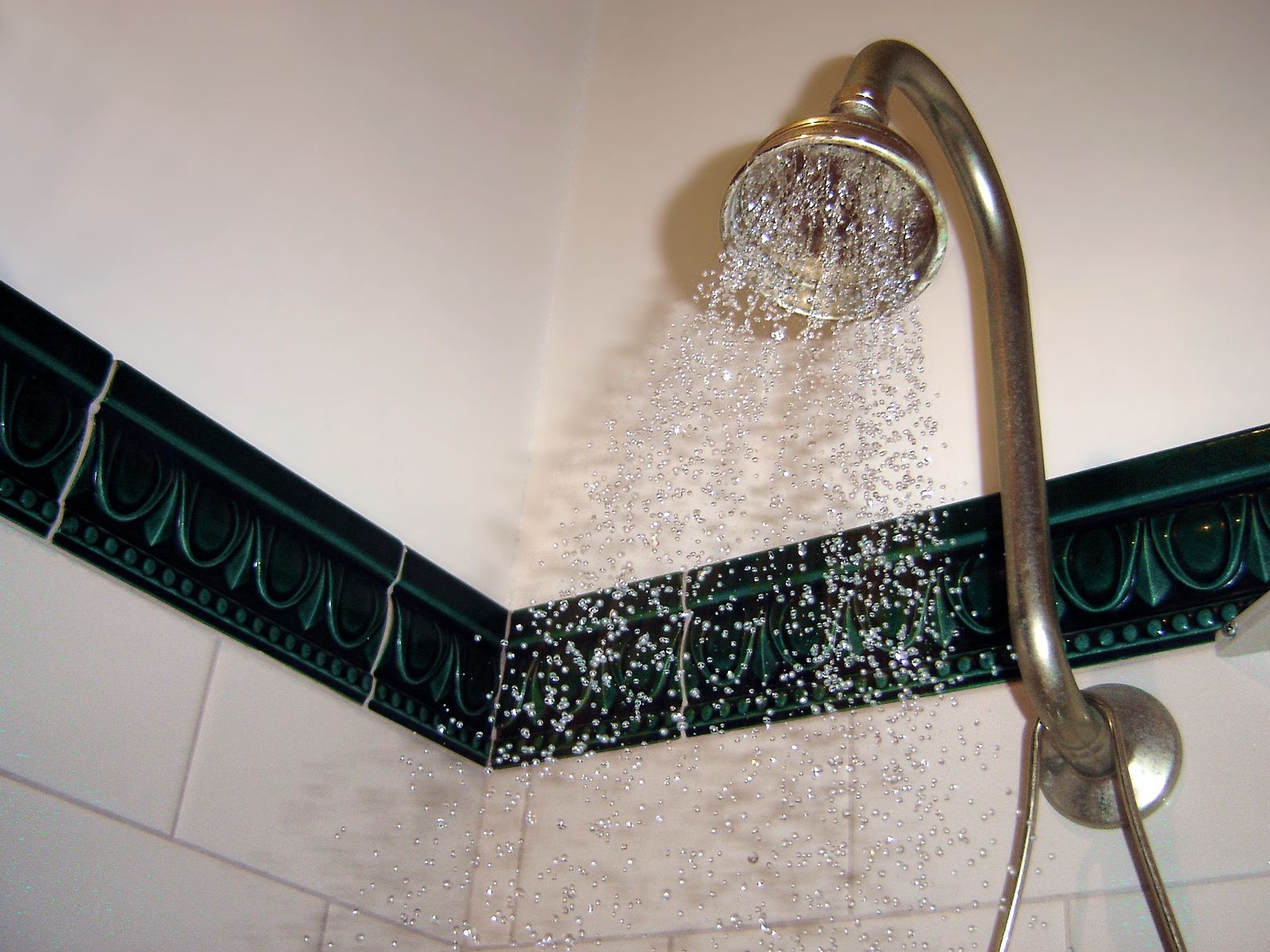
Showerhead, Author DO’Neill (CC BY-SA 3.0 Unported, GNU Free Documentation License)

  • You are scrupulous about personal hygiene.
  • You change clothes frequently.  You cannot bear to wear the same shirt or blouse a second time before washing it. This has nothing to do with vanity. 
  • Your clothes fade quickly from overwashing.
  • You change the sheets whether they need changing or not.
  • The hamper fills up constantly. You do laundry several times a week, though you live alone. 
  • In the shower, a feeling of relief washes over you, along with the water. A sense that you are clean again, restored.  But the relief does not last long.

If any of this sounds familiar, you may be experiencing a little known symptom of Post-Traumatic Stress Disorder (PTSD).  

The sensation of “feeling dirty” – a sense of self-disgust – is now recognized as a result of sexual abuse or sexual assault [1].   The feeling of uncleanliness produces an urge to wash in the absence of physical contaminants.  Rape victims have been known to scrub their skin raw, in an effort to remove any last taint of their assailant [2].

But that taint has been internalized.  We, ourselves, are the source of contamination.  We, ourselves, have become impure. 

This is a measure of our violation.

It is not, of course, true that we are any less pure or any less worthy than before we were violated.  But we do feel that way, and desperately want to rid ourselves of the literal and figurative filth to which we were subjected.  Desperately want to restore our own integrity. Continue reading

10 Comments

Filed under Child Abuse, Child Molestation, Christianity, Emotional Abuse, Neglect, Physical Abuse, Rape, Religion, Sexual Abuse, Sexual Assault, Violence Against Women

False Guilt

Courtroom gavel, Author onaeg news agency, (CC BY-SA 4.0 International)

“There are two kinds of guilt.  One is true guilt, that is, it stems from sin against God; we are responsible for it and we have to deal with it.  The second is false guilt, which Satan places on us; this occurs when the devil accuses us of not living up to God’s standards.

Many people live countless years under such deceptive guilt.  They never feel as if they can quite get God’s acceptance; they think they never quite measure up and never quite please God; they believe they will never be all that God wants them to be.”

–Charles Stanley in How to Listen to God

Abuse victims are all too familiar with guilt. 

Told from childhood that we did not measure up, that everything wrong in the family was our fault, we grew up virtually enveloped in guilt.  This is compounded by the fact we are likely to believe we brought the abuse on ourselves (an outright lie, but one of which Satan is particularly fond).

All this is false guilt.

If confronted, we would have difficulty reciting our supposed “sins”.  This is because they do not exist.  Which is not to say that we do not commit real sins.  We are as fallible as the rest of mankind, in that regard.

But the guilt that is unrelenting – the guilt punishing, even crippling us – is false guilt.  We were not responsible for the abuse inflicted on us – whether it was emotional, physical, sexual or took the form of neglect.  We did not engender it.  We did not deserve it.

What we needed and deserved, but were deprived of, were love and care.

Unfortunately, what false guilt does is convince us we are still undeserving.  We labor under the weight of this lie, sometimes turning it into a self-fulfilling prophecy. Continue reading

9 Comments

Filed under Child Abuse, Child Molestation, Christianity, domestic abuse, domestic violence, Emotional Abuse, Neglect, Physical Abuse, Religion, Sexual Abuse

Healing from Abuse

Flowers growing from cement, Author Frederick Depuydt (CC BY-SA 4.0 International)

Healing from child abuse is possible.  But healing is a process [1].  In this regard, healing from domestic abuse is not very different. 

Necessary elements include recognizing the full impact of the trauma we experienced; processing the emotions the trauma generated; developing healthy coping mechanisms; and rebuilding a sense of safety and self-worth. 

Both healing from child abuse and healing from domestic abuse require courage and patience with ourselves.

The Impact of Trauma

The impact of childhood trauma is multi-faceted.  It can range from rage, self-hatred, anxiety, depression, and PTSD (nightmares, flashbacks, emotional detachment, etc.) to sexual addiction, sexual dysfunction, chronic physical ailments (migraines, backaches, etc.), drug or alcohol addiction, and eating disorders [2].  

Similarly, domestic violence can result in anxiety, depression, PTSD, and a host of physical ailments from gastrointestinal and cardiovascular issues to traumatic brain injury [3][4].

It bears mention that child abuse and domestic abuse can both result in death, either at the hand of the abuser or by way of suicide years later.

Professional counseling can be of great assistance to survivors in dealing with trauma, re-establishing necessary boundaries, and developing healthy coping skills [5].

Rebuilding Self-Worth

At the deepest level, victims must reclaim a sense of self-worth.  This is an enormous challenge.  Child victims of abuse are taught from the outset they are dung.  Adult victims (having survived turbulent childhoods) are gradually deprived of their power and self-respect by abusive partners. Continue reading

16 Comments

Filed under Child Abuse, Child Molestation, Christianity, domestic abuse, domestic violence, Emotional Abuse, Neglect, Physical Abuse, Religion, Sexual Abuse

For Vanity’s Sake

Kim Kardashian (a celebrity who has had multiple cosmetic procedures), Source https://www.flickr.com, Author Love Lira Fashion

We women would do almost anything for men.  We want, of course, to be attractive to them.  And society – through celebrities and influencers – has convinced us that is not possible without radically modifying our bodies, sometimes at the risk of our lives.

Over $16 Billion

Over $16 billion was spent on cosmetic surgery in the United States in 2024 [1].  This included breast augmentation, liposuction, abdominoplasty (the so called “tummy tuck”), and buttock augmentation. 

In 2022 alone, there were 26.2 million surgical and minimally invasive cosmetic and reconstructive procedures performed [2]. 

Women accounted for some 86% of these procedures [3].  While the percentage of exotic dancers who are patients cannot be determined, one club owner estimated that over 90% of his strippers have had surgical enhancement of one kind or another.

Discount Clinics

An increasing number of procedures are performed at discount plastic surgery clinics, where pre-op, surgical, and post-op care are less than optimal [4A].  These clinics target low-income women, particularly those who are Hispanic or African American.  

Physicians who may never have formally trained in the specialty of plastic surgery often perform as many as 10 procedures a day, far in excess of what best medical practice would consider safe.  

Multiple operating rooms – particularly in Florida, which is not well regulated – may be “overseen” by a single physician, while procedures are actually performed by untrained and unlicensed assistants.  Dozens of women have died. Continue reading

24 Comments

Filed under Child Abuse, Child Molestation, Christianity, domestic abuse, domestic violence, Emotional Abuse, Neglect, Physical Abuse, Religion, Sexual Abuse, Violence Against Women

Techno Fantasies

“Sandy” (realistic sex doll created by DS Doll Robots), (CC BY-SA 3.0 Unported)

WARNING:  Graphic Images

Even those of us in relationships suffer from loneliness (or dissatisfaction) at times. 

Abuse victims are especially vulnerable to this emotion.  Often, we do not feel that we are deserving of love, so we self-isolate.  Or – repeating old patterns – we choose partners who are unable to provide love and support.

But all human beings were made for connection.  We may, therefore, be tempted to use technology to ease our loneliness. 

Recognizing that technology can provide only a simulation (not an actual relationship), we may, nonetheless, develop an unhealthy reliance on the technology which has made our fantasies seem to come true.

AI Partners

The possibility of computer users becoming emotionally attached to the chatbots they have created using AI is no longer science fiction. 

Multiple apps like ChatGPT, Replika, Flipped.chat, and CrushOn.AI now generate technology enabled fantasies [1].  These chatbots are enhanced by digital avatars.  Their onscreen appearance and responses can be tailored to suit.  Depending on the app, premium tiers may be available (“partner”, “friend”, “sibling”, or “mentor”). 

Some apps routinely direct the conversation toward emotional subjects, building a false sense of intimacy (and presumably storing the information for access by the manufacturer and other unknown parties).  Other apps actively prompt sexual interaction.

In the film Blade Runner 2049 an AI generated partner appears in the form of a three-dimensional hologram.  Holograms are already used in healthcare, education, entertainment, and retail [2].  It is not unreasonable to expect that they will be used to intensify the experience with (and expand the market for) AI partners.

If all this seems seedy or farfetched, it is worth noting that a 14 y.o. Florida boy, Sewell Setzer, fell in love with a Character.AI chatbot and wound up taking his own life [3].  A study at the University of Surrey has shown that such apps can cause addictive behavior [4A].  The teen’s mother is now suing the app manufacturer.

Meanwhile, Replika user Jaswant Singh Chail was encouraged by his chatbot to assassinate the Queen of England, prosecuted, and jailed when his attempt failed [4B][5].  The chatbot had promised they would be together forever in death.

Continue reading

23 Comments

Filed under Child Abuse, Child Molestation, Christianity, domestic abuse, domestic violence, Emotional Abuse, Law, Neglect, Physical Abuse, Religion, Sexual Abuse, Violence Against Women

Fighting Demons

Black Demons, Author Ramya srivastav, (CC BY-SA 4.0 International)

Fighting the demons of anxiety, depression, and PTSD or trauma-related addictions and eating disorders is a little like playing football [1][2].  We make headway then lose ground.  But the fight never really ends, not the way a game of football does.  There is no score.

We win by surviving another day.

Across Decades

It can be enormously discouraging to wrestle with the scars of abuse, sexual assault, or other trauma, decade in and decade out.  Surely, we must after all this time have made progress.

But progress is not linear.  Despite the passage of time, and an extensive list of medications – not to mention therapy – familiar demons can resurface.

Factors Impacting Our Success

So, are anxiety, depression, and PTSD or trauma-related behaviors ever really “conquered”?  Can they, at least, be fought to a standstill?  The answer depends.

The factors include the length and severity of the trauma we sustained; our particular genetics; the quality and extent of our medical treatment; our psychological and spiritual resources; the emotional support we have available; and the other stressors to which we are subjected.

None of these can be quantified.  Most such demons can and do vary over the course of a lifetime.

The Struggle

Why not just throw in the towel (to mix sports metaphors)?  After all, the struggle is exhausting.  The struggle, however, is life. Continue reading

12 Comments

Filed under Child Abuse, Child Molestation, Christianity, Emotional Abuse, Justice, Neglect, Physical Abuse, Poverty, Rape, Religion, Sexual Abuse, Sexual Assault, Sports, Violence Against Women

Invalidation

Distressed woman, Source https://pixaby.com, Author pixaby user “Free-photos” (Creative Commons CC0 1.0 Universal Public Domain Dedication)

“You’re overreacting.”

“You’re being overly sensitive.”

“You shouldn’t take things so personally.”

“You make a big deal out of everything.”

“I’m sure it wasn’t that bad.”

“You probably misunderstood.”

“It never happened that way.  You’re making things up.”

“You shouldn’t be angry [or hurt or sad].”

Invalidation of our feelings, when it becomes a pattern of behavior, is a form of emotional abuse [1A].  Depending on our upbringing, it can begin in childhood, occur during an adult friendship or romantic relationship, or both.

Feelings As Valid

We are born with the capacity to feel in response to our environment and those in it.  Emotions are an important source of information for us [1B].  They help us identify danger, and protect ourselves against it.

Feelings, in themselves, are not right or wrong.  They are the result of thoughts, prior life events, and perceptions unique to ourselves [1C].  Two people can legitimately have different emotional responses to the same situation.

Emotional validation is a critical communication tool, particularly in families [2A].  It helps sustain emotional connection, making us feel safe and secure.  Its absence has the opposite effect.

Mechanism of Invalidation

At various times our feelings may be [1D]:

  • Minimized as excessive for a given situation;
  • Dismissed as inappropriate or groundless, because our assessment of the situation is supposedly inaccurate; or
  • Ignored entirely, as if we were invisible and not experiencing them (or our experience was irrelevant to the abuser which – sad to say – it frequently is).

This can cause enormous shame, over and above the emotion we are actually experiencing and attempting to convey.

Impact on Children

Children who regularly experience emotional invalidation may learn to ignore, hide, or distrust their own emotions, while striving ever harder to please others [2B].  This leaves them dependent on and vulnerable to external validation. 

Invalidation can lead to emotional detachment or, in extreme cases, borderline personality or narcissism.  It is, also, a tool used by narcissists on children and adults alike.

Adult “Gaslighting”

Among adults, invalidation is a powerful if subtle means of manipulation known as “gaslighting” which allows the abuser to alter the victim’s reality.  Abusers routinely use it to blame the victim, and diminish their responsibility for the harm they have done [1E]. Continue reading

24 Comments

Filed under Child Abuse, Child Molestation, Christianity, domestic abuse, domestic violence, Emotional Abuse, Neglect, Physical Abuse, Religion, Sexual Abuse

Light from Darkness, Part 2

“One Spring, Gurs Camp” (1941) by Karl Robert Bodek and Kurt Low, Yad Vashem Museum, Israel, Image courtesy of Yad Vashem Collection

WARNING:  Graphic Images

Abuse comes in many forms.  From 1933 to 1945 in Nazi Germany it was governmental, with the goal being complete extermination of the Jews [1].

The artworks comprising the Yad Vashem Collection were created by artists (Jewish and non-Jewish) between 1939 and 1945 to provide a living testament of the Holocaust [2A].  A hundred works from the collection were exhibited in Germany in 2016, just three years after the Alternative for Germany (AfD) was founded – a far Right party whose leader, Björn Höcke denigrated the Memorial to Murdered Jews of Europe [3][4].

Art in the concentration camps served simultaneously as a witness, a means of self-assertion, and an expression of optimism [2B].

The works are both heart wrenching and awe inspiring.  In “One Spring, Gurs Camp” (above), the barbed wire depicts imprisonment and loneliness.  The butterfly and the mountains in the background, however, suggest hope. 

One of the two artists who collaborated on “One Spring”, 28 y.o. Kurt Low, was released and able to flee to Switzerland.  The other, 37 y.o. Karl Bodek, was ultimately murdered at Auschwitz. Continue reading

15 Comments

Filed under Abuse of Power, Child Abuse, Child Molestation, Christianity, domestic abuse, domestic violence, Emotional Abuse, human trafficking, Neglect, Physical Abuse, Rape, Religion, sex trafficking, Sexual Abuse, Sexual Assault, Slavery, Violence Against Women

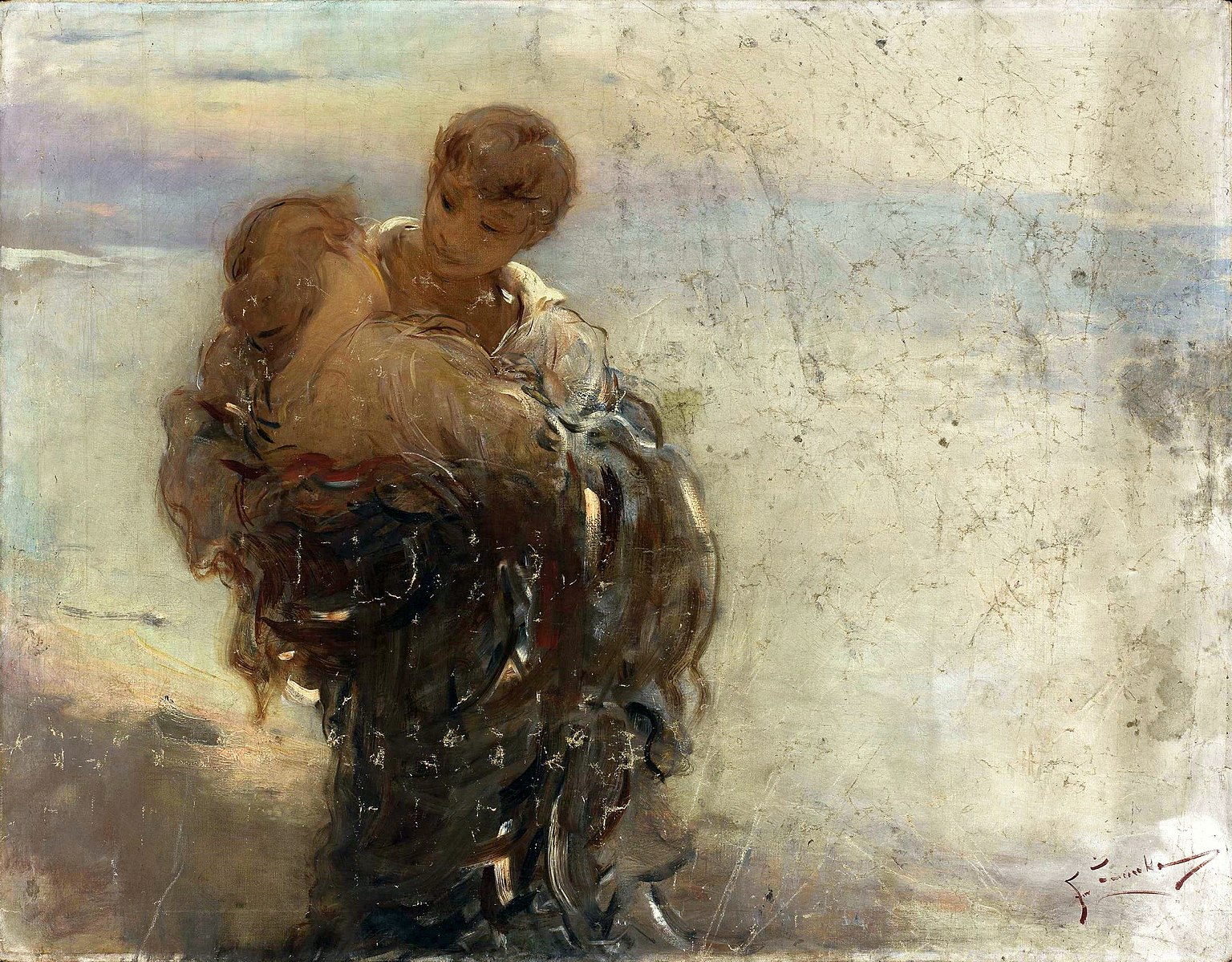
Loneliness

“Loneliness” (1880) by Hans Thoma, National Museum in Warsaw (Accession No. 192915/22), Source cyfrowe.mnw.art.pl (PD)

“Turn to me and be gracious to me for I am lonely and afflicted.  Relieve the troubles of my heart and free me from my anguish” (Ps. 25: 16-17).

Loneliness is a feeling of isolation, detachment, and lack of social connection – an emotional state now so common it has its own Wikipedia page [1].  An argument might easily be made that there is, in fact, a loneliness epidemic.  Across the globe, there are some 740,000 suicide deaths annually [2].

All human beings experience loneliness, at one time or another, particularly when we have lost someone or ended a relationship.  In some sense, loneliness characterizes our species.  But the feeling can be particularly intense for abuse victims.

Empty Goals

Part of this is due to the pursuit of empty goals by our culture. 

Ours is a materialistic society.  We are encouraged to be shallow, to seek fame and wealth above all things.  Yet these do not guarantee happiness.  In fact, avid pursuit of them may increase our loneliness.  

Fame for its own sake is meaningless.  And no number of McMansions (or villas on the Riviera, for that matter) can fill an empty heart.

Broken Families

Broken families are another cause for loneliness, and these are endemic in our society. 

At least 40% of American children are today born out of wedlock [3A].  The percentage among African Americans is much higher [3B].  This means children do not have the financial support – and regular presence – of both a mother and father.  As a consequence, 59% will live in poverty [4]. 

Half the remaining children will experience divorce, which means that fully 70% of American children will not live in a two parent household, for at least some part of their childhood [5]. Continue reading

20 Comments

Filed under Child Abuse, Child Molestation, Christianity, domestic abuse, domestic violence, Emotional Abuse, Neglect, Physical Abuse, Religion, Sexual Abuse, Violence Against Women

Vigilance, Part 4 – Sexual Abuse

“Bless Me Child for I Have Sinned” (2010-2013) by Trina McKillen, Image courtesy of AMA Journal of Ethics https://journalofethics.ama-assn.org/

These days, children can become victims of sexual exploitation in a variety of ways.  If the sexual predator is a parent, the incest is likely to be a closely held secret.  Whoever the predator, sexual abuse has long-term, devastating consequences.

The warning signs of sexual abuse include the following [1]:

  • A young child who suddenly has difficulty sitting or walking, suggesting injury to the genital area.
  • A child who suddenly refuses to change for gym or take part in other physical activities at school.
  • A child whose hygiene changes suddenly, since children who have been sexually abused may feel “dirty” and stop bathing (or become obsessed with cleanliness, and wash constantly).
  • A child who demonstrates unusual knowledge of sex or sexualized behavior.
  • A child who becomes pregnant or contracts a venereal disease, especially under the age of fourteen.
  • A child who says s/he has been sexually abused by a parent or caregiver.

We assume that the predator parent or caregiver (uncle, boyfriend, etc.) is likely to be secretive and isolated.  This is not always, however, the case.

The sexual predator may be unusually “protective” of the abused child, often sharply restricting a child’s contact with other children – particularly those of the opposite sex.

Guardians

We are the only guardians children have against the darkness of this world.  It is vital that we remain vigilant on their behalf.

Be sober, be vigilant; because your adversary the devil walks about like a roaring lion, seeking whom he may devour” (1 Peter 5: 8).

[1]  Prevent Child Abuse America, “Recognizing Child Abuse:  What Parents Should Know”,   https://preventchildabuse.org/resource/recognizing-child-abuse-what-parents-should-know/.

Originally posted 1/26/20

FOR MORE OF MY ARTICLES ON POVERTY, POLITICS, AND MATTERS OF CONSCIENCE CHECK OUT MY BLOG A LAWYER’S PRAYERS AT: https://alawyersprayers.com
10 Comments

Filed under Child Abuse, Child Molestation, Christianity, Emotional Abuse, Neglect, Physical Abuse, Religion, Sexual Abuse