Tag Archives: bitterness

Poor Pitiful Me – The Victim Mentality

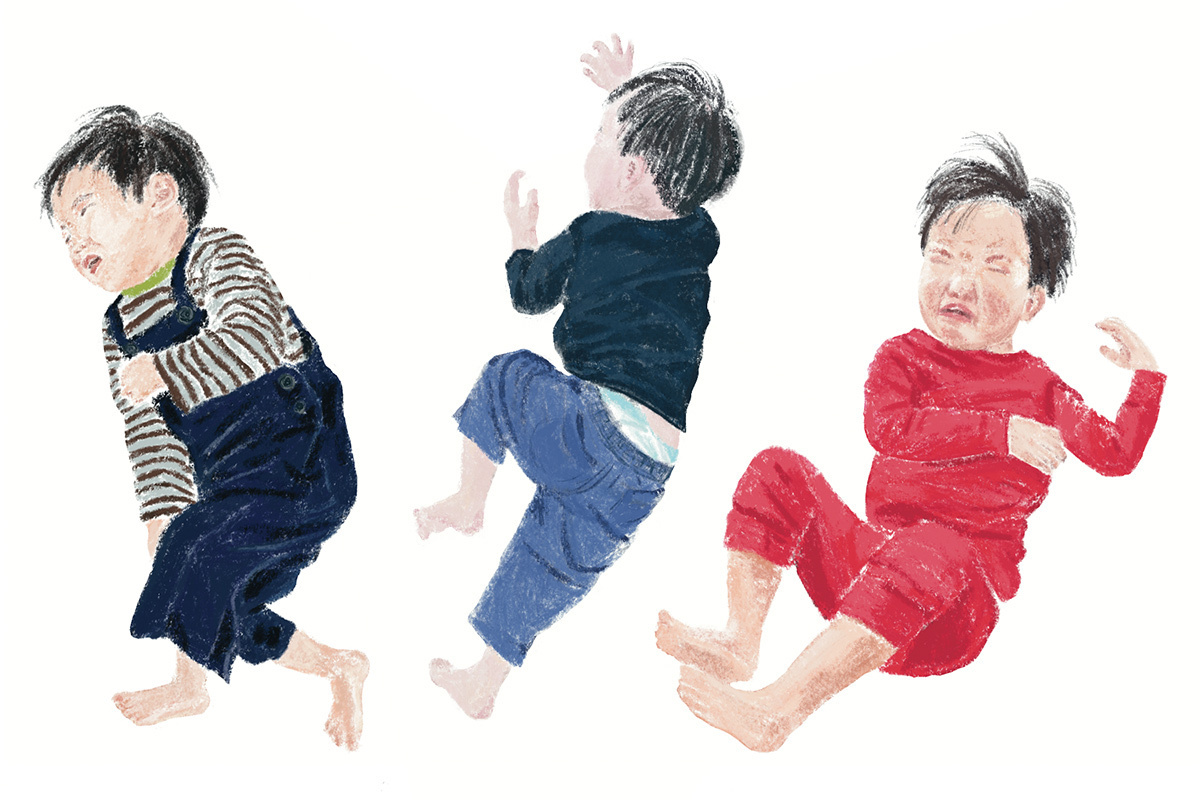
“Screaming and Watercolors” by Teresa Wong, Source The Walrus https://thewalrus.ca/good-mom-on-paper/

Whether we have been the victims of trauma or not, some of us adopt a victim mentality. 

We view the whole world as against us, and our “luck” as consistently bad [1][2].  We see ourselves as constantly wronged or treated unfairly.  We avoid taking personal responsibility, instead blaming our life choices (and their consequences) on others.  We have difficulty with change.  We can reject helpful suggestions outright.

Like toddlers, we may throw a tantrum, if our victimhood is challenged.

This is learned helplessness.  It results in frustration, resentment, and loneliness.

Maladaptive Coping

Self-pity as expressed in a negative view towards life is a maladaptive coping mechanism.  Meant to protect us against further disappointment, it is, in the long run, emotionally crippling. 

While adopting a “poor, pitiful me” attitude can generate sympathy, it does little or nothing to build character or promote personal growth.  The attitude is closely linked to self-sabotage, and not uncommonly associated with a narcissistic personality focused on entitlement. 

We may think we are avoiding risk.  But we are actually avoiding life, and all it has to offer.  Indeed, the chances are that we will attract only those with the same propensity for self-pity and complaint. Continue reading

28 Comments

Filed under Child Abuse, Child Molestation, Christianity, domestic abuse, domestic violence, Emotional Abuse, Neglect, Physical Abuse, Religion, Sexual Abuse

The Rose Garden – Afterword

https://upload.wikimedia.org/wikipedia/commons/7/72/Rosa_%27Charisma%27%2C_Bad_W%C3%B6rishofen%2C_Alemania%2C_2019-06-20%2C_DD_05.jpg

“Charisma” Rose, Author Diego Delso (CC BY-SA 4.0 International)

who comforts us in all our tribulation, that we may be able to comfort those who are in any trouble, with the comfort with which we ourselves are comforted by God” (2 Cor. 1: 4).

I have tried to paint an accurate and nuanced picture of people and events.  This is in no way intended to excuse abuse.  Whatever his or her personal history, the adult in a situation of child abuse remains the responsible party.

Ultimately, my story is not one of incest — or even loss — but love.  I was blessed with a loving sister, mother, grandmother and grandfather; and saved by Love Incarnate.

I had access to great books and great teachers.  I had the help of fine physicians and psychologists.  I had the opportunity to work in a field I loved passionately — in the process becoming the person I was intended to be.  I have always been surrounded by loving friends.

Not all children in the world are as fortunate.  Worldwide, millions each year are the victims of physical, emotional, and/or sexual abuse or neglect, with devastating consequences.  My case is just one among many.

The National Child Abuse and Neglect Data System (NCANDS) reports that there were 558,899 cases of documented abuse or neglect in 2022.  That equates to one in seven children in the United States abused or neglected each year [1][2].  Since abuse and neglect are underreported, experts believe the true number is far higher [3].

Thankfully, there is now a much greater awareness of the problem than when I was a child.

Each child’s life is precious, a banner waiting to unfurl.  But God values the worn and battle-scarred banner no less.

If there is a lesson to be drawn from my experience and family history, it is that — with God’s help — we endure.  Bitterness is not an answer to life.  We all bear scars.  Whatever our personal sorrows, we each of us have something inside only we can give.

And we have a choice.  To lift a finger, light a candle, lend a hand…or not.  Opportunities for good abound.

Defeat is a temporary condition.  It is a greater triumph to have struggled against failure and rejection, than never to have failed for fear of making the attempt.  Even in loss there is honor.

Take that chance.  The world is waiting.  The roses are in bloom.


[1]  Children’s Bureau, Administration for Children and Families, “Child Maltreatment 2022”, https://www.acf.hhs.gov/sites/default/files/documents/cb/cm2022.pdf.

[2]   McLean Hospital, “Understanding Child Abuse and Its Effects on Mental Health”, 8/18/23, https://www.mcleanhospital.org/essential/effects-child-abuse.

[3]  National Institutes of Health, National Library of Congress, National Biotechnology Information Center, “New Directions in Child Abuse and Neglect Research” by National Research Council, et al, 3/25/14, https://www.ncbi.nlm.nih.gov/books/NBK195982/ and https://nap.nationalacademies.org/catalog/18331/new-directions-in-child-abuse-and-neglect-research.

Copyright © 2008 – Present Anna Waldherr.  All rights reserved.
ISBN: 978-1-60247-890-9

FOR MORE OF MY ARTICLES ON POVERTY, POLITICS, AND MATTERS OF CONSCIENCE CHECK OUT MY BLOG A LAWYER’S PRAYERS AT: https://alawyersprayers.com

13 Comments

Filed under Child Abuse, Child Molestation, Christianity, Emotional Abuse, Neglect, Physical Abuse, Religion, Sexual Abuse

Battery Acid

Car battery, Author Towel401 (PD)

The victims of child abuse often wrestle with the question of forgiveness.  Forgiveness can feel like defeat – another surrender to a predator who has already taken so much from us, including our self-respect.

Strength v. Weakness

But forgiveness is NOT a sign of weakness.  Nor is it a warm and cozy feeling.

Forgiveness is a deliberate decision to put the past behind us [1].  That requires enormous strength on the part of victims.  Most of us cannot accomplish it until we have first mourned our losses (a fact those urging forgiveness upon us must not overlook).

Unforgiveness

Emotionally speaking, unforgiveness is akin to the sulfuric acid used in storage batteries.

Battery acid is a dangerous substance.  It dissolves the skin, causing chemical burns.  Heavy scarring can result.  Contact with the eyes will cause blindness.  Long-term exposure to fumes is toxic.

Like battery acid, unforgiveness eats us up inside, creating scars that further tie us to the past, exacerbating rather than easing our pain.  And the longer our bitterness lasts, the deeper the scars.

Bitterness blinds us to the possibilities before us.  Forgiveness, by contrast, opens our eyes.  It clears our head, and cleanses our heart.  We can once again breathe freely.  The past no longer has power over us.

Release

Forgiveness is NOT salt in the wound, NOT an added stripe from the lash, NOT a final humiliation [2].  Nor is it an argument that predators’ horrendous behavior should be excused away at victims’ expense.

Significantly, forgiveness is not inconsistent with criminal prosecution, should victims choose to pursue that.  Prosecution may prevent others from being victimized.

Instead, forgiveness implies release for the victim…release from bitterness, from anger, from hatred.  From the groundless self-condemnation the abuse to which we were subjected left in its wake [3].

Victims deserve that.

But I say to you, love your enemies, bless those who curse you, do good to those who hate you, and pray for those who spitefully use you and persecute you” (Matt. 5: 44).

[1]  Prevention, “How to Forgive Someone Who Hurt You – Even When It Feels Impossible” by Cassie Shortsleeve, 12/13/19, https://www.prevention.com/life/a29995725/how-to-forgive-som.eone/

[2]  NPR, “Why Forgiving Someone Else Is Really About You” by Stephanie O’Neill, 7/30/20, https://www.npr.org/2020/07/28/896245305/why-forgiving-someone-else-is-really-about-you.

[3]  This is not to suggest that we were responsible for our abuse.  Children, however, blame themselves for the actions of the adults around them.  Victims carry that misplaced sense of guilt into adulthood.

FOR MORE OF MY ARTICLES ON POVERTY, POLITICS, AND MATTERS OF CONSCIENCE CHECK OUT MY BLOG A LAWYER’S PRAYERS AT: https://alawyersprayers.com

7 Comments

Filed under Child Abuse, Child Molestation, Christianity, Emotional Abuse, Neglect, Physical Abuse, Religion, Sexual Abuse

In the Aftermath of Abuse, Part 5 – Forgiveness

“The Confession” by Giuseppe Molteni (1838), Gallerie di Piazza Scala, Photographer Artgate Fondazione Cariplo (CC BY-SA 3.0 Unported)

From a human perspective, it is inconceivable that abuse victims would consider forgiving so grievous a violation as abuse.  Only with God’s intervention can abuse victims hope to forgive the perpetrator, and successfully move on with their lives.

Forgiveness begins with a decision to put the violation in the past. It may be necessary to re-address forgiveness as life events bring other areas of unforgiveness to the survivor’s awareness.  This does not mean that the victim should be placed again in harm’s way.

Forgiveness cannot be forced (and does not preclude criminal prosecution). But without it, victims run the risk of being consumed by bitterness. God wants more for them than that.

Originally posted 8/11/13

Of note, Federal authorities have successfully taken down Backpage.com, a classified advertising website repeatedly accused of enabling prostitution and sex trafficking of minors.

FOR MORE OF MY ARTICLES ON POVERTY, POLITICS, AND MATTERS OF CONSCIENCE CHECK OUT MY BLOG A LAWYER’S PRAYERS AT:  https://alawyersprayers.com

3 Comments

Filed under Child Abuse, Child Molestation, Christianity, Emotional Abuse, Justice, Law, Neglect, Physical Abuse, Religion, Sexual Abuse

Greater than We Know

I’d like to tell you the story of two women. It is a true story, not a fairytale. Both these women faced hardship and loss. However, they responded differently which is the lesson for us at the heart of their story.

Naomi was an Israelite woman who moved with her husband and two sons to nearby Moab, during a time of famine. Naomi’s husband soon died. The young men married Moabite women with pagan beliefs. Ruth was one of these.

To Naomi’s sorrow, after about ten years her sons, also, died. Hearing that the famine at home had ended, Naomi decided to return. She urged her daughters-in-law to remain in Moab, and rebuild their lives.

But Ruth had grown especially close to Naomi, and was determined to follow her back. Ruth’s beautiful words have come down to us, over the centuries:

But Ruth said: ‘Entreat me not to leave you, or to turn back from following after you. For wherever you go, I will go; and wherever you lodge, I will lodge; your people shall be my people, and your God, my God’ ” (Ruth 1: 16-17).

Naomi was an embittered woman, angry with God for what she had been through.

Ruth, on the other hand, is remembered as a woman of faith and integrity. Without complaint, Ruth went to work in the fields to sustain herself and Naomi on their return, in the process, winning the love and admiration of a man who would become her new husband.

We are not promised that Prince Charming will ride in on a white horse. Tragedies will befall us in this broken world. Our dreams will at times be dashed, and our hearts broken. But we can rest assured our lives will have purpose, even when we do not see that purpose.

Abuse can be devastating, its scars lifelong. But the violation is not the sum total of our lives. With God, there is always hope. Sometimes, in fact, God’s plans for us may be greater than we know.

Ruth could easily have become bitter when her first husband died. She could have doubted God’s plans for her life. When she chose to remain with her mother-in-law, Ruth had no idea that she would remarry…or that she would become the great-grandmother of kings, and enter the lineage of Christ [1] [2].

Yet she did.

For I know the thoughts that I think toward you, says the Lord, thoughts of peace and not of evil, to give you a future and a hope” (Jer. 29: 11).


[1] Ruth is documented in Scripture as having been the great-grandmother of King David, and the great-great-grandmother of King Solomon (Ruth 4: 13, 17, 21). She is expressly included in the geneology of Christ (Matt. 1: 5).

[2] Though scholars continue to debate its significance, archaeological evidence for King David appears to have been unearthed at Tel Dan, in northern Israel, on a stone stela dating to the 9th Century BC.

FOR MORE OF MY ARTICLES ON POVERTY, POLITICS, AND MATTERS OF CONSCIENCE CHECK OUT MY BLOG A LAWYER’S PRAYERS AT: http://www.alawyersprayers.com

9 Comments

Filed under Child Abuse, Christianity, Religion, Violence Against Women

In the Aftermath of Abuse, Part 5 – Forgiveness

From a human perspective, it is inconceivable that abuse victims would consider forgiving so grievous a violation as abuse. Only with God’s intervention can abuse victims hope to forgive the perpetrator, and successfully move on with their lives.

Forgiveness begins with a decision to put the violation in the past. It may be necessary to re-address forgiveness as life events bring other areas of unforgiveness to the survivor’s awareness.  This does not mean that the victim should be placed again in harm’s way.

Forgiveness cannot be forced (and does not preclude criminal prosecution). But without it, victims run the risk of being consumed by bitterness. God wants more for them than that.

FOR MORE OF MY ARTICLES ON POVERTY, POLITICS, AND MATTERS OF CONSCIENCE CHECK OUT MY BLOG A LAWYER’S PRAYERS AT:  https://alawyersprayers.com

Leave a comment

Filed under Child Abuse, Emotional Abuse, Justice, Law, Neglect, Physical Abuse, Religion, Sexual Abuse