Category Archives: Violence Against Women

Baby Trafficking

Pregnant woman, Source https://www.flickr.com/photos/aurimas_m/3423098686/, Author Aurimas Mikalauskas of Paliūniškis, Lithuania (CC BY-SA 2.0 Generic)

WARNING:  Graphic Images

In a joint operation between the United States and Mexico, authorities last year captured Martha Mendez Aguilar, known as “La Diabla” (“The Devil”), the head of a grisly baby trafficking ring called the Jalisco New Generation Cartel [1A].

“[This is an] example of what terrorist cartels will do to diversify their revenue streams and finance operations [1B].”

–Joe Kent, Dir. of National Counterterrorism Center

Pregnant women, often from impoverished circumstances, were lured to remote locations.  Once there, the mothers were murdered, and their organs and infants harvested for sale.  The infants were sold to couples for around $14,000 each.

Tragically, this cartel was not the only one to pursue baby trafficking.

Indonesian police uncovered an international baby trafficking ring believed to have sold at least 25 infants to buyers in Singapore since 2023 [2A].  Using Facebook, WhatApp, and other channels, this syndicate targeted expectant mothers who allegedly did not want to raise their infants.

Delivery costs were covered and a small amount of compensation paid to the mothers.  Then the infants were handed over.

In some cases, infants were actually reserved in the womb for purchasers and housed for as long as a year after birth, while fraudulent birth certificates, parental consent forms, medical records, and immigration documents were prepared.

Desperate Straits

“These clinics or shelters use language that sounds compassionate at first, such as ‘you can give birth and take your baby home’.  But in reality, they offer money and illegally transfer custody of the baby [2B].”

— Ai Rahmayanti, Commissioner of the Indonesian Child Protection Commission (KPAI)

Child trafficking cartels are extremely sophisticated, often posing as maternity clinics, orphanages, or shelters which appear to care for vulnerable women and children [2C].

Typically, they target women in desperate straits – those suffering from financial hardship, trapped in debt bondage, abandoned by a spouse or partner, pregnant as the result of sexual violence whether by a partner or stranger, or simply pregnant from a casual sexual relationship [2D].

When manipulation fails, cartels will resort to criminal approaches including direct abduction (whether from hospitals, schools, playgrounds, or other public spaces), and crisis exploitation (natural disasters, civil unrest, or refugee settings) [7A].

Purposes

Infants and children may be trafficked for illegal adoption, prostitution or other sexual abuse, forced marriage, forced organ donation, forced labor or slavery, use in the drug trade, use as beggars, and use as child soldiers [3][4][5].  These can overlap [6]. Continue reading

10 Comments

Filed under Child Abuse, Child Molestation, Christianity, domestic abuse, domestic violence, Emotional Abuse, human trafficking, Justice, Law, Neglect, Physical Abuse, Poverty, Prostitution, Rape, Religion, sex trafficking, Sexual Abuse, Sexual Assault, Slavery, Terrorism, Violence Against Women

The Trouble with Throuples

File:ST TroubleWithTribbles.jpg

Screenshot of William Shatner as Captain James Kirk surrounded by tribbles, Source Star Trek:  The Original Series, Episode “The Trouble with Tribbles”, Copyright © 1967 Paramount Pictures (Fair Use)

There was an old Star Trek episode titled “The Trouble with Tribbles” [1].  Cute and furry little creatures, tribbles multiplied rapidly when fed, and had the potential to destroy entire ecosystems as a result.  The trouble with throuples is not dissimilar.

Throuples, for those unfamiliar with the term, are sexual relationships comprised of three individuals [2].  The fad is a modern variant on polygamy which is again in vogue, as People Magazine and reality TV reflect.

The concept may at first seem titillating.  Why not explore our sexuality to the fullest extent?  It’s “obvious” no single individual can fulfill all our needs.  And why should we have to fulfill the needs of someone else, when that burden can so easily be shared?

Theoretically, each member of a throuple is an equal partner.  Presumably, however, the group can decide to distribute power differently.  With or without consent, both power and attraction can, also, shift within the group.

Unfortunately, tensions that can exist between a married couple are multiplied in the context of a throuple, not diminished. That applies whether the group involves one man/two women, one woman/two men, three women, or three men (and whatever the sexual orientation within the group). Continue reading

11 Comments

Filed under Child Abuse, Child Molestation, Christianity, domestic abuse, domestic violence, Emotional Abuse, Neglect, Physical Abuse, Religion, sex trafficking, Sexual Abuse, Violence Against Women

Minimizing Pain

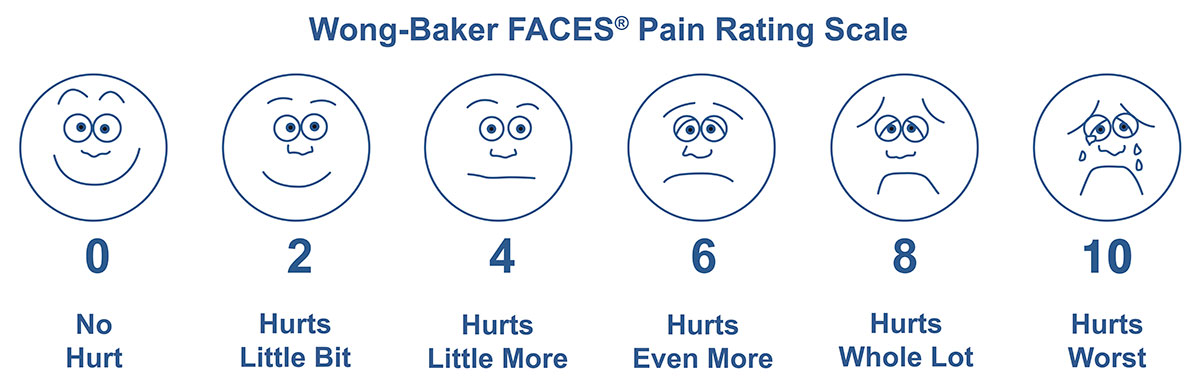
FACES_English_Blue_no copyright info

As abuse victims, we will often minimize our pain.  We may downplay our pain out of fear, guilt, or a desperate need to believe that the parent/caregiver or partner who caused that pain “deep down” loves us.

This is a short-term coping mechanism, a way of assuring ourselves that we will survive the harm done to us.

It is, also, a way of minimizing the responsibility of those who inflicted that harm on us (and avoid or defer dealing with the anger and grief their betrayal caused us).

Denial v. Reality

Both the victims of childhood abuse and the victims of domestic abuse may employ this coping mechanism, sometimes despite clear evidence to the contrary [1].  A woman whose partner blackened her eyes and knocked her teeth out may, nonetheless, seek to assure concerned family members, “Really, it’s not so bad.”

The problem with this coping mechanism is that it does not address the abuse.  The victim denies the reality that he or she has been seriously harmed; may fail to obtain necessary medical treatment; and continues to remain in the abusive situation. Continue reading

28 Comments

Filed under Child Abuse, Child Molestation, Christianity, domestic abuse, domestic violence, Emotional Abuse, Neglect, Physical Abuse, Religion, Sexual Abuse, Violence Against Women

The Dangers of So Called “Freebirth”

18th Century anatomical illustration of a pregnant woman, possibly a plate to Gautier d’Agoty’s “Exposition Anatomique”, Marseille, Paris, and Amsterdam (1759). Source/Photographer The Wellcome Collection https://wellcomecollection.org/works/m5jaykde (Photo No. L0036026),  (CC Attribution 4.0 International)

Women have died in childbirth since time immemorial.  Complications can develop even in low risk pregnancies.

But the rate of maternal mortality has dropped 99% in the last hundred years, since the advent of prenatal care [1].  Prenatal care has likewise been crucial in reducing infant mortality [2].  Advancements in medical training and infection control were key to this.

Free Birth Society

The Free Birth Society founded by Emilee Saldaya promotes the radical concept of “freebirth” without medical assistance of any kind during pregnancy or childbirth, whether from a physician (even a female physician) or from a midwife.  This supposedly serves to reclaim the sacredness of childbirth, and assert a woman’s autonomy over her own body.

The messaging resonates with women who have had traumatic experiences with maternity services or unnecessary medical interventions, and those seeking to live “off the grid”.

Maternal and Infant Deaths

Investigation has, however, linked the Free Birth Society to dozens of cases of maternal and infant harm or death across the globe [3][4][5][6]. Continue reading

10 Comments

Filed under Child Abuse, Christianity, Neglect, Physical Abuse, Religion, Violence Against Women

Good Tidings

“Nativity of Christ a/k/a Holy Night” by Antonio de Correggio (c. 1529-1530), Staatliche Kunstsammlungen (Accession No. Gal.-Nr. 152), Dresden, Source/Photographer Google Arts & Culture https://artsandculture.google.com/asset/7wGhio0LPVXb_g Hans Peter Klut/Elke Estel (PD)

Then the angel said to them, ‘Do not be afraid, for behold, I bring you good tidings of great joy which will be to all people.  For there is born to you this day in the city of David a Savior, who is Christ the Lord.  And this will be the sign to you: You will find a Babe wrapped in swaddling cloths, lying in a manger’” (Luke 2: 10-12).

Wishing you all a Merry Christmas!

FOR MORE OF MY ARTICLES ON POVERTY, POLITICS, AND MATTERS OF CONSCIENCE CHECK OUT MY BLOG A LAWYER’S PRAYERS AT: https://alawyersprayers.com

16 Comments

Filed under Child Abuse, Child Molestation, Christianity, domestic abuse, domestic violence, Emotional Abuse, Neglect, Physical Abuse, Religion, Sexual Abuse, Violence Against Women

Grooming – The Manipulation of Children

“Garden of Deception” by Andrew Blucha  (2022), Courtesy of https://www.reddit.com/r/ImaginaryHorrors/comments/uyxcoo/the_garden_of_deception_andrew_blucha_2022/ 

Grooming refers to the deliberate process by which an abuser builds a relationship with a child for the purpose of manipulating, exploiting, and abusing that child [1A][2A].  It involves gaining the victim’s trust over time while desensitizing the child to abusive behaviors, so that the child is less likely to reject them and report the abuser to authorities. 

Significantly, grooming can take place both in person and online.  It can take place at home, at school, in clubs, on teams, in religious settings, and elsewhere [2B].  Online, it can involve social media (Instagram, Tik Tok, Snapchat, etc.) or gaming platforms (PlayStation Network, Xbox Live, Discord, etc.) [2C].

Dynamic

Grooming is the result of a power differential within the relationship, which the abuser uses for his/her own gratification [1B].  Authority can create such a differential, for instance, where the abuser is a teacher, coach, or physician.  But age, itself, can create a power differential. 

Most caring adults will be sensitive to the fact children are easily influenced.  Predators, by contrast, use this vulnerability to their advantage, coupling it with appropriately tailored lies.  “This is how all Daddies teach their little girls about sex.”  “This will make Uncle Frank very happy.  You want to make him happy, don’t you?”  “This is what big boys do.”

Grooming Situations

Grooming is most commonly employed in cases of child sexual abuse.  Even adults, however, can be groomed [1C].  That may be the case where the abuser is a family “friend” (a charming predator with whom parents are led to believe their child will be safe), or where an adult victim comes under the sway of a narcissistic partner [3][4].

Children old enough to flee physical or sexual abuse at home will find it brutally hard to live on the streets.  Not surprisingly, they, too, are susceptible to grooming which is precisely why pimps and sex traffickers rely on the tactic.  A homeless young person offered “free” room and board will find it difficult to refuse sex in exchange. Continue reading

26 Comments

Filed under Child Abuse, Child Molestation, Christianity, domestic abuse, domestic violence, Emotional Abuse, Neglect, Physical Abuse, Prostitution, Religion, sex trafficking, Sexual Abuse, Violence Against Women

Wounds

Colored stipple etching of a forearm with three open wounds, WOUNDS by J. Stewart after J. Bell (c. 1826), Wellcome Collection (Library Reference ICV No 9908), Source/Photographer https://wellcomeimages.org/indexplus/obf_images/b3/e5/19f609d2570b60390b8f1a0e2f55.jpg, (Creative Commons Attribution 4.0 International)

When sex is viewed merely as another human appetite – powerful perhaps, but devoid of emotional content; when it is shared with any number of casual strangers, rather than with the beloved in a lifelong committed relationship as intended by God, then it is devalued and we with it. 

Instead, a profound wound is created, a wound that reaches to the soul.

We may deny the existence of this wound.  Certainly, our culture does.  But the wound is a reality, nonetheless, a gaping void no substitute can fill. 

We may try to fill that void by increasing the number of our sexual partners, a fruitless exercise.  We may try to fill it with food, alcohol, or drugs in an effort to numb the pain.  The effort, itself, can become a compulsion.  But the wound remains. 

For the victims of abuse, sexual or otherwise, the very same wound is created.  We know at the deepest level that we were seen as worthless by the parents or guardians who should have loved us.  The grief and shame are overwhelming, and can last a lifetime.

Christ is familiar with wounds.  He, too, bore them.  Not due to His own fault, but for our sakes.  And He can heal them.

FOR MORE OF MY ARTICLES ON POVERTY, POLITICS, AND MATTERS OF CONSCIENCE CHECK OUT MY BLOG A LAWYER’S PRAYERS AT: https://alawyersprayers.com

12 Comments

Filed under Child Abuse, Child Molestation, Christianity, domestic abuse, domestic violence, Emotional Abuse, Neglect, Physical Abuse, Religion, Sexual Abuse, Violence Against Women

Tiger Widows

File:THE CLOSE-UP.jpg

Tiger hiding in Bandavgarh National Park, India, Author Amitban77 (Creative Commons Atribution 4.0 International)

“…The Sundarbans [is] a vast mangrove forest straddling the border of India and Bangladesh…

In the coastal villages of the Sundarbans, many women have lost their husbands to tiger attacks.  These men — fishermen, honey collectors, and woodcutters — venture into the forest’s treacherous depths to earn a living.  When they don’t return, their wives are left to face not only grief but also a cruel and unjust blame.  They are branded as Apia (inauspicious) or even “husband-eaters.”

Branded as Cursed:  A Life of Blame and Ostracism

Superstition dictates that when a man enters the forest, his wife must observe strict rituals and vows for his safety.  However, if her husband falls prey to a tiger, the community immediately presumes that the wife must have failed in her duties or is inherently unlucky.  The responsibility for his death is placed squarely on her shoulders.

This social condemnation is just the beginning.  The women, now known as tiger widows, face severe ostracism.

  • Villagers may stop interacting with them.
  • They are refused work in agricultural fields or community fishing.
  • They are barred from attending social and religious ceremonies.

Forced into isolation, these women must raise their children alone, often in a separate hut on the outskirts of the village.  Crippled by poverty, many are forced to pull their children from school and send them to cities to work as child laborers. Worse still, their vulnerability is often exploited, and if a tiger widow is sexually assaulted, the finger of blame is, yet again, pointed at her…”  [Continued at:  https://shobdoneerin.com/2025/09/04/sundarbans-tiger-widows-blamed-for-the-kill-shunned-by-society/comment-page-1/?unapproved=79&moderation-hash=3fc82dcecf5c5cbb795093646fb5cb61#comment-79 ]

This post is courtesy of Samiran Mandal who blogs at https://shobdoneerin.com.

The Franciscan Sisters have returned land to the Lac du Flambeau tribe in an effort to repair the painful Native American boarding school legacy.  This is the first time a Catholic institution has returned Wisconsin tribal land as an act of reparation.

See, https://waow.com/news/top-stories/a-historic-first-catholic-institution-returns-tribal-land-back-to-lac-du-flambeau-tribe/article_0f59e30d-b3cb-4381-becd-959559d2ef3a.html.

FOR MORE OF MY ARTICLES ON POVERTY, POLITICS, AND MATTERS OF CONSCIENCE CHECK OUT MY BLOG A LAWYER’S PRAYERS AT: https://alawyersprayers.com

11 Comments

Filed under Community, domestic abuse, domestic violence, Poverty, Rape, Violence Against Women

Mercy, Justice, and the God of the Old Testament, Part 2

“Padre Eterno (The Eternal Father)” by Giovanni Bellini (1500-1505), Civic Museums of Pesaro, Italy, Source https://www.pesaromusei.it, (PD)

WARNING:  Graphic Images

The relationship abuse victims have with God is, as they say, complicated.  Since we see God through the filter of our own experience (a lens which can be distorted), victims both of childhood abuse and domestic violence tend to view Him as harsh and punitive [1]. 

Though God does not cause evil, we may well blame Him for our pain.  There are those who have rejected Him because of that. 

In considering the nature of God, however, we must not overlook the fact that He is forgiving.  That idea may seem at odds with the picture of God presented in the Old Testament.  But it is central to God’s character.

Forgiveness

Out of His great love, God created a world in which His children are given freedom to sin.  They are not, in other words, required to love Him.  The Old Testament tells the story of how Israel repeatedly abandoned God, repented, and was forgiven.  

But You are God, Ready to pardon, Gracious and merciful, Slow to anger, Abundant in kindness, And did not forsake them” (Neh. 9: 17).

The Book of Hosea brings this down to a personal level.  The prophet is instructed by God to take a wife who is a harlot.  She betrays him with other men.  Yet he takes her back and treats her kindly.

Many, of course, point to the people God instructed the Israelites to kill.  These critics conclude God must be an angry and heartless god.  But God’s motives should be considered.  This is where His justice comes in.

A.  Egyptians

The ancient Egyptians worshiped a vast number of gods, i.e. demons (1 Cor. 10: 20), estimated to be over 2000 [8].  During the 400 years the Israelites were enslaved in Egypt, they served as witnesses to the Egyptians concerning the one true God.  God then gave the Egyptians 10 more chances (the biblical plagues) to turn away from idols.  They chose not to do that.

B.  Canaanites

The Canaanites (among them the Perizzites, the Hivites, the Jebusites, and the people of Ai) were involved in practices abominable to God, including child sacrifice and sexual immorality. 

  • Children were burned alive to the Canaanite god (demon) Molech to ensure their parents’ prosperity [2A].  Music was used to drown out the pitiful screams.
  • The Canaanite goddess (demon) Ashtoreth (known as Ishtar in Mesopotamia, and Astarte in Phoenicia) had male and female prostitutes who performed erotically, and engaged sexually with worshipers [2B]. 
  • Gender-bending was one of Ashtoreth’s characteristics [2C][3].  So parades in honor of the goddess (demon) not only featured temple prostitutes, but lesbians, homosexuals, and transvestites (sexual orientations and gender identity not in accord with God’s intention for humanity) [2D][4].  
  • The goddess (demon) Ashtoreth was, also, deeply involved with magic, the occult, and the casting of spells (practices abhorrent to God) [2E][5]. 
  • Mind altering substances like opium, cannabis, and the blue water lily are thought to have been used in worship [2F][6].

Idolatry is not harmless.  It corrupts the heart [7].

Canaanite children who were not sacrificed themselves would have been brought up in this depraved culture, and have followed in their parents’ footsteps.  Such indoctrination could, itself, be considered a form of child abuse.

The Canaanites were given ample time to repent, as an earlier Scriptural reference to the sin of the Amorites (another Canaanite group) not yet being “full” (Gen. 15: 16) implies. Like the Egyptians, they chose not to do that.

God wanted to prevent the Israelites from adopting similar idolatrous practices (Lev. 20: 1-8; Deut. 18: 9-11), and He wanted to protect their children (Lev. 18: 21). 

C.  Ninevites (Assyrians)

The Assyrians in Ninevah (notorious for violent and terroristic tactics like torture, dismemberment, and decapitation) repented after hearing the word of God from the prophet Jonah, and God stayed His hand of judgment [9].  God then explained to Jonah that His forgiveness was motivated by love even for these wicked people (Jonah 4: 10-11). Continue reading

19 Comments

Filed under Child Abuse, Child Molestation, Christianity, domestic abuse, domestic violence, Emotional Abuse, Neglect, Physical Abuse, Religion, Sexual Abuse, Violence Against Women

Mercy, Justice, and The God of the Old Testament, Part 1

“Moses Receiving the Tablets of the Ten Commandments” by Gebhard Fugel (c. 1900), Source https://freechristimages.com/bible-stories/ten-commandments.html, (PD)

While it may be surprising to find the Old Testament discussed on a blog about abuse, spirituality and abuse are closely entwined. 

Satan attempts to use the abuse we suffered as a weapon to destroy victims’ faith.  Many of us do lose our faith as a result, seeing God as harsh and cruel, if we continue to believe in Him at all.

Even those who were never victimized may have difficulty reconciling the God of the Old Testament with the God of the New Testament.  God, of course, has never changed.

Because of this confusion, it is worth examining God’s true nature.

Mercy and Justice

God described Himself to Moses in this way:

“And the Lord passed before him and proclaimed, ‘The Lord, the Lord God, merciful and gracious, longsuffering, and abounding in goodness and truth, keeping mercy for thousands, forgiving iniquity and transgression and sin, by no means clearing the guilty, visiting the iniquity of the fathers upon the children and the children’s children to the third and the fourth generation'” (Ex. 34: 6-7).

God is, therefore, both merciful and just.  These two qualities are in tension with one another in human beings.  Not so with God.

  • The Hebrew word translated as “mercy” or “merciful” is associated with the love of a mother, with compassion from the very womb [1A]. 
  • Graciousness refers to undeserved favor or grace [1B].
  • Longsuffering refers to patience with our mistakes and sins [1C]. Indeed, God is not only willing to forgive our sins, but desires to take them upon Himself [1D].

The phrase “visiting the iniquity of the fathers upon the children and the children’s children” will have special resonance for abuse victims, since it conveys the idea of generational sin or abuse.   Children are not punished by God for the sins of their parents [2].  Patterns of sin often, however, continue from one generation to the next. Continue reading

13 Comments

Filed under Child Abuse, Child Molestation, Christianity, domestic abuse, domestic violence, Emotional Abuse, Neglect, Physical Abuse, Religion, Sexual Abuse, Violence Against Women