Category Archives: human trafficking

Twitter and the Mainstreaming of Porn

https://upload.wikimedia.org/wikipedia/commons/0/0c/Bronze_Satyr_with_Phallus%2C_Naples_Archaeological_Museum.jpg
Satyr with phallus, Naples Archaeological Museum, Italy, Source https://www.flickr.com, Author Tyler Bell (Creative Commons Attribution 2.0 Generic)

Pornography – printed or visual material containing the explicit description or display of sexual organs or activity, intended to stimulate erotic rather than aesthetic or emotional feelings.

–Oxford Dictionary

X, the social media platform f/k/a Twitter, has formally changed its policy to allow so called “adult” content [1].

Actually, Twitter has long tolerated adult content, i.e. pornography and graphic violence.  Reuters reported two years ago that made up fully 13% of the platform’s content [2].

This change is purportedly meant to make the platform’s rules more transparent.  In reality, it is intended to attract more users by attracting more content “creators” (a term which now includes pornographers).

Porn as an Industry

Tragically, X is not alone in mainstreaming the sexual exploitation of women and children.  Once a relatively small niche market, pornography has in recent years become an established, technologically sophisticated, multi‐billion‐dollar industry [3].

The pornography industry is closely related to organized crime, since child pornography is illegal in many countries [4A].  The crimes associated with it can include kidnapping, sexual assault, and murder.

But home video equipment and computers have greatly assisted pedophiles in the production and distribution of child pornography.

A Shift in Values

The growth and acceptance of the pornography industry reflect a serious crisis of values [5].

It used to be that individuals purchasing obscene or salacious material were embarrassed at being seen with it.  No more.  Standards of decency have been radically revised.  Pornography has been normalized, and is discussed openly. Continue reading

10 Comments

Filed under Child Abuse, Child Molestation, domestic abuse, domestic violence, Emotional Abuse, human trafficking, Neglect, Physical Abuse, Rape, sex trafficking, Sexual Abuse, Sexual Assault, Violence Against Women

Enslaved 2024 – Part 3

File:Human Trafficking.jpg

Human Trafficking, concept image by Tapas Kumar Halder, Author Tapas Kumar Halder, (CC BY-SA 4.0 International)

We conclude our discussion of the blight of human trafficking with suggestions as to how the public can prevent and respond to this profound evil [1].

What You Can Do

Concerned as they may be, most people are overwhelmed by the magnitude of human trafficking — at a loss for how they can make a difference.  But there are things the average person can do [2]:

  • Become educated about human trafficking, and stay alert to the situations people may be experiencing.
  • Share information about human trafficking with family, friends, neighbors, business associates, and fellow bloggers.
  • Support local anti-trafficking organizations, either financially or by volunteering.  Pro bono attorneys are especially needed.  An online directory of community organizations is available here:  https://humantraffickinghotline.org/en/find-local-services.
  • Buy with care.  Consider where (and by whom) food, clothing, jewelry, electronics, and other items were produced.  An extensive list of items made by forced labor or child labor can be found here:  https://www.dol.gov/agencies/ilab/reports/child-labor/list-of-goods.
  • Get help for a family member, co-worker, student, tenant, patient, or someone else in need.  The National Human Trafficking Hotline https://humantraffickinghotline.org/en/contact provides free confidential support, 24/7.  Call 1-888-373-7888 or text HELP to 233733 (BEFREE).
  • Partner with the schools, healthcare providers, and other institutions and professionals serving those experiencing human trafficking.  Together with them, craft student safety programs for children at risk, fair workplace protocols, and ethical procurement practices at places of employment.  Work for safe and affordable housing, and accessible healthcare.
  • Speak out.  Inquire what elected representatives are doing about human trafficking.  Urge that trafficking be made a priority.

Continue reading

10 Comments

Filed under Child Abuse, Child Molestation, Christianity, Community, domestic abuse, domestic violence, Emotional Abuse, human trafficking, Neglect, Physical Abuse, Poverty, Prostitution, Rape, Religion, sex trafficking, Sexual Abuse, Slavery, Violence Against Women

Enslaved 2024 – Part 2

As discussed in Part 1 of this series, human trafficking is the form slavery takes today [1].

Red Flags

The red flags for trafficking include the following [2]:

A.  In the Workplace, Generally

  • A job offer that seems to be too good to be true.
  • A job offer that requires a move far from family and friends, where the recruiter or prospective employer declines to provide detailed information about the job.
  • A prospective employer who refuses to provide a signed contract, or asks employees to sign a contract in a language they cannot read.
  • A prospective employer who collects fees from a potential employee for the mere “opportunity” to work at a particular job.
  • Promised pay withheld by a recruiter or employer after work has been done.
  • Dangerous work conditions without training, adequate breaks, safety gear, or other protections.
  • Inhumane living conditions provided by an employer.
  • Monitoring by an employer of all interaction with others.
  • Isolation by an employer from support systems.
  • Pressure by an employer to stay on the job.
  • Control by an employer of a passport and identity documents.
  • Threats of deportation or other harm by an employer.

Continue reading

9 Comments

Filed under Child Abuse, Child Molestation, domestic abuse, domestic violence, Emotional Abuse, human trafficking, Neglect, Physical Abuse, Poverty, Prostitution, Rape, sex trafficking, Sexual Abuse, Slavery, Violence Against Women

Enslaved 2024 – Part 1

File:ValentinGalochkin 1965 Slavery.jpg

“Slavery – A Study in Marble” by Valentin Galochkin, Author Valentin Galochkin, (PD)

The White House has proclaimed January as Slavery and Human Trafficking Prevention Month [1].

Scope

Over 40 million people are trafficked worldwide [2A].  Women and girls constitute about 71%  of all human trafficking victims [2B].  In fact, one in every four victims of modern slavery is a child [2C].

Geographic Distribution

Trafficking centers around areas with international travel hubs (airports and seaports), access to highways, seasonal work, a hospitality industry (often associated with tourism), a sharp disparity between rich and poor, and a large immigrant population [3A][8].

A. Overseas

According to the International Labor Organization, Asia and the Pacific region have the highest incidence of forced labor and forced marriages [5].

B. United States

In our country, experts estimate that there are over 199,000 instances of human trafficking (which includes sex trafficking) annually [4A].

The top ten states for trafficking in 2022 were Mississippi, Nevada, Missouri, Nebraska, Florida, Texas, California, Arkansas, Oregon, and Georgia [2D]. Continue reading

14 Comments

Filed under Child Abuse, Child Molestation, domestic abuse, domestic violence, Emotional Abuse, human trafficking, Neglect, Physical Abuse, Poverty, Prostitution, Rape, sex trafficking, Sexual Abuse, Slavery, Violence Against Women

Not Love

File:Andrew Tate - James Tamim Upload (Cropped Wide Portrait).png

Andrew Tate on “Anything Goes with James English” podcast (2023).  Source https://www.youtube.com/watch?v=LjYjLJpzeas, Author Anything Goes with James English (CC Attribution 3.0 Unported)

The social media “influencer” Andrew Tate who once contended that the victims of rape should bear responsibility for their violation has, himself, been charged in Romania with rape, human trafficking, and the formation of a crime syndicate to sexually exploit women [1][2].

Evidence exists of Tate and his cohorts coercing women into sexual acts [3][4].  Tate contends that he is innocent.  Hopefully, the courts will sort this out, and the appropriate consequences will follow.

Another misogynist, even another rapist, is not news.

The larger question is why an egotist like Tate would have gained such popularity (particularly among young men), and why women so often fall prey to men like this.

Hypermasculinity

“Hypermasculinity” is the sociological term for a toxic form of masculinity characterized by the view that violence is virile; that danger is exciting; and that women should be treated with less regard than one would have for an animal [4].

To be a man, by this definition, is to be merciless and wholly self-centered. Continue reading

13 Comments

Filed under Child Abuse, Child Molestation, Christianity, domestic abuse, domestic violence, Emotional Abuse, human trafficking, Neglect, Physical Abuse, Prostitution, Rape, Religion, sex trafficking, Sexual Abuse, Violence Against Women

The Sound of Freedom

An upcoming film The Sound of Freedom documents the efforts to free a young girl from human traffickers.  The film stars Jim Caviezel, best known for his work in The Passion of the Christ.

The Sound of Freedom is based on the real life efforts of Tim Ballard to combat the trafficking of children.  Ballard is a former Special Agent for the Department of Homeland Security (DHS) [1].  He spent a dozen years as an undercover operative with the US Child Sex Tourism Jump Team.

Ballard’s non-profit Operation Underground Railroad (OUR) https://ourrescue.org in conjunction with governments and law enforcement has successfully rescued over 6000 children trafficked for purposes of sexual exploitation, slave labor, and involuntary organ harvesting. Continue reading

25 Comments

Filed under Child Abuse, Child Molestation, Christianity, Emotional Abuse, human trafficking, Neglect, Physical Abuse, sex trafficking, Sexual Abuse, Slavery

Lost Voices

Lost Voices https://www.lostvoices.org/ is a non-profit which uses music as a vehicle to change the lives of children impacted by violence, abuse, neglect, and human trafficking.

The non-profit was founded by Executive Director Mike Ball, after a visit to a Juvenile Detention Center.

Young people are encouraged to get in touch with their feelings by writing and performing their own songs. Workshops are facilitated by trained musicians.

A key element of the Lost Voices program is trauma informed care which focuses on the need to understand life experiences, establishing a non-judgmental setting in which young people can work through their emotions.

The goal is to confirm for these children that — whatever they may have done or been subjected to — their lives remain valuable.

A bruised reed He will not break, And smoking flax He will not quench; He will bring forth justice for truth” (Isa. 42: 3).

FOR MORE OF MY ARTICLES ON POVERTY, POLITICS, AND MATTERS OF CONSCIENCE CHECK OUT MY BLOG A LAWYER’S PRAYERS AT:  https://alawyersprayers.com

7 Comments

Filed under Child Abuse, Child Molestation, Christianity, Community, Emotional Abuse, human trafficking, Neglect, Physical Abuse, Religion, sex trafficking, Sexual Abuse

Child Labor in the United States

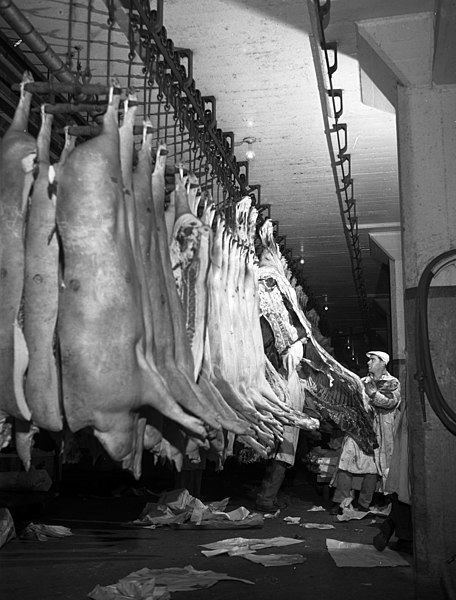
File:Pig carcasses in a Los Angeles meat packing plant.jpg

Workers with pig carcasses at Los Angeles meat packing plant (1945), Source https://digital.library.ucla.edu/catalog/ark:/21198/zz0002qn8w, Author Los Angeles Daily News (CC-BY-4.0 International)

The term “child labor” conjures up images of 19th Century sweat shops.  If meat packing plants are mentioned, some of us may recall Upton Sinclair’s 1905 expose The Jungle [1].

Few of us would imagine that child labor practices are still engaged in today.  Unfortunately, that is the case.

Cleaning Slaughterhouses

The Labor Dept. in December settled a civil suit against Packers Sanitation Services Inc. (PSSI) for the violation of child labor laws [2].

Investigators had found some 50 children (one as young as 13 y.o.) employed by PSSI cleaning slaughterhouses at 5 different locations in Nebraska and Michigan.  An earlier investigation in Kansas was dropped when necessary records could not be obtained.

“Oppressive Child Labor” Standards

The Fair Labor Standards Act prohibits “oppressive child labor” [3].  Labor Dept. regulations identify many positions in slaughterhouses and meat packing plants as hazardous for minors.

In particular, the “kill floors” in meat packing facilities are known to have slippery surfaces from animal fat, hot water, and soap [4A].  Though safety equipment is required for their use, strong cleaning chemicals can cause caustic burns from exposure.

No Penalties or Fines

Despite all this, the Labor Dept. issued no penalties or fines to PSSI [4B]. Continue reading

18 Comments

Filed under Child Abuse, Child Molestation, Community, Emotional Abuse, human trafficking, Justice, Law, Neglect, Physical Abuse, Sexual Abuse, Slavery

Trafficking, Abuse, and the Disabled

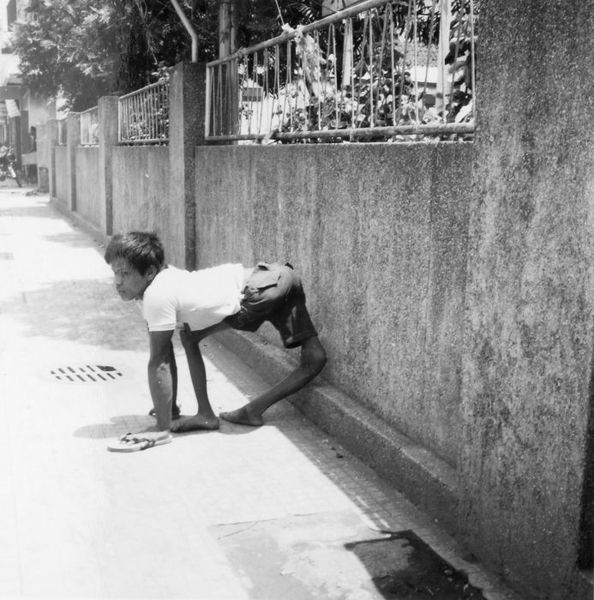
File:COLLECTIE TROPENMUSEUM Een gehandicapte bedelaar langs de kant van de straat TMnr 20000047.jpg

Disabled child begging in the street, Source Tropenmuseum part of the National Museum of World Cultures, Author H.W. (Henk) van Rinsum (Photographer), (CC BY-SA 3.0 Unported)

WARNING:  Graphic Images

There are nearly 240 million children with mental or physical disabilities worldwide [1].

Across the globe, the majority of these children have meager access to clean water and sanitation; adequate nutrition; and necessary healthcare, including immunization.

  • 53% are likely to suffer from acute respiratory infections, the leading cause of death in children under five [2].
  • 42% are likely to be “wasted” which is to say emaciated, with muscle mass far below normal.
  • 34% are likely to be stunted in growth.

Disabled children are often denied education.

  • 49% are likely never to have attended school.
  • 42% are likely to lack basic reading and arithmetic skills.

Children with disabilities are at higher risk of abuse (including sexual abuse) and neglect [3][4].  In the United States, that risk is 300% higher than for children without disabilities [5]. Continue reading

23 Comments

Filed under Child Abuse, Child Molestation, Christianity, Emotional Abuse, human trafficking, Justice, Neglect, Physical Abuse, Religion, sex trafficking, Sexual Abuse, Slavery

Internet Safety Tips for Teens

File:Social media.jpg

Typical social media sites, Source Flickr, Author Automotive Social
(CC BY 2.0 Generic)

The following safety tips were supplied by a child advocacy center all too familiar with child abuse in its many forms.  Please, discuss them with the teens in your life.

Personal Safety 

Never share your personal information with others online unless you already know them offline, and they have good reason for needing to know.

Before sharing the following information with ANYONE, always check with a trusted adult first:  last name, address, phone number, date of birth, school name, social security number, passwords.

Social Media

Many social networking websites (e.g. Facebook/Meta, Twitter, and Instagram) have minimum age requirements for signing up.  These requirements are there to protect you!  Never accept a “friend request” from someone you do not already know offline.  Again, never share personal information with others. Continue reading

12 Comments

Filed under bullying, Child Abuse, Child Molestation, Emotional Abuse, human trafficking, Law, Neglect, Physical Abuse, Prostitution, Rape, sex trafficking, Sexual Abuse, Sexual Assault, Slavery, Violence Against Women