Category Archives: domestic violence

Depravity II

File:Cooling Off - 7583784354.jpg

Source https://www.flickr.com, Image Author Bob Haarmans (CC BY-SA 2.0 Generic)

WARNING:  Graphic Images

Depravity has risen to a new high.

Psychologist Christopher Ryan, the author of Sex at Dawn proposes that human beings are sexual omnivores, designed and entitled to have sex with anyone, at any time, in any way, anywhere [1][2].  In fact, there are those who advocate sex with children and with animals [3][4].

There is no guilt, no shame associated with this.  Morality is an illusion.  There should be no artificial restrictions placed on human behavior.  

After all, human beings are just animals, themselves, only slightly more evolved than apes.  Unrealistic expectations that they exhibit loyalty, trustworthiness, and commitment are the real reason relationships fail.  According to Ryan, at any rate.  

Unfortunately, Ryan is not alone in his belief [5].  Well known celebrities and influencers are taking up the cause.  These individuals are being hailed for their courage in “changing the conversation” [6].

A Sordid Lie

That we are sexual omnivores is a sordid lie about human nature, a rationalization for sin. Continue reading

10 Comments

Filed under Child Abuse, Child Molestation, Christianity, domestic abuse, domestic violence, Emotional Abuse, Neglect, Physical Abuse, Religion, Sexual Abuse, Violence Against Women

Rom-Coms

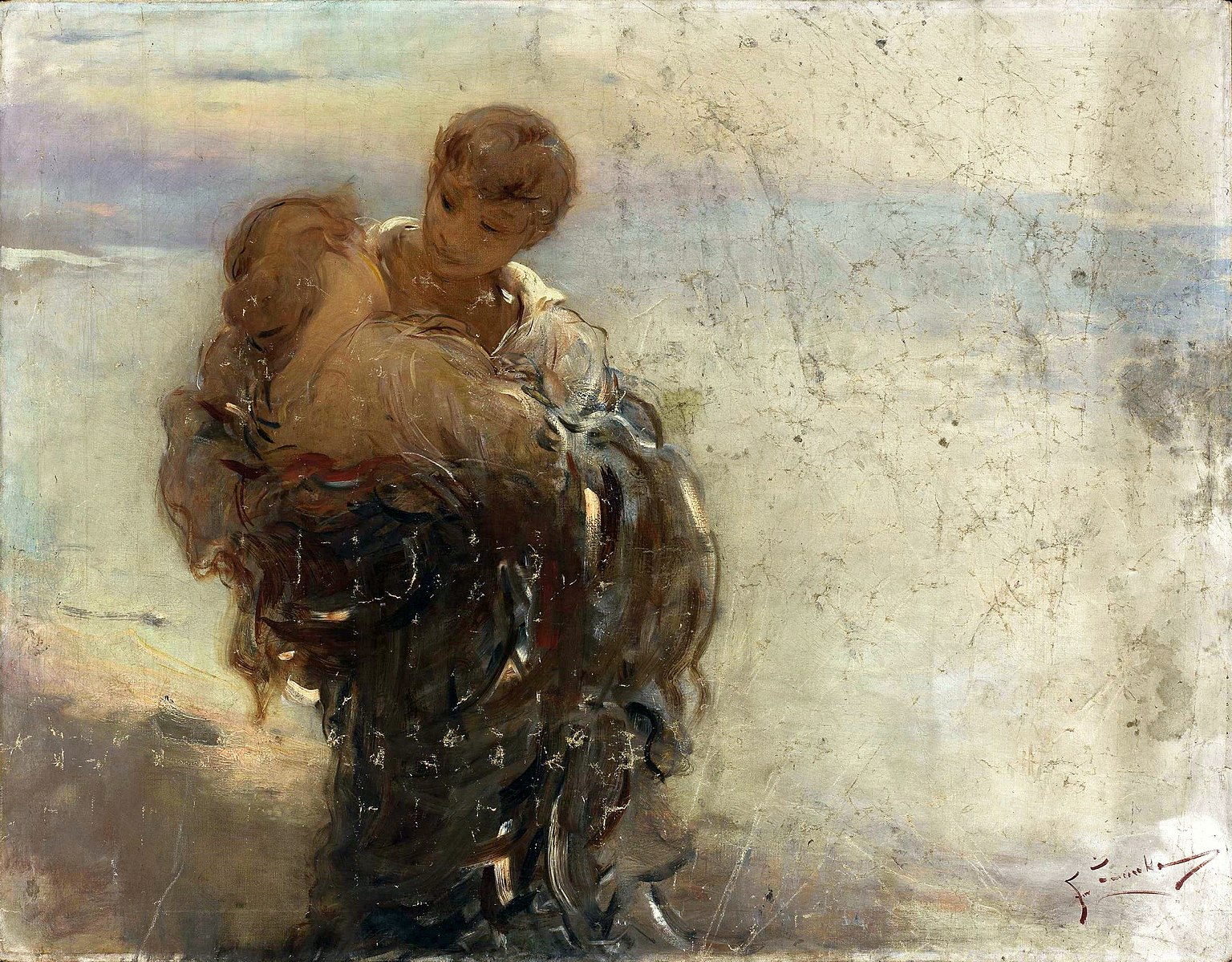
“In Rapture” by Franciszek Zmurko (c. 1900), National Museum in Warsaw (Accession No. MP 3946), Source/Author cyfrowe.mnw.art.pl/pl/zbiory/453259, (PD)

“Rose Castorini:  Listen, Johnny.  There’s a question I want to ask.  I want you to tell me the truth, if you can.  Why do men chase women?

Johnny Cammareri:  Well, there’s the Bible story.  God.  God took a rib from Adam and made Eve.  Now, maybe men chase women because they want the rib back.  When God took the rib, He left a big hole there, a place where there used to be something.  And the women have that.  Now maybe, just maybe, a man isn’t complete as a man without a woman.”

Moonstruck

Many of us enjoy romantic comedies or rom-coms as they are called.  Moonstruck happens to be a favorite of mine.  Boy meets girl.  Boy loses girl.  Boy gets girl.  And they both live happily ever after.

Trite as many rom-com plots are, they contain a kernel of truth about the importance and the power of love.  At some level we all recognize that.  It is the reason we find the boy’s pursuit of the girl engaging.

Sadly, as survivors of childhood abuse, we may settle for unresponsive partners or avoid relationships entirely.  We may not, therefore, have known the sweetness of courtship.  Or perhaps courtship was followed by the horrors of domestic violence. 

How much more meaningful then is God’s pursuit of us?  That pursuit began in the Garden, when sin first separated man from God.

Then the Lord God called to Adam and said to him, ‘Where are you?’” (Gen. 3: 9).

Continue reading

7 Comments

Filed under Child Abuse, Child Molestation, Christianity, domestic abuse, domestic violence, Emotional Abuse, Neglect, Physical Abuse, Religion, Sexual Abuse, Violence Against Women

Invisible Wounds – Emotional Abuse

Mimi & Eunice Cartoon:  “Posture”, Source https://mimiandeunice.com/2011/10/20/posture/, Author Nina Paley, (CC BY-SA 3.0 Unported)

“Ugh.  I hate the sight of your ugly face.”

“I wish I’d never had you.  I should have gotten an abortion.”

“You’re useless.  You’ll never amount to anything.”

“How can you be so stupid?  No wonder you have no friends.”

“Now, look what you made me do.  It’s all your fault.”

“No one could love you.  No one ever will.”

Emotional abuse leaves no visible scars.  But the wounds go deep.  We may as well have scalding water dumped over us.

Emotional abuse is often mischaracterized as a less damaging form of child abuse.  To the contrary, the American Academy of Pediatrics calls it, “the most challenging and prevalent form of child abuse and neglect” [1A]. 

Such abuse can carry over into adult relationships [2].  We settle for what we think we deserve.  There is, therefore, a clear link to domestic abuse [3].

Emotional abuse of children may be accompanied by physical neglect, physical abuse, or sexual abuse. 

However, there is credible evidence that the victims of emotional abuse and emotional neglect exhibit equal or worse immediate and long-term effects than the survivors of other forms of maltreatment and violence [1B].

Types of Emotional Abuse

A. Cruelty

Emotional abuse can involve name calling; constant criticism; negative remarks about a child’s (or later an adult partner’s) appearance, intellect, abilities, hopes, and dreams; cruel jokes at a child’s (or later an adult partner’s) expense; deliberate humiliation; and threats of violence or abandonment [4A]. 

A parent may permanently damage a child’s self-esteem simply by withholding all kind and encouraging remarks [4B].

B. Manipulation

There are other varieties of emotional abuse, no less harmful to a child.  These can range from manipulating or scapegoating a child; failing to promote a child’s social development by forbidding friends, and forcing isolation on a child; to making a child the parent’s emotional partner (covert incest); or exposing a child to traumatic events like domestic violence, drug and alcohol abuse [4C].

C. Excessive Control

Children can be damaged if they are pushed too hard, in order to fulfill a parent’s own ambitions, or controlled so closely that they have no lives of their own [4D].

D. Emotional Neglect

At the other extreme, children can be emotionally harmed, if they are regularly ignored [4E]. 

Failure by a parent to interact at all with a child is known as emotional neglect.  This can occur if, for instance, a parent suffers from serious mental illness.  It can be devastating for the child, even if he or she is otherwise fed and clothed.

E. Domestic Abuse

In the context of domestic violence, emotional abuse is often accompanied by extreme jealousy; isolation; enforced dependence; and coercive control by the abusive partner over money, travel, and communication with family and friends [5A]. Continue reading

25 Comments

Filed under Child Abuse, Child Molestation, domestic abuse, domestic violence, Emotional Abuse, Neglect, Physical Abuse, Sexual Abuse, Violence Against Women

Poor Pitiful Me – The Victim Mentality

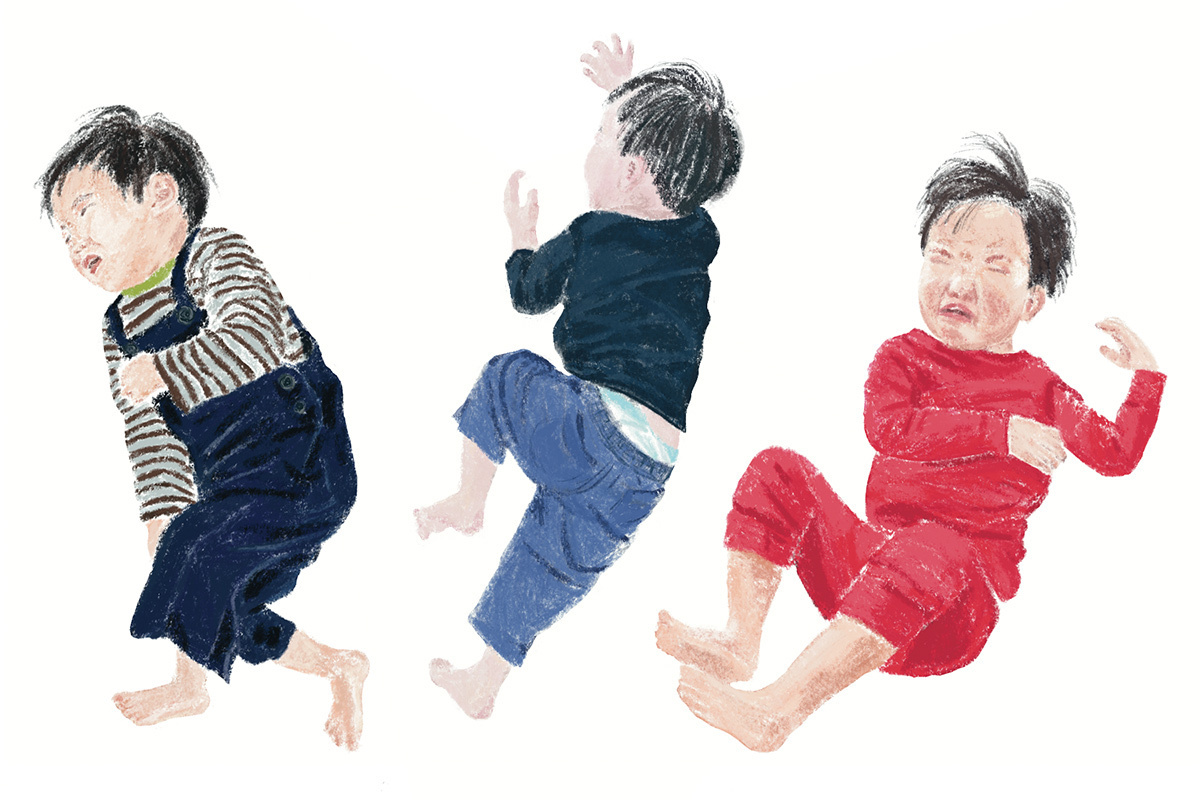
“Screaming and Watercolors” by Teresa Wong, Source The Walrus https://thewalrus.ca/good-mom-on-paper/

Whether we have been the victims of trauma or not, some of us adopt a victim mentality. 

We view the whole world as against us, and our “luck” as consistently bad [1][2].  We see ourselves as constantly wronged or treated unfairly.  We avoid taking personal responsibility, instead blaming our life choices (and their consequences) on others.  We have difficulty with change.  We can reject helpful suggestions outright.

Like toddlers, we may throw a tantrum, if our victimhood is challenged.

This is learned helplessness.  It results in frustration, resentment, and loneliness.

Maladaptive Coping

Self-pity as expressed in a negative view towards life is a maladaptive coping mechanism.  Meant to protect us against further disappointment, it is, in the long run, emotionally crippling. 

While adopting a “poor, pitiful me” attitude can generate sympathy, it does little or nothing to build character or promote personal growth.  The attitude is closely linked to self-sabotage, and not uncommonly associated with a narcissistic personality focused on entitlement. 

We may think we are avoiding risk.  But we are actually avoiding life, and all it has to offer.  Indeed, the chances are that we will attract only those with the same propensity for self-pity and complaint. Continue reading

28 Comments

Filed under Child Abuse, Child Molestation, Christianity, domestic abuse, domestic violence, Emotional Abuse, Neglect, Physical Abuse, Religion, Sexual Abuse

Sexual Violence in Sudan

WARNING:  Graphic Images

FOR MORE OF MY ARTICLES ON POVERTY, POLITICS, AND MATTERS OF CONSCIENCE CHECK OUT MY BLOG A LAWYER’S PRAYERS AT: https://alawyersprayers.com

10 Comments

Filed under Child Abuse, Child Molestation, domestic abuse, domestic violence, Emotional Abuse, Justice, Law, Neglect, Physical Abuse, Rape, sex trafficking, Sexual Abuse, Sexual Assault, Slavery, Terrorism, Violence Against Women

The Bunny Ranch – Prostitution Exposed

“The Damned” by Luca Signorelli (1499-1502), Chapel of San Brizio, Orvieto, Source Web Gallery of Art (PD)

The A&E Network has been running a series titled “Secrets of the Bunny Ranch”, an expose of legalized prostitution at the infamous Bunny Ranch in Nevada.  Episodes can be viewed online at https://www.aetv.com/shows/secrets-of-the-bunny-ranch.

Marketing v. Reality

Some years ago HBO aired a puff piece on the Bunny Ranch titled “Cathouse:  The Series” [1].  Presented as a documentary, this was essentially a marketing and recruitment device which portrayed brothel life as fun, lucrative, and safe.  Nothing could have been further from the truth.

By contrast, the A&E series examines the sordid underbelly of prostitution:  the grooming, the trafficking, the rape, the drugs, the violence, the financial irregularity, and the law enforcement corruption. 

Virgins are auctioned off to the highest bidder.  Pregnant women are offered for sale by the hour to those with a fetish for them.  Sex workers are regularly abused, and kept in permanent debt bondage.

Many prostitutes already have a history of childhood abuse and/or domestic violence.  They are already wounded, their choices severely limited. Continue reading

15 Comments

Filed under Abuse of Power, Child Abuse, Child Molestation, Christianity, domestic abuse, domestic violence, Emotional Abuse, Justice, Law, Neglect, Physical Abuse, Prostitution, Rape, sex trafficking, Sexual Abuse, Sexual Assault, Violence Against Women

False Guilt

Courtroom gavel, Author onaeg news agency, (CC BY-SA 4.0 International)

“There are two kinds of guilt.  One is true guilt, that is, it stems from sin against God; we are responsible for it and we have to deal with it.  The second is false guilt, which Satan places on us; this occurs when the devil accuses us of not living up to God’s standards.

Many people live countless years under such deceptive guilt.  They never feel as if they can quite get God’s acceptance; they think they never quite measure up and never quite please God; they believe they will never be all that God wants them to be.”

–Charles Stanley in How to Listen to God

Abuse victims are all too familiar with guilt. 

Told from childhood that we did not measure up, that everything wrong in the family was our fault, we grew up virtually enveloped in guilt.  This is compounded by the fact we are likely to believe we brought the abuse on ourselves (an outright lie, but one of which Satan is particularly fond).

All this is false guilt.

If confronted, we would have difficulty reciting our supposed “sins”.  This is because they do not exist.  Which is not to say that we do not commit real sins.  We are as fallible as the rest of mankind, in that regard.

But the guilt that is unrelenting – the guilt punishing, even crippling us – is false guilt.  We were not responsible for the abuse inflicted on us – whether it was emotional, physical, sexual or took the form of neglect.  We did not engender it.  We did not deserve it.

What we needed and deserved, but were deprived of, were love and care.

Unfortunately, what false guilt does is convince us we are still undeserving.  We labor under the weight of this lie, sometimes turning it into a self-fulfilling prophecy. Continue reading

9 Comments

Filed under Child Abuse, Child Molestation, Christianity, domestic abuse, domestic violence, Emotional Abuse, Neglect, Physical Abuse, Religion, Sexual Abuse

Trauma Bonding

Cycle of Abuse Chart created by Avanduyn (PD)

A trauma bond is the emotional connection between a victim and perpetrator that arises from cyclical abuse (discussed below) [1A].  Trauma bonds can form in connection with the parent/child relationship, friendships, romantic relationships, sex trafficking, and in other contexts [1B].

Cyclical Abuse 

Cyclical abuse is characterized by increasing tension and placation; an incident of emotional, physical, or sexual abuse; surface reconciliation; then a calm interval (however brief), after which the cycle repeats [2][3A]. 

Trauma Bond Components

Trauma bonds are based on terror, dominance, and unpredictability [1C].  Two main factors contribute to their formation:  a power imbalance, and intermittent reinforcement (reward/punishment) [1D].

Trauma bonds can have multiple components:

  • Love for the abuser (or who the abuser appears to be on a good day). Hope and promises that the abuser will reform feed into this.
  • Compassion for the abuser, if he or she had a difficult past.
  • Fear of escalation, with the victim often receiving death threats, if departure is contemplated. Because of this, many victims conclude it is “safer” to stay with their abuser, despite the abuse.
  • Fear for the safety of loved ones, whose lives may, also, have been threatened.
  • Diminished self-esteem, as a result of the abuse.
  • Lack of financial resources. Victims are commonly deprived of these by their abuser.
  • Shame.  Public opinion is frequently that victims are “weak” to stay with an abuser or “materialistic”, if the abuser is well-off financially.  As a result, victims are likely to hide the abuse from others.  This serves to further isolate them.

The first instance of abuse is often viewed as an anomaly, a one-off [1E].  A profuse apology and professions of “love” lull the victim into a false belief that the abuse will not recur [1F]. 

Repeat instances of abuse generate a cognitive shift, i.e. a belief that preventing (or escaping) the abuse is no longer in the victim’s power [1G].  By this point the trauma bond has been well established [3B]. Continue reading

5 Comments

Filed under Child Abuse, Child Molestation, domestic abuse, domestic violence, Emotional Abuse, Neglect, Physical Abuse, sex trafficking, Sexual Abuse, Violence Against Women

Healing from Abuse

Flowers growing from cement, Author Frederick Depuydt (CC BY-SA 4.0 International)

Healing from child abuse is possible.  But healing is a process [1].  In this regard, healing from domestic abuse is not very different. 

Necessary elements include recognizing the full impact of the trauma we experienced; processing the emotions the trauma generated; developing healthy coping mechanisms; and rebuilding a sense of safety and self-worth. 

Both healing from child abuse and healing from domestic abuse require courage and patience with ourselves.

The Impact of Trauma

The impact of childhood trauma is multi-faceted.  It can range from rage, self-hatred, anxiety, depression, and PTSD (nightmares, flashbacks, emotional detachment, etc.) to sexual addiction, sexual dysfunction, chronic physical ailments (migraines, backaches, etc.), drug or alcohol addiction, and eating disorders [2].  

Similarly, domestic violence can result in anxiety, depression, PTSD, and a host of physical ailments from gastrointestinal and cardiovascular issues to traumatic brain injury [3][4].

It bears mention that child abuse and domestic abuse can both result in death, either at the hand of the abuser or by way of suicide years later.

Professional counseling can be of great assistance to survivors in dealing with trauma, re-establishing necessary boundaries, and developing healthy coping skills [5].

Rebuilding Self-Worth

At the deepest level, victims must reclaim a sense of self-worth.  This is an enormous challenge.  Child victims of abuse are taught from the outset they are dung.  Adult victims (having survived turbulent childhoods) are gradually deprived of their power and self-respect by abusive partners. Continue reading

16 Comments

Filed under Child Abuse, Child Molestation, Christianity, domestic abuse, domestic violence, Emotional Abuse, Neglect, Physical Abuse, Religion, Sexual Abuse

For Vanity’s Sake

Kim Kardashian (a celebrity who has had multiple cosmetic procedures), Source https://www.flickr.com, Author Love Lira Fashion

We women would do almost anything for men.  We want, of course, to be attractive to them.  And society – through celebrities and influencers – has convinced us that is not possible without radically modifying our bodies, sometimes at the risk of our lives.

Over $16 Billion

Over $16 billion was spent on cosmetic surgery in the United States in 2024 [1].  This included breast augmentation, liposuction, abdominoplasty (the so called “tummy tuck”), and buttock augmentation. 

In 2022 alone, there were 26.2 million surgical and minimally invasive cosmetic and reconstructive procedures performed [2]. 

Women accounted for some 86% of these procedures [3].  While the percentage of exotic dancers who are patients cannot be determined, one club owner estimated that over 90% of his strippers have had surgical enhancement of one kind or another.

Discount Clinics

An increasing number of procedures are performed at discount plastic surgery clinics, where pre-op, surgical, and post-op care are less than optimal [4A].  These clinics target low-income women, particularly those who are Hispanic or African American.  

Physicians who may never have formally trained in the specialty of plastic surgery often perform as many as 10 procedures a day, far in excess of what best medical practice would consider safe.  

Multiple operating rooms – particularly in Florida, which is not well regulated – may be “overseen” by a single physician, while procedures are actually performed by untrained and unlicensed assistants.  Dozens of women have died. Continue reading

24 Comments

Filed under Child Abuse, Child Molestation, Christianity, domestic abuse, domestic violence, Emotional Abuse, Neglect, Physical Abuse, Religion, Sexual Abuse, Violence Against Women