
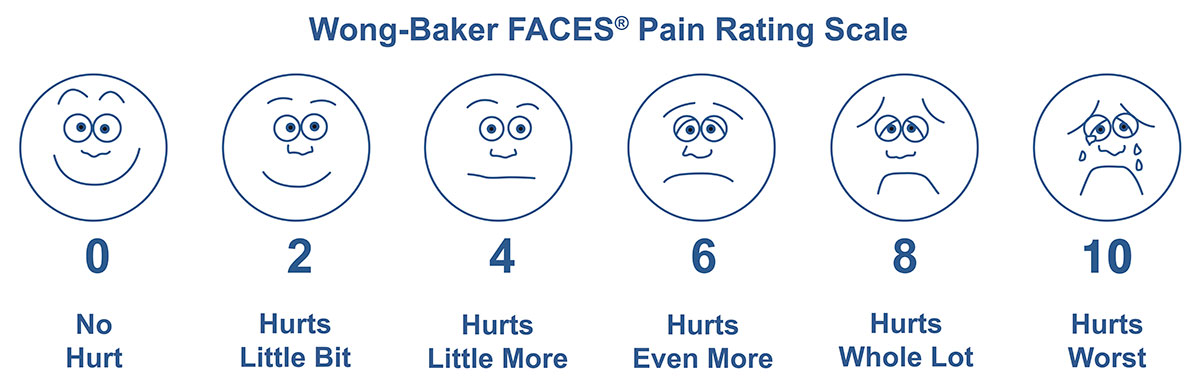
As abuse victims, we will often minimize our pain. We may downplay our pain out of fear, guilt, or a desperate need to believe that the parent/caregiver or partner who caused that pain “deep down” loves us.
This is a short-term coping mechanism, a way of assuring ourselves that we will survive the harm done to us.
It is, also, a way of minimizing the responsibility of those who inflicted that harm on us (and avoid or defer dealing with the anger and grief their betrayal caused us).
Denial v. Reality
Both the victims of childhood abuse and the victims of domestic abuse may employ this coping mechanism, sometimes despite clear evidence to the contrary [1]. A woman whose partner blackened her eyes and knocked her teeth out may, nonetheless, seek to assure concerned family members, “Really, it’s not so bad.”
The problem with this coping mechanism is that it does not address the abuse. The victim denies the reality that he or she has been seriously harmed; may fail to obtain necessary medical treatment; and continues to remain in the abusive situation.
Empowerment and Healing
Children are likely to believe that their world will collapse, if a beloved parent or caregiver is acknowledged to have caused them harm. Adults in abusive relationships may fear the same, particularly since victims’ self-esteem is eroded in such relationships.
“Recognizing and naming the abuse breaks the silence and begins to dismantle the shame…Grieving that loss is a painful but necessary part of healing [2].”
-Gregory Jantz, PhD
Difficult as it may be for us to acknowledge abuse, recognizing the abuse is crucial for victims’ empowerment and healing.
God’s Love for Abuse Victims
We may think that the pain of admitting we have not been loved as we deserved is unbearable, that anything is more tolerable. That is not, however, true.
And God’s love for abuse victims never falters. That love is a powerful sustaining force.
—
[1] Domestic Shelters, “‘It’s really not that bad’ – Why some survivors minimize abuse” by Stephanie Thurrott, 12/18/24, https://www.domesticshelters.org/articles/taking-care-of-you/why-some-survivors-minimize-their-abuse.
[2] Psychology Today, “Healing the Scars of Childhood Abuse” by Gregory Jantz PhD, 5/30/25, https://www.psychologytoday.com/us/blog/hope-for-relationships/202505/healing-the-scars-of-childhood-abuse?msockid=3ad3725d78f867551ce164fa792266ac.
“Wildflower” by Maggie Watson is a book of poetry by a domestic abuse survivor. The poems are honest, encouraging, and uplifting. The book is available on Amazon.
Though its drivers are considered independent contractors, Uber has been held liable for the rape of a passenger and ordered to pay $8.5 million.
See, https://abcnews.go.com/US/wireStory/uber-found-liable-sexual-assault-case-ordered-pay-129924970.
FOR MORE OF MY ARTICLES ON POVERTY, POLITICS, AND MATTERS OF CONSCIENCE CHECK OUT MY BLOG A LAWYER’S PRAYERS AT: https://alawyersprayers.com

 A Voice Reclaimed, Surviving Child Abuse and More
My blog readers feel compassion. May I share your posts with them?
Thank you. That would be an honor.
From the outside, as someone that would like to help, the tendencies you describe here are a struggle for me to navigate. I think that many people (me!) want to “do something” (I have been told that is the wrong approach). I feel so terribly for the victims faced with circumstances they feel are no-win, even while enduring the torment. Prayers for all facing and enduring what they should not have to.
Your desire to help is not wrong. Much of the criticism directed at that desire originates, I think, in a mistaken belief that we cannot understand the pain of others, if we have not had the self-same experiences. But empathy is real and powerful. And even a shoulder to cry on can be a lifeline for someone.
Pingback: “MINIMIZING PAIN”/A VOICE RECLAIMED | By the Mighty Mumford
Great post, Anna. I tend to minimize everything, definitely due to my history and part of it is just personality.
This is why I sometimes get offended when people try to dismiss me as if to say I’m just exaggerating or over reacting. It’s far more likely I’ve toned everything down, put filters on it, and minimized the entire situation.
Thank you for sharing, Gabrielle.
I grew up looking at the blackened eyes and swollen face of an aunt who endured severe abuse at the hands of her husband. As a child, I remember the hushed conversations from my parents and how my dad would become so angry at what was happening. Then, as now, I cannot imagine living that way, nor can I imagine enduring such cruelty at the hands of another.
You are a good man, Ron. It is heartening to know you.
You are far too kind my friend.
Yesterday with our youth I taught on bullying for Sunday school and noted one wrong response is denial; reading this post made me realize that those who have been abused can deny or minimize the abuse…this is helpful for all to know as well
The worst thing is the trauma and the shame. If you can somehow recover from this..
It is tragic that the victims of abuse are often saddled w/ shame. The pain of shame can be excruciating. Recovering from trauma — physical and emotional — is difficult enough.
There should be no real shame at having been victimized, whatever form our abuse takes. All guilt rests w/ the abuser. It is he who should feel ashamed of his actions.
To be clear, guilt arises from the recognition that we have done something wrong. Shame arises from a belief that we are fundamentally flawed, even worthless; that we must somehow have engendered the abuse. That is never the case.
Yes it is tragic. This is an emotion that is highly destructive.
Whenever I felt down, I kept watching this. I will never be like Rocky, but it helped me. Moving forward.
Thank you for sharing your experience with this, Hubert. It is a beautiful and inspiring speech by a father to his son. The Rocky films hold a special place in the hearts of anyone who has ever lived in Philadelphia. But we all need courage to face this world, whether we are boxers or not. We are all beaten down, at some point or other. The challenge is getting up again, no matter how often that happens.
In my wife’s and my hearts, the city of Philadelphia holds a special place — not least because of Rocky. And we are certainly not alone in that sentiment.
Perhaps I should post a small medallion from our visit — a reminder of the moment we stood by the Rocky statue and ran up the legendary Rocky Steps. There, we met people from all over the world, strangers connected by nothing more — and nothing less — than their affection for the film and its enduring legacy.
And it was, not least, your articles, Anna, that revealed to me the strength of the people of that city — some victorious, some burdened by setbacks, yet most finding the resolve to stand up again. In that, I see a resemblance to you, to Jonathan, and to Aretha.
You bring tears to my eyes, Hubert.
I’m sorry Anna, I’ve never intended to make you feel sad 😔
No, you simply touched my heart.
🙂
This is such an important reminder, Anna. Thank you for a being a voice in the darkness on this subject. This is really hard to put into words sometimes, but you did a great job of keeping it simple and to the point. It can be difficult for a victim of abuse to face the reality of their situation. Thankfully, God is with us on that healing journey when we feel we don’t have a voice.
Thank you for caring, Amber. Sadly, abuse comes in many forms. But victims are precious to God. ❤
Pingback: Minimizing Pain – NarrowPathMinistries
The “pain of admitting we have not been loved” — these words cut right through me. Also the vulnerability of children, their helplessness in a situation in which, as cruel as it is, they fear its collapse. You pull the curtain back on just how abuse cripples and paralyzes the abused, children and adults, in your informative posts, Anna.
The experience of abuse is heart wrenching. 💔My hope in writing about such painful things is to help victims grow beyond their abuse.
And you do that, Anna, by sharing your knowledge and experience. I appreciate the courage, honesty, and compassion with which you encourage and inform, always pointing to the Savior and Healer of us all. Thank you.
thanks for the book links – off to explore! stay well my friend, best wishes, Linda