Monthly Archives: July 2025

Invisible Wounds – Emotional Abuse

Mimi & Eunice Cartoon:  “Posture”, Source https://mimiandeunice.com/2011/10/20/posture/, Author Nina Paley, (CC BY-SA 3.0 Unported)

“Ugh.  I hate the sight of your ugly face.”

“I wish I’d never had you.  I should have gotten an abortion.”

“You’re useless.  You’ll never amount to anything.”

“How can you be so stupid?  No wonder you have no friends.”

“Now, look what you made me do.  It’s all your fault.”

“No one could love you.  No one ever will.”

Emotional abuse leaves no visible scars.  But the wounds go deep.  We may as well have scalding water dumped over us.

Emotional abuse is often mischaracterized as a less damaging form of child abuse.  To the contrary, the American Academy of Pediatrics calls it, “the most challenging and prevalent form of child abuse and neglect” [1A]. 

Such abuse can carry over into adult relationships [2].  We settle for what we think we deserve.  There is, therefore, a clear link to domestic abuse [3].

Emotional abuse of children may be accompanied by physical neglect, physical abuse, or sexual abuse. 

However, there is credible evidence that the victims of emotional abuse and emotional neglect exhibit equal or worse immediate and long-term effects than the survivors of other forms of maltreatment and violence [1B].

Types of Emotional Abuse

A. Cruelty

Emotional abuse can involve name calling; constant criticism; negative remarks about a child’s (or later an adult partner’s) appearance, intellect, abilities, hopes, and dreams; cruel jokes at a child’s (or later an adult partner’s) expense; deliberate humiliation; and threats of violence or abandonment [4A]. 

A parent may permanently damage a child’s self-esteem simply by withholding all kind and encouraging remarks [4B].

B. Manipulation

There are other varieties of emotional abuse, no less harmful to a child.  These can range from manipulating or scapegoating a child; failing to promote a child’s social development by forbidding friends, and forcing isolation on a child; to making a child the parent’s emotional partner (covert incest); or exposing a child to traumatic events like domestic violence, drug and alcohol abuse [4C].

C. Excessive Control

Children can be damaged if they are pushed too hard, in order to fulfill a parent’s own ambitions, or controlled so closely that they have no lives of their own [4D].

D. Emotional Neglect

At the other extreme, children can be emotionally harmed, if they are regularly ignored [4E]. 

Failure by a parent to interact at all with a child is known as emotional neglect.  This can occur if, for instance, a parent suffers from serious mental illness.  It can be devastating for the child, even if he or she is otherwise fed and clothed.

E. Domestic Abuse

In the context of domestic violence, emotional abuse is often accompanied by extreme jealousy; isolation; enforced dependence; and coercive control by the abusive partner over money, travel, and communication with family and friends [5A]. Continue reading

23 Comments

Filed under Child Abuse, Child Molestation, domestic abuse, domestic violence, Emotional Abuse, Neglect, Physical Abuse, Sexual Abuse, Violence Against Women

Poor Pitiful Me – The Victim Mentality

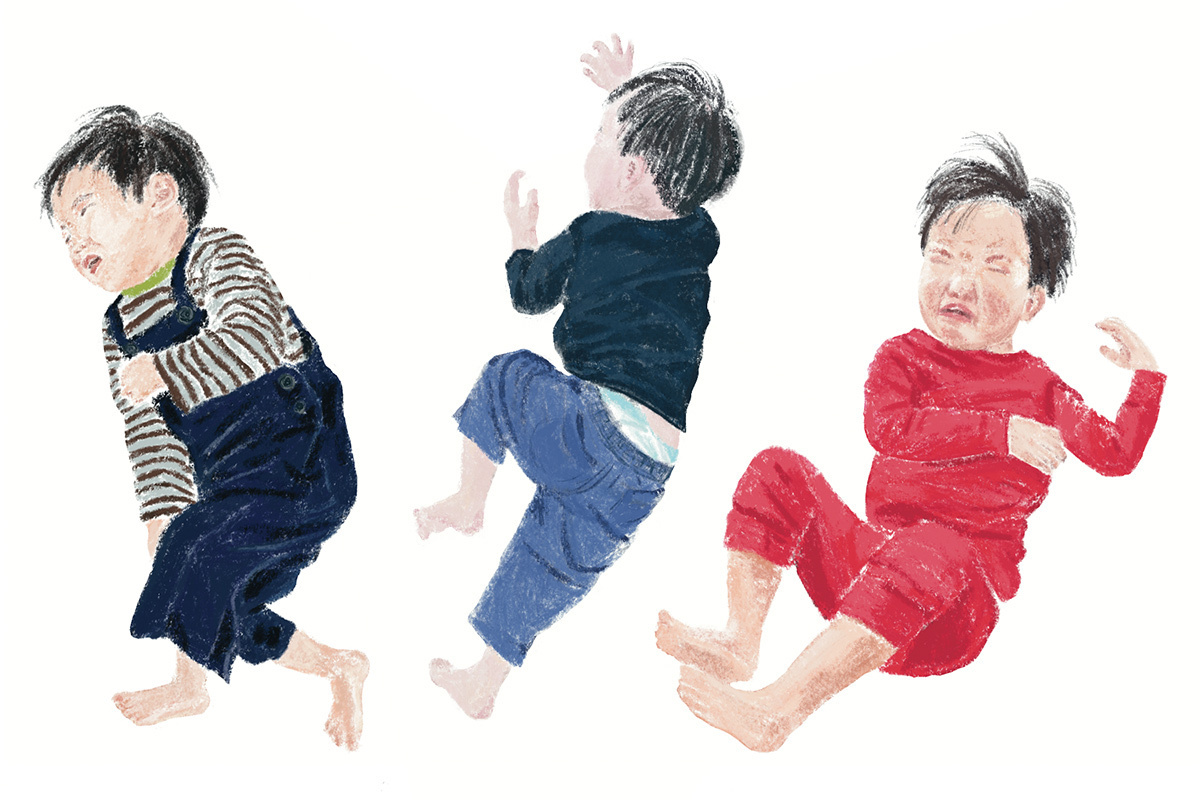
“Screaming and Watercolors” by Teresa Wong, Source The Walrus https://thewalrus.ca/good-mom-on-paper/

Whether we have been the victims of trauma or not, some of us adopt a victim mentality. 

We view the whole world as against us, and our “luck” as consistently bad [1][2].  We see ourselves as constantly wronged or treated unfairly.  We avoid taking personal responsibility, instead blaming our life choices (and their consequences) on others.  We have difficulty with change.  We can reject helpful suggestions outright.

Like toddlers, we may throw a tantrum, if our victimhood is challenged.

This is learned helplessness.  It results in frustration, resentment, and loneliness.

Maladaptive Coping

Self-pity as expressed in a negative view towards life is a maladaptive coping mechanism.  Meant to protect us against further disappointment, it is, in the long run, emotionally crippling. 

While adopting a “poor, pitiful me” attitude can generate sympathy, it does little or nothing to build character or promote personal growth.  The attitude is closely linked to self-sabotage, and not uncommonly associated with a narcissistic personality focused on entitlement. 

We may think we are avoiding risk.  But we are actually avoiding life, and all it has to offer.  Indeed, the chances are that we will attract only those with the same propensity for self-pity and complaint. Continue reading

28 Comments

Filed under Child Abuse, Child Molestation, Christianity, domestic abuse, domestic violence, Emotional Abuse, Neglect, Physical Abuse, Religion, Sexual Abuse

Sexual Violence in Sudan

WARNING:  Graphic Images

FOR MORE OF MY ARTICLES ON POVERTY, POLITICS, AND MATTERS OF CONSCIENCE CHECK OUT MY BLOG A LAWYER’S PRAYERS AT: https://alawyersprayers.com

10 Comments

Filed under Child Abuse, Child Molestation, domestic abuse, domestic violence, Emotional Abuse, Justice, Law, Neglect, Physical Abuse, Rape, sex trafficking, Sexual Abuse, Sexual Assault, Slavery, Terrorism, Violence Against Women

Gnosticism and Pedophilia

Ancient Greek pederast kissing a young boy (4th Century BC), Louvre Museum (Accession No. G 278), Author Marie-Lan Nguyen (PD)

Many today are adherents of a pernicious philosophy, a false religion, whose name they do not know [1].  It masquerades as ancient wisdom, secret knowledge, a path to self-fulfillment.  But it incorporates Satan’s oldest and most effective lies.

Gnosticism is a heresy that seeks to undermine Christian doctrine.  It promises that men can become godlike, and exalts inner “perception” over outer reality.  Its beliefs are at the root of the Transgender Movement, and are paving the way for the normalization of pedophilia [2][3][4].

This is not to say that Gnostics are pedophiles or even aware of the connection to pedophilia.  Most Gnostics would undoubtedly dispute the connection.  Not that pedophiles need much help in normalizing their perversion.

Legitimizing Pedophilia

B4U-ACT is part of a growing movement to legitimize sexual attraction to children [5].  Founded by social worker Russell Dick and convicted child sex offender Michael Melsheimer, this Maryland group maintains that sexual attraction to children is not a psychiatric disorder, but an identity to be affirmed. 

A list of pedophilia advocacy groups can be found on Wikipedia [6].  Like B4U-ACT, they hold that attempts to reduce or control pedophiles’ attraction to children through cognitive behavior therapy or drugs are not only pointless, but unethical.

Never mind the lasting harm pedophiles do to children. Continue reading

18 Comments

Filed under Child Abuse, Child Molestation, Christianity, Emotional Abuse, Justice, Law, Neglect, Physical Abuse, Religion, Sexual Abuse